
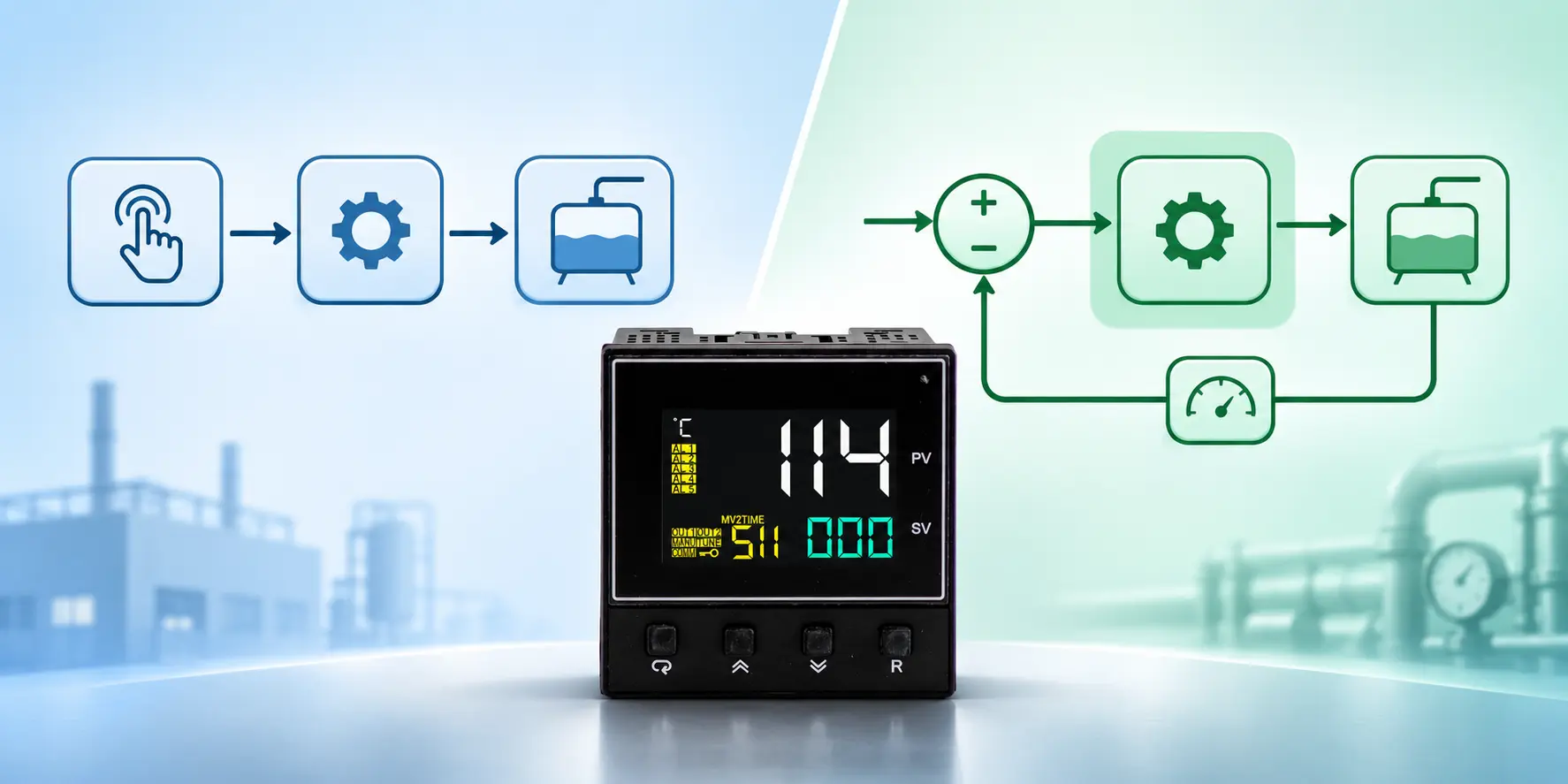
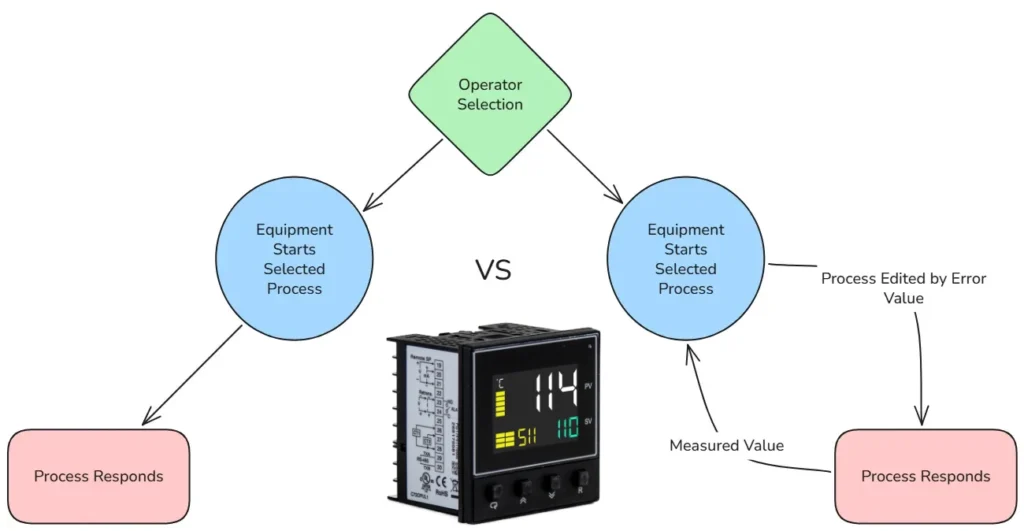
A heated tank can follow a preset heating schedule or adjust its heater output based on measured temperature. Both approaches can serve a purpose, but they respond differently when operating conditions change. A timed heating command might work for a repeatable process, while changing material loads may require feedback to keep temperature near a target.
Understanding PID closed-loop control starts with this distinction. Open-loop control issues commands without using feedback from the controlled result to correct them. Closed-loop control uses that feedback to guide adjustments, and PID provides a method for calculating those adjustments. This article explains how each approach works, where PID fits, and when industrial applications benefit from automatic correction.
What Is an Open-Loop Control System?
An open-loop control system issues commands without using feedback from the controlled result to adjust them. For example, a water tank might apply a preset heater output for a specified duration when starting conditions are repeatable and broad temperature tolerances are acceptable. A temperature sensor could still display or record readings, but those readings do not guide automatic heating adjustments.
How Open-Loop Control Works
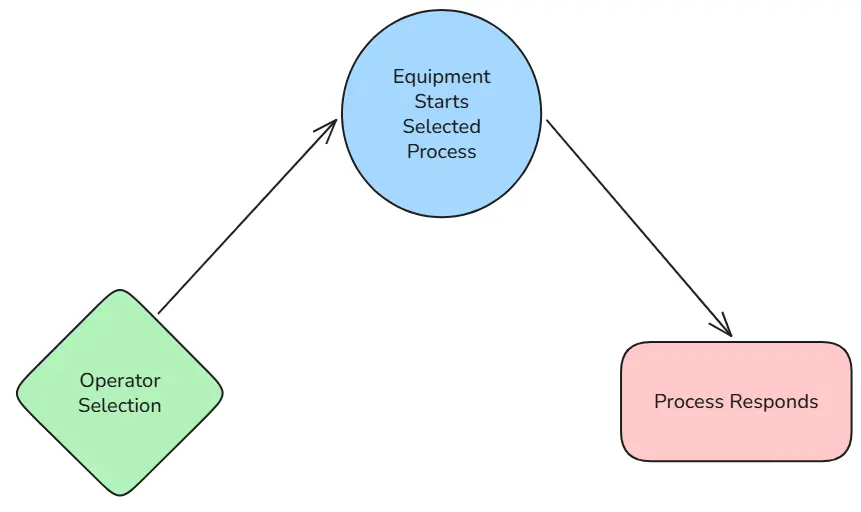
Open-loop control follows this basic sequence:
- An operator or program selects a command.
- Equipment acts on this command.
- The process responds, without feeding its measured result back to the control decision.
Open-loop commands can change according to a programmed schedule, sequence, or operator instruction. What makes the system open-loop is that feedback from the controlled result does not determine those changes. For example, a timed filling system opens a valve for a preset duration. If actual flow changes, the system does not automatically adjust the duration based on the quantity delivered.
Advantages and Limitations of Open-Loop Control
Open-loop control can reduce cost and simplify commissioning because it does not require feedback components for regulation. Fewer components may also simplify troubleshooting. However, performance depends on predictable operating conditions, and operators may need to recalibrate commands when conditions change. Open-loop control can meet application requirements when the process is repeatable and resulting variations remain acceptable.
What Is a Closed-Loop Control System?
A closed-loop control system uses feedback about the actual process condition to adjust equipment operation. In a typical regulating loop, the controller compares the measured process variable with a setpoint and uses the resulting error to determine a corrective command. Typically the system uses three values to achieve this:
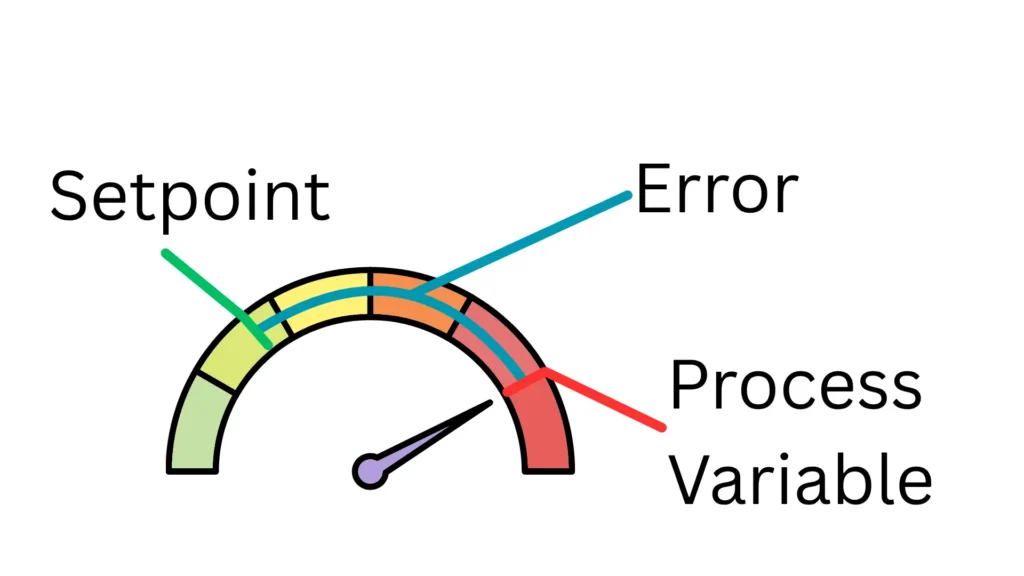
- Setpoint: the desired value.
- Process variable: the measured value.
- Error: the difference between the setpoint and process variable.
How Feedback Changes the Control Loop
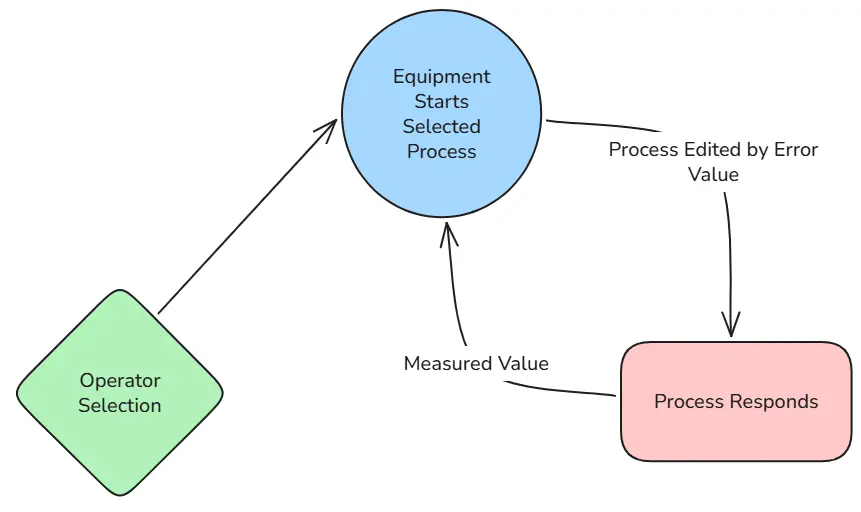
Feedback allows the controller to respond when operating conditions change. Adding cooler water to the tank, for example, lowers its temperature. A feedback controller detects the deviation from the setpoint and adjusts heater output. An open-loop system continues following its programmed heating command without correcting for the measured temperature change.
Advantages and Limitations of Closed-Loop Control
Disturbances are changes that affect the process, such as a different material load or changing ambient temperature. Closed-loop control can compensate for their effects within the equipment’s operating limits. These benefits of improved regulation and automatic adjustment do however require:
- Suitable measurement and sensor placement.
- Equipment capable of making required adjustments.
- Appropriate controller configuration.
- Maintenance of sensors and control components.
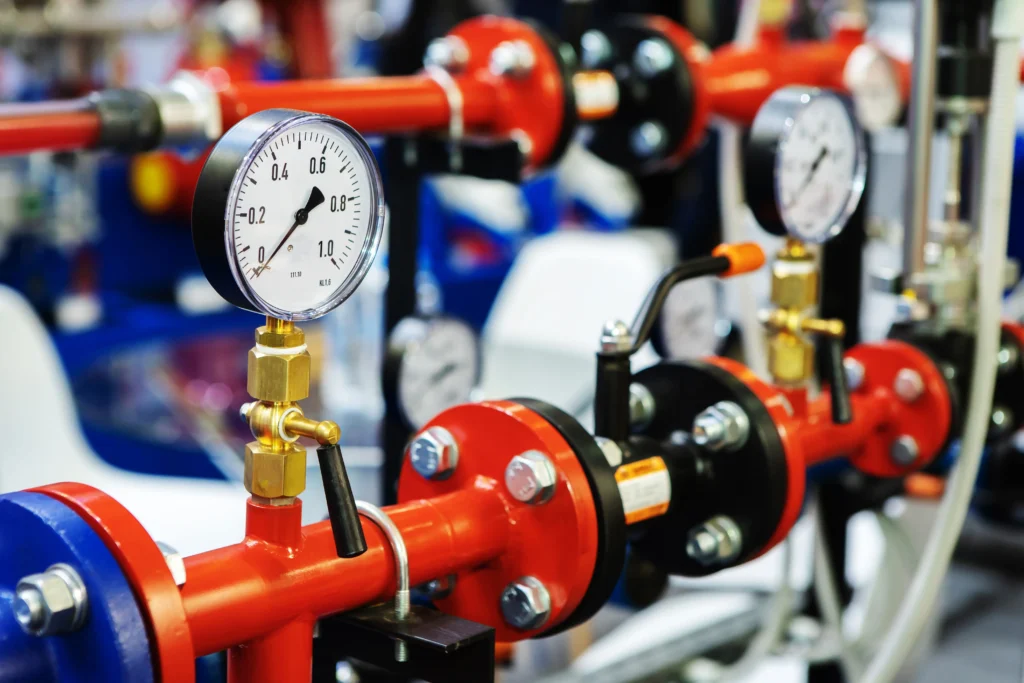
Feedback cannot overcome insufficient equipment capacity. If the heater already operates at full output and incoming cold water removes heat faster than the heater can replace it, temperature will remain below the setpoint. The controller can detect the error and request more heating, but achieving the target requires sufficient heating capacity. Additional sensors and control components can also introduce more potential faults and troubleshooting requirements. Poor controller tuning can also cause overshoot, oscillation, or instability.
Open-Loop vs. Closed-Loop Control Systems
The defining difference is whether feedback from the controlled result influences the command. Process variability and acceptable tolerances help determine which approach is suitable.
| Comparison | Open-loop control | Closed-loop control |
|---|---|---|
| Feedback | Does not use controlled-variable feedback for correction | Uses controlled-variable feedback |
| Output measurement | May exist for monitoring; does not drive correction | Supplies information for correction |
| Automatic correction | No correction based on the measured result | Adjusts commands based on feedback |
| Complexity | Often simpler | Adds feedback integration and controller configuration |
| Response to disturbances | Does not correct their measured effects through feedback | Can compensate within system capabilities |
| Common applications | Timed dosing, scheduled operation, predetermined heating | Temperature, pressure, flow, and speed regulation |
Where Does PID Fit in a Closed-Loop Control System?
A simple on/off controller uses feedback to switch heating on and off at defined temperature thresholds. PID calculates a heating demand that can vary as the process approaches or moves away from the setpoint. Depending on the output hardware, that demand may control power directly or determine how long the heater remains on during each switching cycle.
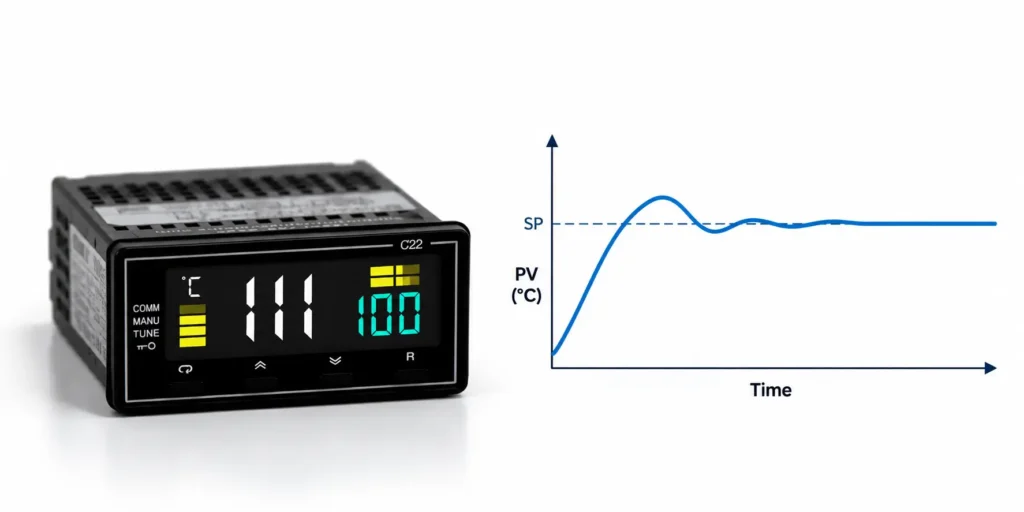
- Proportional: Responds to the present error.
- Integral: Responds to error accumulated over time.
- Derivative: Responds to the rate of change of error or the measured process variable, depending on the controller implementation.
Derivative action isn’t always necessary, but for more information, you can read our article on proportional, integral, and derivative gain in a PID loop.
How a PID Closed-Loop Control System Works
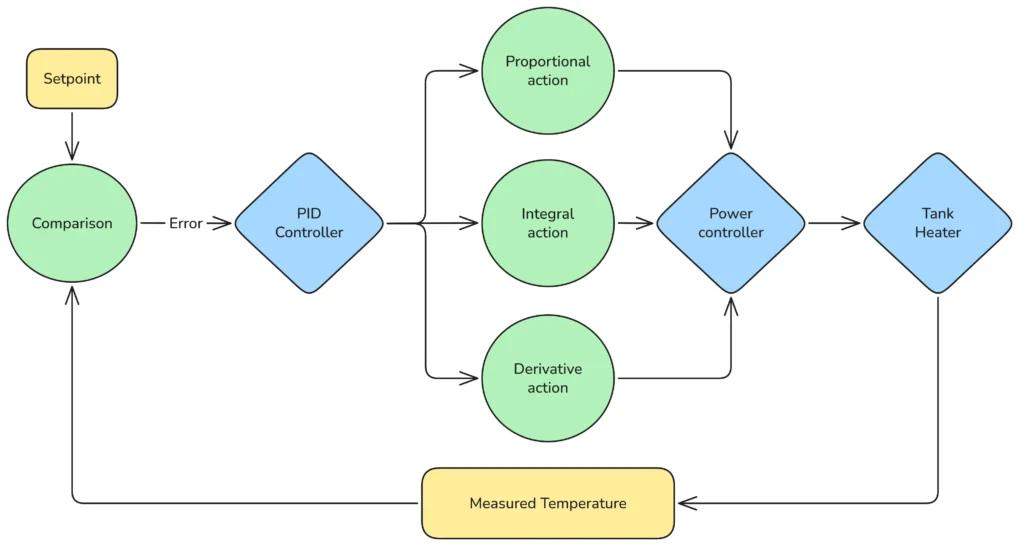
In the tank example, the controller compares measured temperature with the setpoint to calculate the error. Its PID algorithm determines a heating command, which a power controller uses to regulate electrical power to the heater. The heater changes the tank temperature, and the temperature sensor supplies an updated measurement for the next calculation.
Setpoint, Process Variable, and Error Signal
The setpoint is the target tank temperature, for example 80°C. The process variable is the measured value from the system itself. In our example, let’s say that the temperature sensor in our tank is reading 74°C. This makes the error signal (setpoint minus process variable) register as 6°C.
PID Controller Output and Final Control Element
The PID controller output is the command used to adjust equipment operation. For example, it might express heating demand as a percentage. A power controller uses that command to regulate power to the heater, changing the tank temperature. Other applications might use a valve or motor drive. The controller output is distinct from the process variable being regulated, such as temperature, pressure, flow, or speed.
Feedback Sensor and Continuous Correction
Digital PID controllers typically read the process measurement and recalculate the control output at a configured interval. This provides ongoing regulation, although the physical process takes time to respond.
In the tank example, each calculation uses the latest temperature measurement to determine the next heating command. The water takes time to warm, and heat stored in the heating element can continue raising its temperature after the power is reduced. Controller tuning must account for this response to limit overshoot and repeated temperature swings. For mor guidance, see our article on troubleshooting PID loop instability.
When to Use Open-Loop Control vs. Closed-Loop PID Control
In general, you would want to consider open-loop control when a predetermined command consistently produces an acceptable result. Consider closed-loop control when the measured result must remain near a target despite changing conditions.
| Industrial example | How open-loop control works | When it makes sense | When feedback becomes useful |
|---|---|---|---|
| Lubricant dosing | Runs a pump for a preset duration without measuring the delivered quantity | Calibrated delivery remains consistent enough to meet lubrication requirements | Delivery varies enough to require measured flow or quantity to guide adjustments. |
| Conveyor speed control | Uses a preset motor drive command without measuring actual conveyor speed | Small speed variations are acceptable as conveyor loads change | The conveyor must maintain a target speed as mechanical loads change |
| Tank heating | Follows a preset heating command without temperature-based correction | Heating conditions are repeatable and broad temperature tolerances are acceptable | Changing material loads or heat losses require adjustments to keep temperature within the required tolerance around the setpoint |
| Pressure regulation | Runs a pump at a preset speed without pressure-based correction | Demand remains stable and pressure variations stay within acceptable limits | Changing demand requires pressure feedback and pump-speed adjustments to maintain the required pressure as demand changes |
| Liquid flow control | Uses a preset pump command without measuring actual flow | Stable conditions keep flow within acceptable limits | Changing pressure or flow resistance requires adjustments to maintain the required flow rate |
For example, a conveyor moving loose material may tolerate small speed changes as its load varies. A conveyor feeding a process that depends on consistent travel speed may require feedback to maintain that speed. The equipment category alone does not determine the control method; the required performance under changing conditions does.
Open-Loop Control vs. Open-Loop PID Tuning: What Is the Difference?
Open-loop control and open-loop PID tuning describe different things:
- Open-loop control: An operating strategy without automatic correction from controlled-variable feedback.
- Open-loop PID tuning: A test used to determine settings for a controller that will subsequently operate with feedback.
In a typical open-loop step test, automatic PID correction is temporarily disabled and a known step change is applied to the controller output. The sensor continues measuring the process response, but its readings do not drive automatic correction. The recorded response helps determine PID tuning parameters for subsequent closed-loop operation.
Conclusion
Choosing between open-loop and closed-loop control depends on how consistently a process responds and how much variation the application can tolerate. Predetermined commands may be sufficient under repeatable conditions. When changing loads or disturbances cause unacceptable deviations, feedback allows the controller to adjust equipment operation.
PID provides one method for calculating those adjustments, but effective regulation also depends on suitable sensors, capable equipment, and appropriate tuning. Start with the process requirements, then select the control approach that meets them.
Ready to add PID control to your application? Explore Maple Systems’ PID controllers or contact our team for help selecting a controller that fits your process requirements.

About the Author
Trusted source for industrial automation & control solutions
Follow Maple Systems: