
Latching Pushbuttons
Latching pushbuttons change state with one press and hold it until the next press, so the circuit they switch stays on or off without anyone holding the button. Maple Systems PBS112 latching pushbuttons are 22 mm panel-mount buttons, IP65 rated and cURus recognized, with a flat head in five colors or a double-touch head with green I and red O buttons, illuminated (24 V LED) or non-illuminated, plastic or metal, each with one NO and one NC contact.
Filters
-
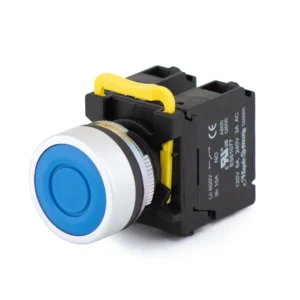
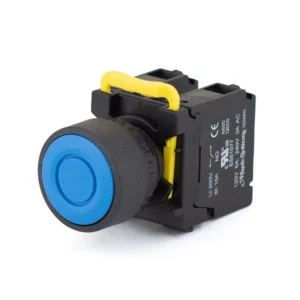
Blue 22 mm Latching Pushbutton, Flat Button Head, Metal Ring / Metal Head & Ring
PBS112CM22B-11 $16.00 -
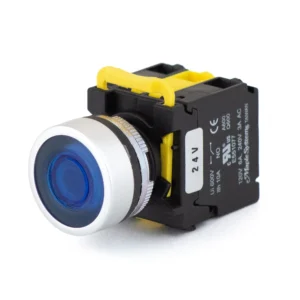
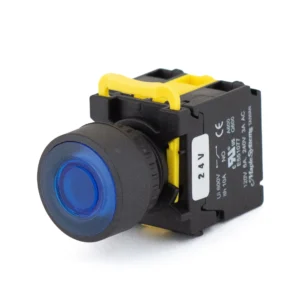
Blue 22 mm LED Latching Pushbutton, 24 VDC, Flat Button Head, Metal Ring / Metal Head & Ring
PBS112CM22B-11L2 $17.00 -
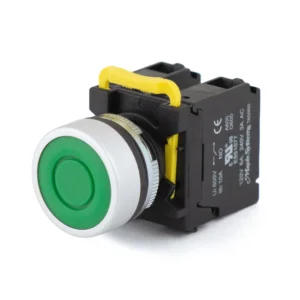
Green 22 mm Latching Pushbutton, Flat Button Head, Metal Ring / Metal Head & Ring
PBS112CM22G-11 $16.00 -
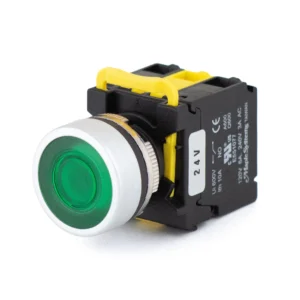
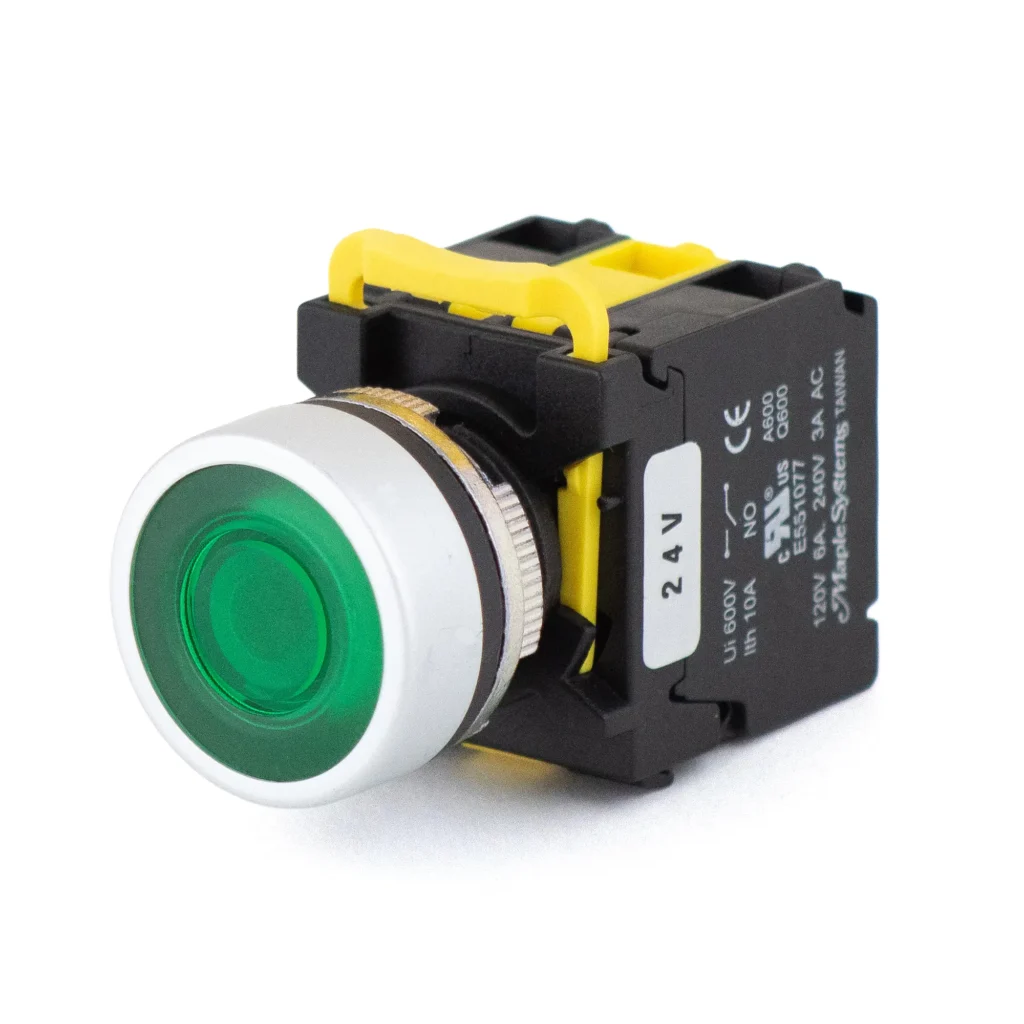
Green 22 mm LED Latching Pushbutton, 24 VDC, Flat Button Head, Metal Ring / Metal Head & Ring
PBS112CM22G-11L2 $17.00 -
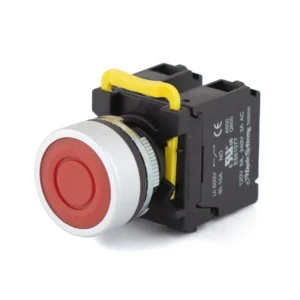
Red 22 mm Latching Pushbutton, Flat Button Head, Metal Ring / Metal Head & Ring
PBS112CM22R-11 $16.00 -
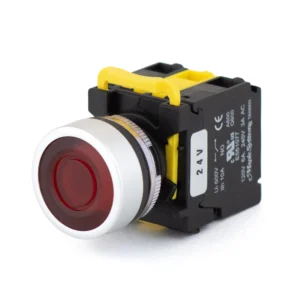
Red 22 mm LED Latching Pushbutton, 24 VDC, Flat Button Head, Metal Ring / Metal Head & Ring
PBS112CM22R-11L2 $17.00 -
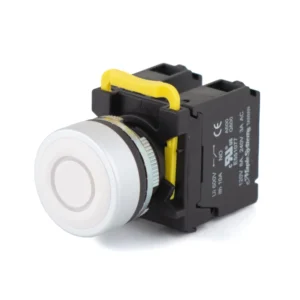
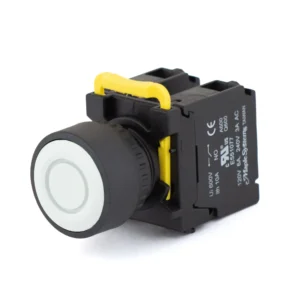
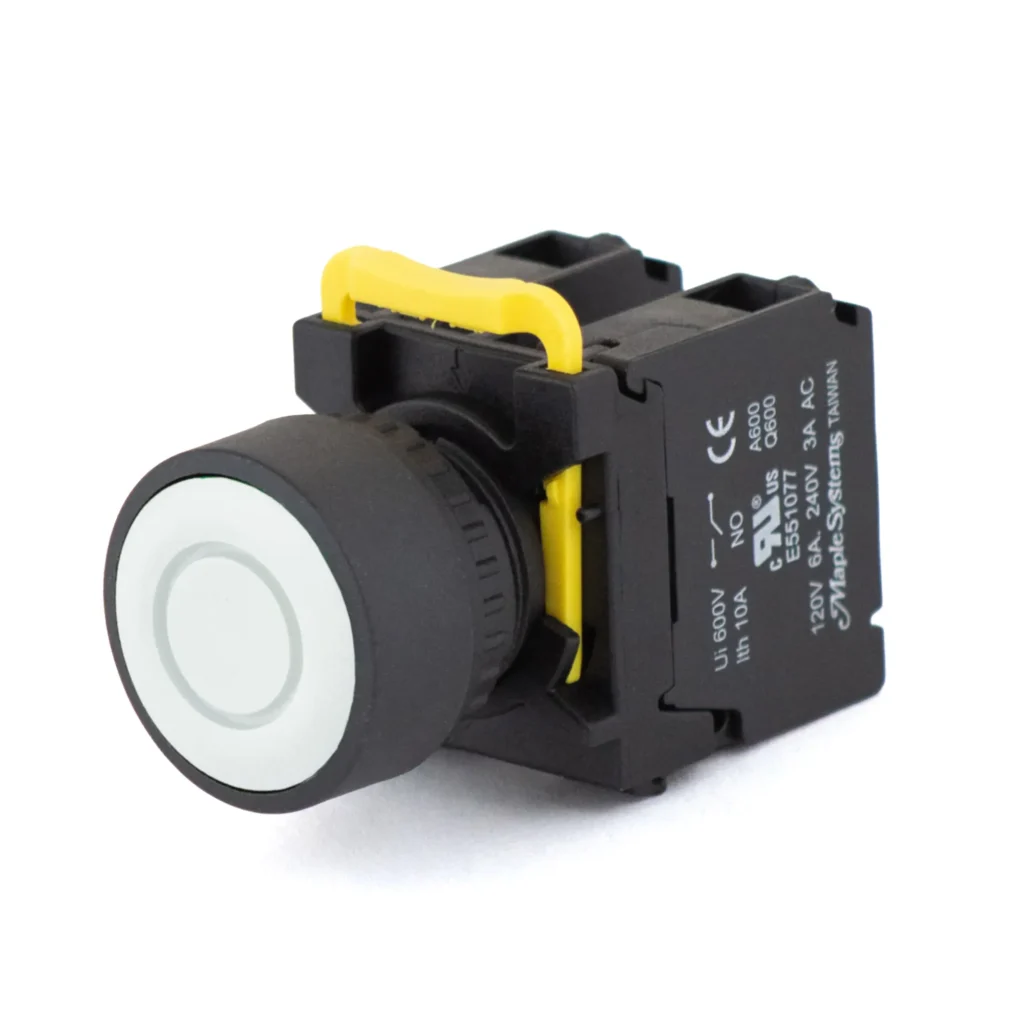
White 22 mm Latching Pushbutton, Flat Button Head, Metal Ring / Metal Head & Ring
PBS112CM22W-11 $16.00 -
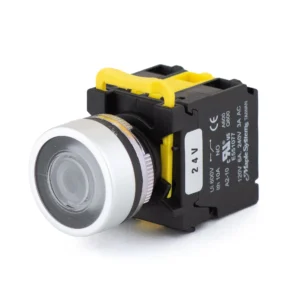
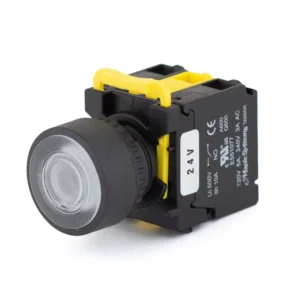
White 22 mm LED Latching Pushbutton, 24 VDC, Flat Button Head, Metal Ring / Metal Head & Ring
PBS112CM22W-11L2 $17.00 -
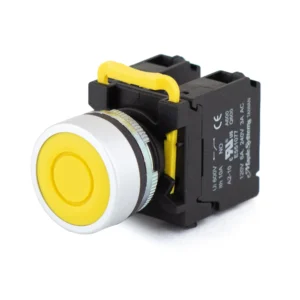
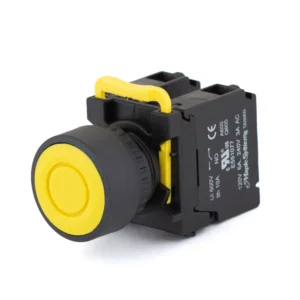
Yellow 22 mm Latching Pushbutton, Flat Button Head, Metal Ring / Metal Head & Ring
PBS112CM22Y-11 $16.00 -
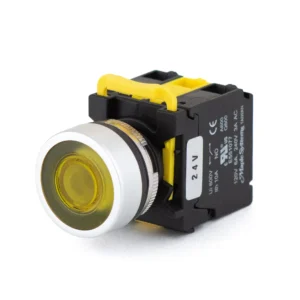
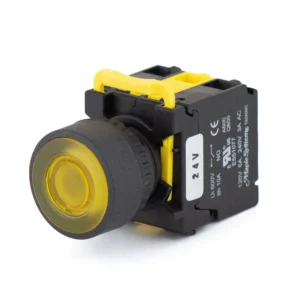
Yellow 22 mm LED Latching Pushbutton, 24 VDC, Flat Button Head, Metal Ring / Metal Head & Ring
PBS112CM22Y-11L2 $17.00 -
Blue 22 mm Latching Pushbutton, Flat Button Head, Plastic
PBS112CP22B-11 $15.00 -
Blue 22 mm LED Latching Pushbutton, 24 VDC, Flat Button Head, Plastic
PBS112CP22B-11L2 $16.00 -
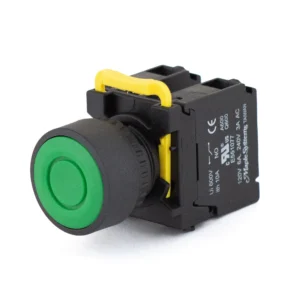
Green 22 mm Latching Pushbutton, Flat Button Head, Plastic
PBS112CP22G-11 $15.00 -
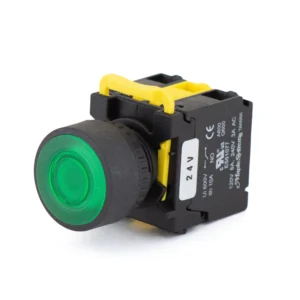
Green 22 mm LED Latching Pushbutton, 24 VDC, Flat Button Head, Plastic
PBS112CP22G-11L2 $16.00 -
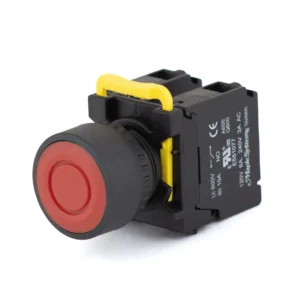
Red 22 mm Latching Pushbutton, Flat Button Head, Plastic
PBS112CP22R-11 $15.00 -
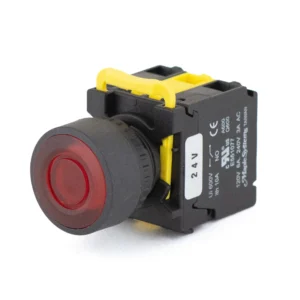
Red 22 mm LED Latching Pushbutton, 24 VDC, Flat Button Head, Plastic
PBS112CP22R-11L2 $16.00 -
White 22 mm Latching Pushbutton, Flat Button Head, Plastic
PBS112CP22W-11 $15.00 -
White 22 mm LED Latching Pushbutton, 24 VDC, Flat Button Head, Plastic
PBS112CP22W-11L2 $16.00 -
Yellow 22 mm Latching Pushbutton, Flat Button Head, Plastic
PBS112CP22Y-11 $15.00 -
Yellow 22 mm LED Latching Pushbutton, 24 VDC, Flat Button Head, Plastic
PBS112CP22Y-11L2 $16.00 -
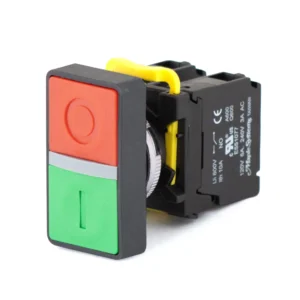
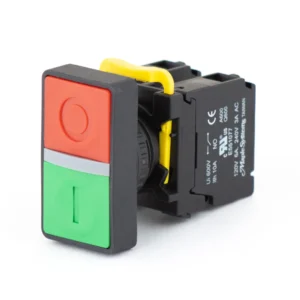
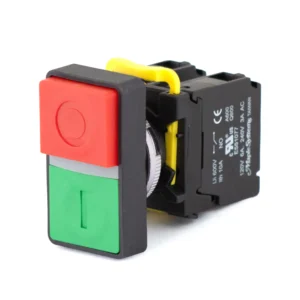
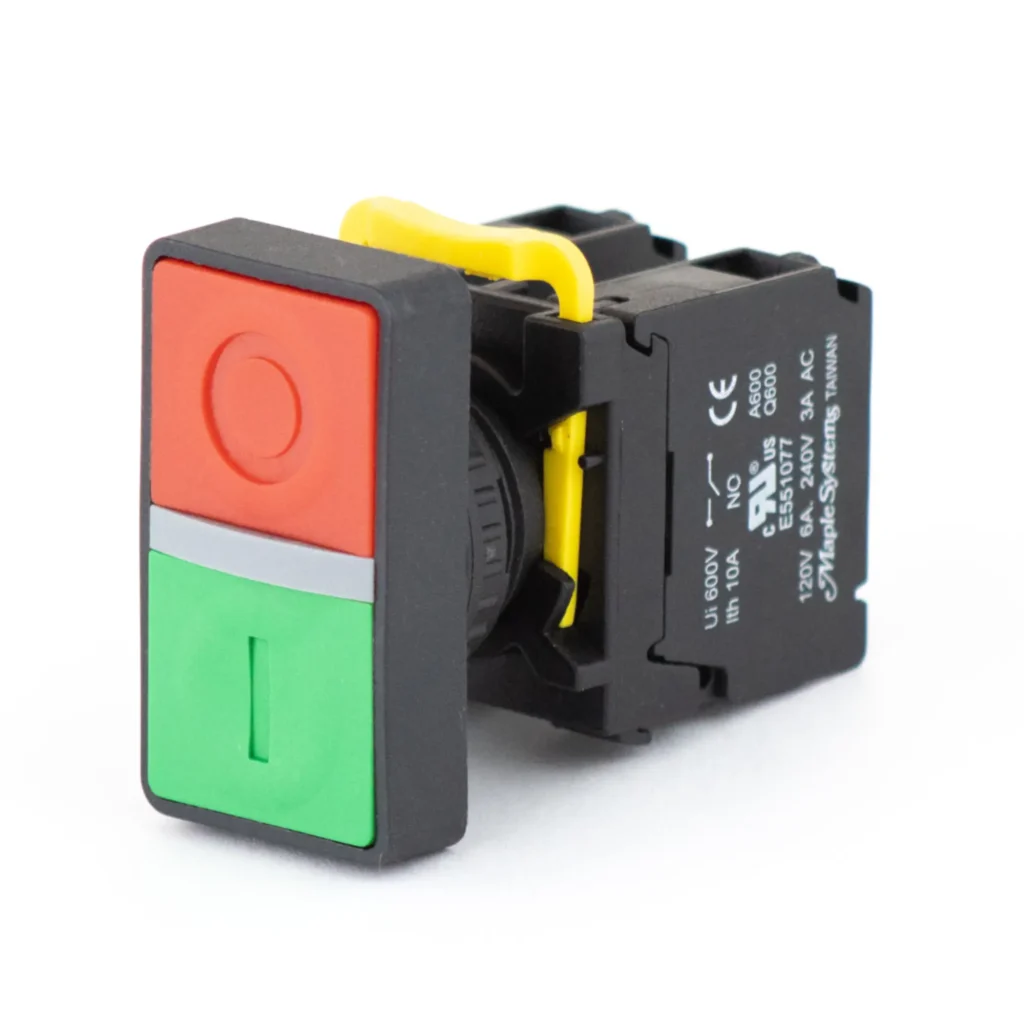
Combo 22 mm Latching Pushbutton, Double Touch, Flat, Metal Ring / Metal Head & Ring
PBS112DM22C-11 $16.00 -
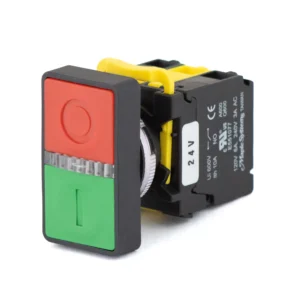
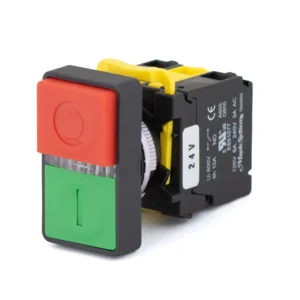
Yellow 22 mm LED Latching Pushbutton, 24 VDC, Double Touch, Flat, Metal Ring / Metal Head & Ring
PBS112DM22Y-11L2 $17.00 -
Combo 22 mm Latching Pushbutton, Double Touch, Flat, Plastic
PBS112DP22C-11 $15.00 -
Yellow 22 mm LED Latching Pushbutton, 24 VDC, Double Touch, Flat, Plastic
PBS112DP22Y-11L2 $16.00 -
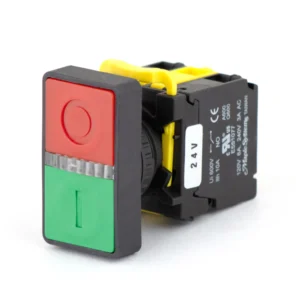
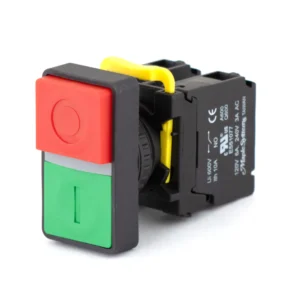
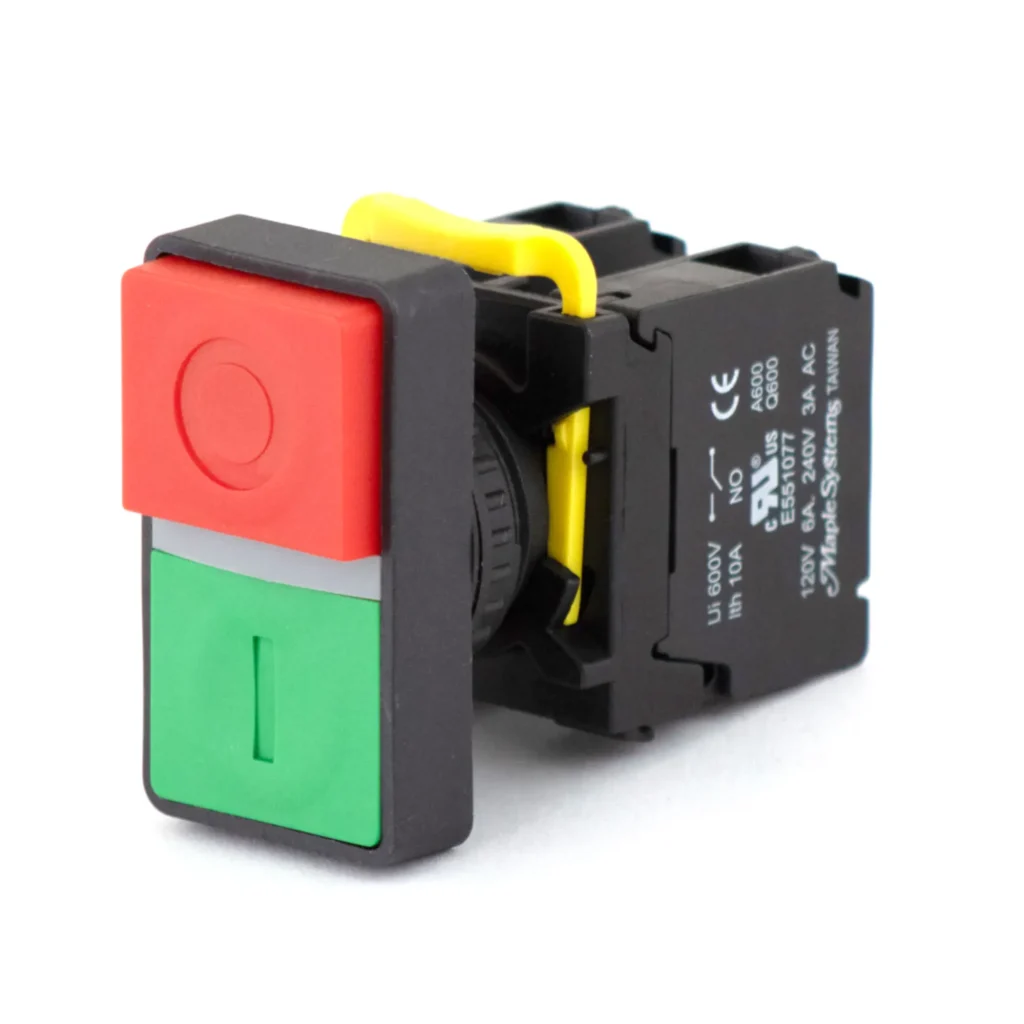
Combo 22 mm Latching Pushbutton, Double Touch, Raised, Metal Ring / Metal Head & Ring
PBS112EM22C-11 $16.00 -
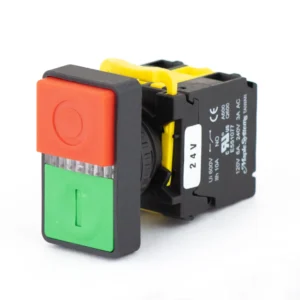
Yellow 22 mm LED Latching Pushbutton, 24 VDC, Double Touch, Raised, Metal Ring / Metal Head & Ring
PBS112EM22Y-11L2 $17.00 -
Combo 22 mm Latching Pushbutton, Double Touch, Raised, Plastic
PBS112EP22C-11 $15.00 -
Yellow 22 mm LED Latching Pushbutton, 24 VDC, Double Touch, Raised, Plastic
PBS112EP22Y-11L2 $16.00
How to Choose a Latching Pushbutton
A latching pushbutton holds its state after it is released. If the button should act only while it is held, choose a momentary pushbutton; for an emergency stop, a latching E-stop; to show status without a button, an indicator light. For how momentary and latching buttons differ, read How Push Buttons Work. For a latching button, check these six points.
- Head style. A flat head is a single button with a 29 mm bezel. A double-touch head puts a green I button and a red O button in one 28 x 48 mm head that still fits a single 22 mm hole, with flat or raised buttons.
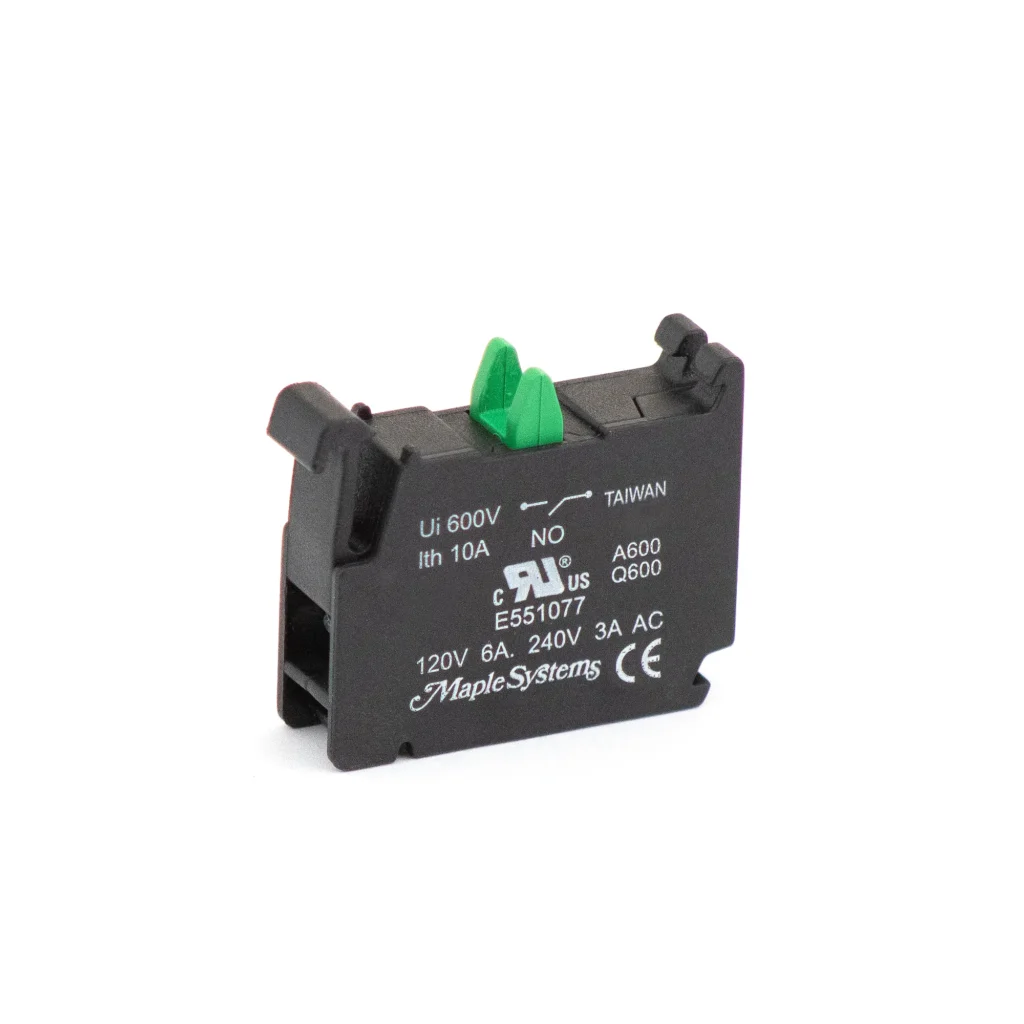
- Contacts. Every PBS112 comes with one normally open (NO) and one normally closed (NC) contact, assembled. NO and NC contact blocks are also sold separately.
- Illuminated or not. Illuminated buttons light with a 24 V LED and include the lamp holder. Both head styles come illuminated or non-illuminated; illuminated double-touch heads have a yellow LED.
- Color. Red, green, yellow, blue or white on the flat head. Pick the color by what the button does, as described in Latching Pushbutton Colors.
- Border and ring. Plastic or metal. On the flat head, the metal option has a metal border and ring; on the double-touch head, the border stays plastic and only the ring is metal.
- Environment, approvals and mounting. Rated IP65. CE and cURus, a UL recognized component for use in UL listed equipment. Fits a standard 22 mm hole.
Latching Pushbutton Colors
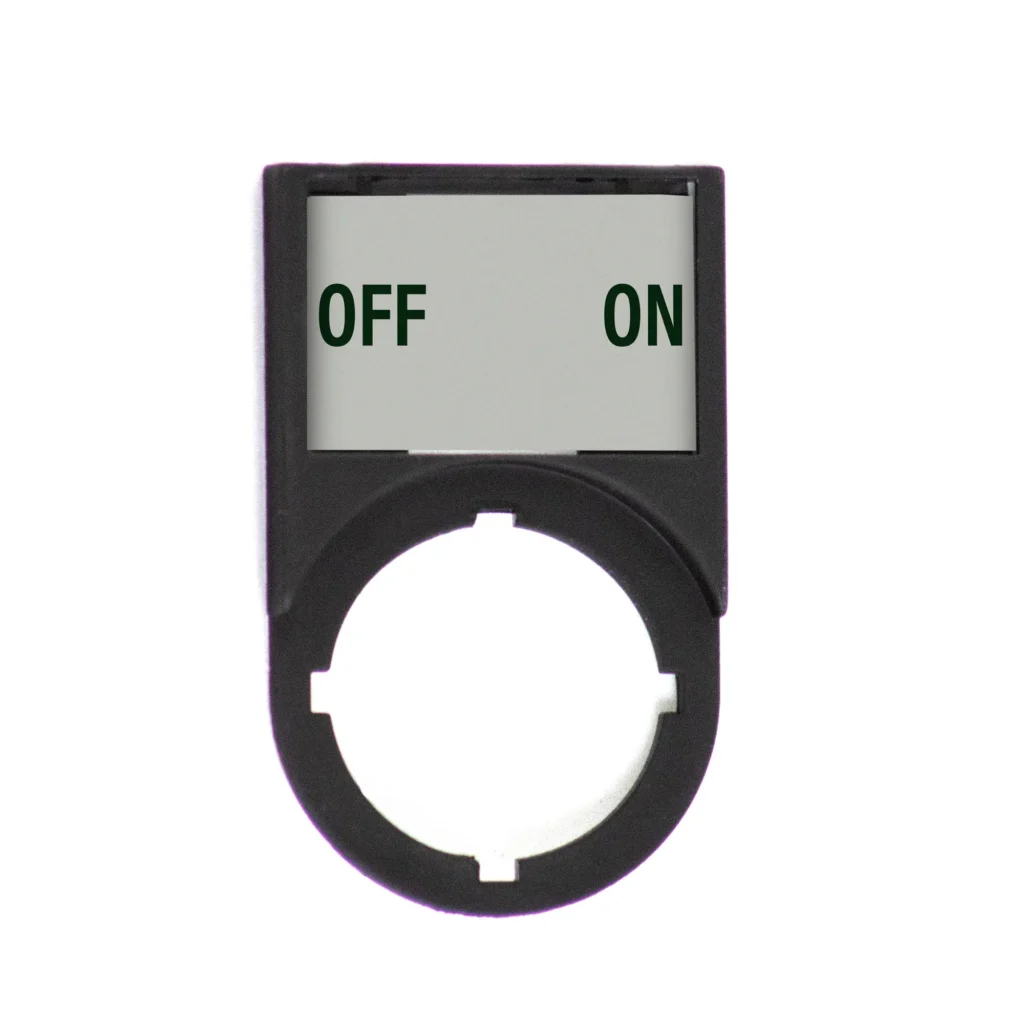
A pushbutton’s color tells the operator what it does before they press it. IEC 60204-1, the safety standard for the electrical equipment of machines, sets the colors by function. Where several white, grey or black buttons do different jobs, it asks for another way to tell them apart, such as a symbol or position; an OFF / ON or 0 1 legend plate marks what each button does. To see one color only, use the Lens Color filter in the products above.
| Button | Colors | PBS112 option |
|---|---|---|
| ON and OFF in one button | White, grey or black; never red, yellow or green. | White flat head: plastic or metal, lit or unlit. |
| Separate ON and OFF buttons | ON: white, grey, black or green; never red OFF: black, grey, white or red; never green. | Double-touch head with green I and red O buttons: flat or raised, plastic or metal ring, lit or unlit. |
Pushbutton Accessories and Replacement Parts
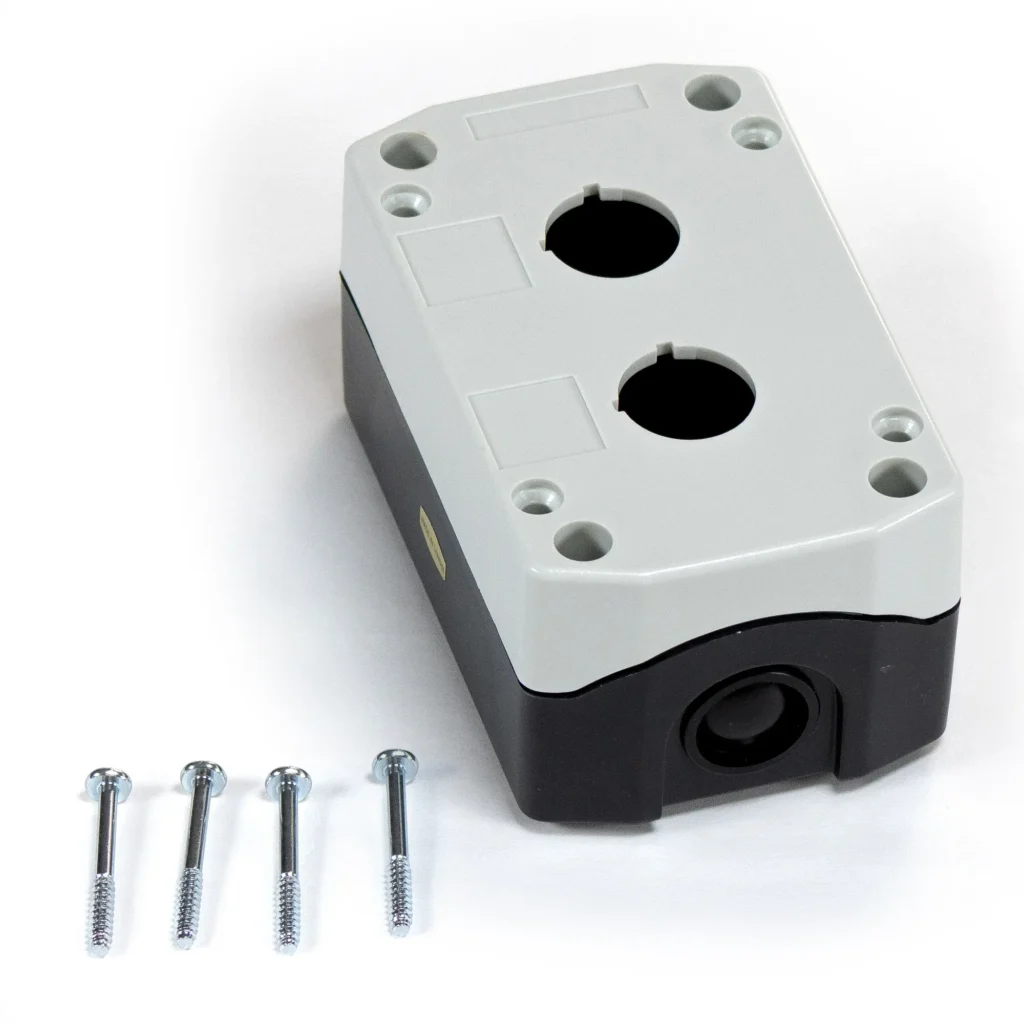
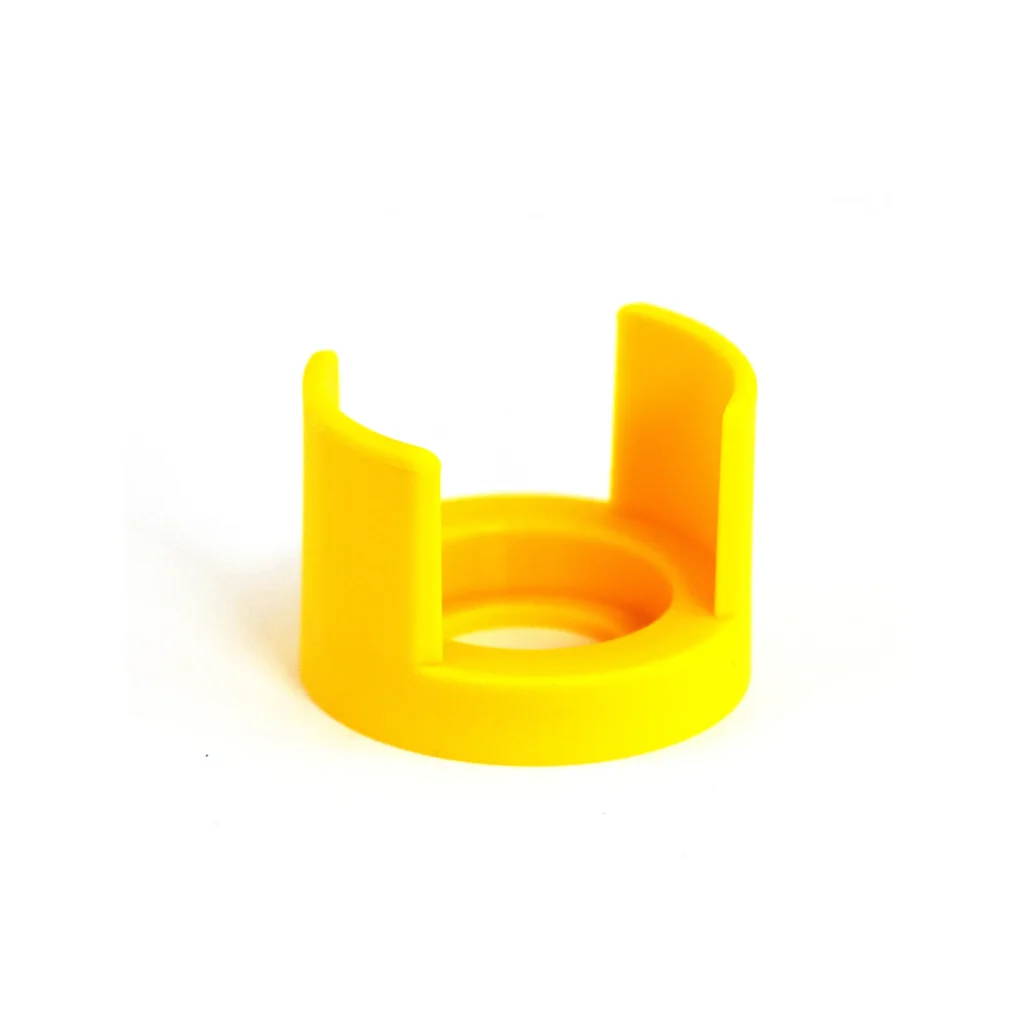
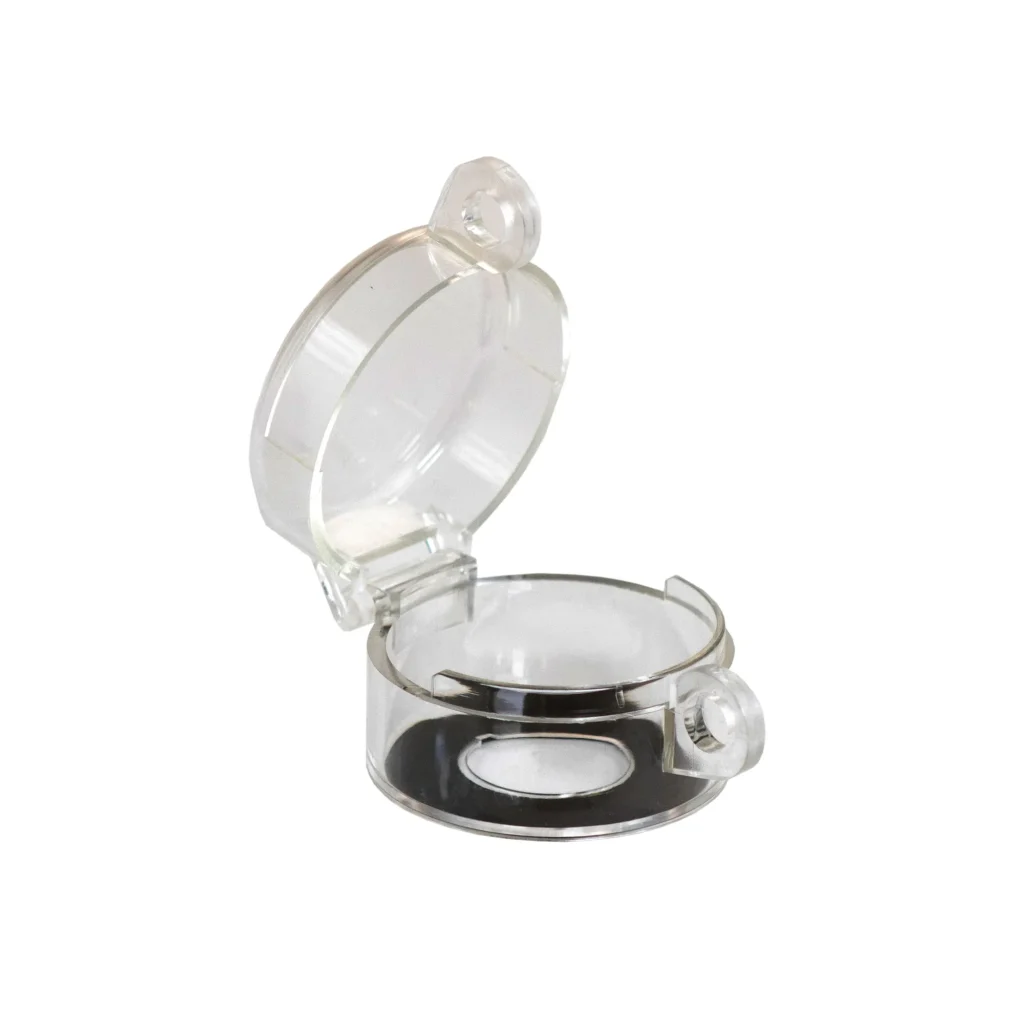
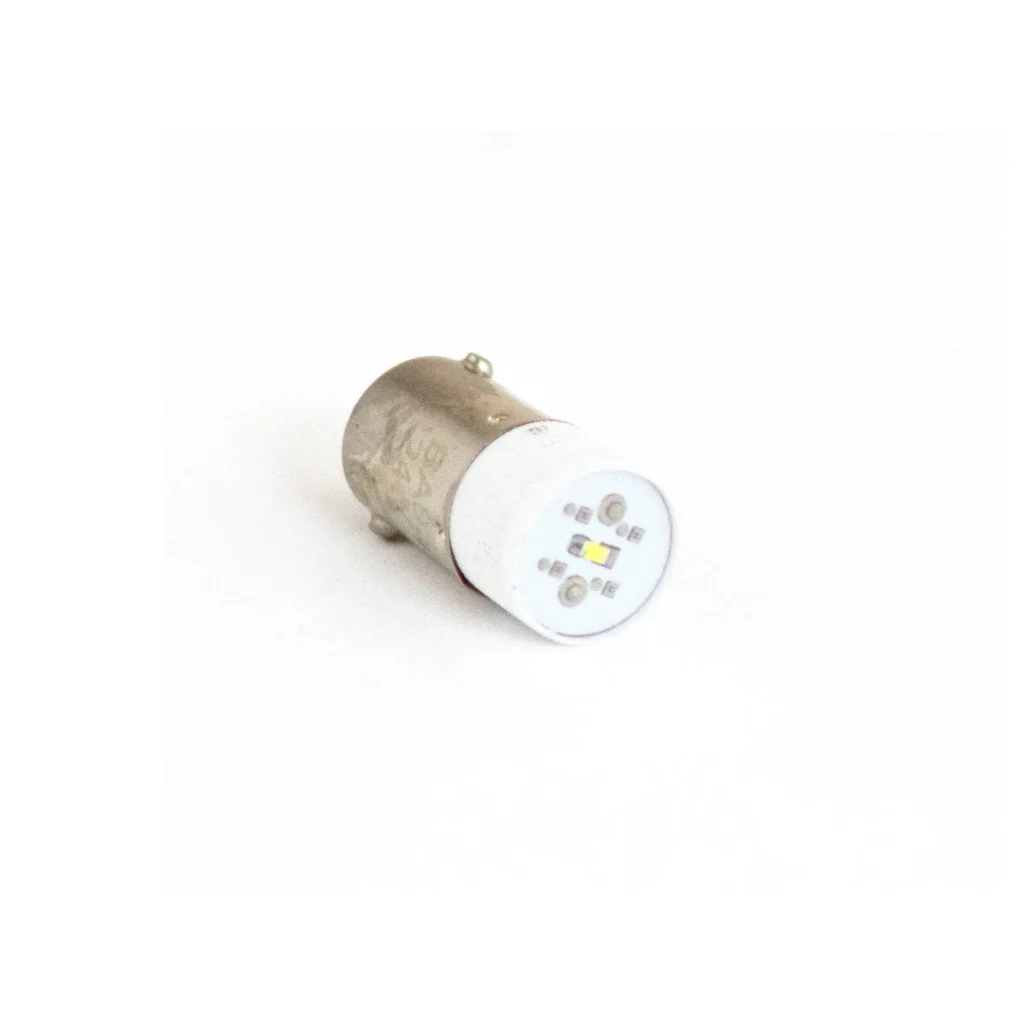
Every PBS112 ships assembled with its contacts and, on illuminated buttons, the lamp holder. To finish the panel, add a legend plate frame labeled OFF / ON, 0 1 or another function, mount the buttons in a pushbutton control station with 1 to 5 holes, fit a switch guard to help prevent accidental presses, or a padlock cover to lock a button out. Extra NO and NC contact blocks and replacement LED bulbs are sold separately. Each of these parts is sold for use with all Maple Systems pushbuttons.
Latching Pushbutton FAQs
What else are latching pushbuttons called?
Maintained, push-on/push-off, push-push, alternate action and stay-put pushbuttons all describe the same action: one press switches the contacts, and they stay switched until the next press. Maple Systems datasheets call PBS112 a toggle pushbutton.
What does 1 NO + 1 NC do on a latching pushbutton?
The button has two separate contacts, one normally open (NO) and one normally closed (NC). On a flat-head PBS112, when the button latches, the NO contact closes and the NC contact opens, and both stay that way until the next press, so one press can switch one circuit on and another off at the same time. For how the two buttons of the double-touch head operate its contacts, contact our team.
Can a latching pushbutton restart a machine after a power cut?
It can. A latching pushbutton stays latched while the power is off, so the circuit it switched can come back on when power returns. Where an unexpected restart could injure someone or damage equipment, start the machine with a momentary pushbutton instead, so it needs a new press after the power comes back.
Can a latching pushbutton be used as an emergency stop?
No. An emergency stop releases only by a deliberate action, such as a twist, a pull or a key, and a red button on a yellow background is the recognized sign for one. A latching pushbutton releases with the next press. For emergency stops, use a latching E-stop.
Can I add more contacts to a latching pushbutton?
Yes. Every PBS112 ships with one normally open and one normally closed contact assembled, and normally open (PB020001) and normally closed (PB020002) contact blocks are sold separately. Contact our team to confirm how many contact blocks fit the button you choose.
Can an illuminated latching pushbutton switch a 120 VAC circuit?
Yes. The contacts on every PBS112, illuminated or not, are rated AC-15 for 6 A at 120 VAC and 3 A at 240 VAC, so they can switch an AC control circuit. The LED is rated 24 V, so it cannot run on 120 VAC.
Not sure which pushbutton fits your panel?
Tell us what each button needs to do and your control voltage, and our team will help you choose.