
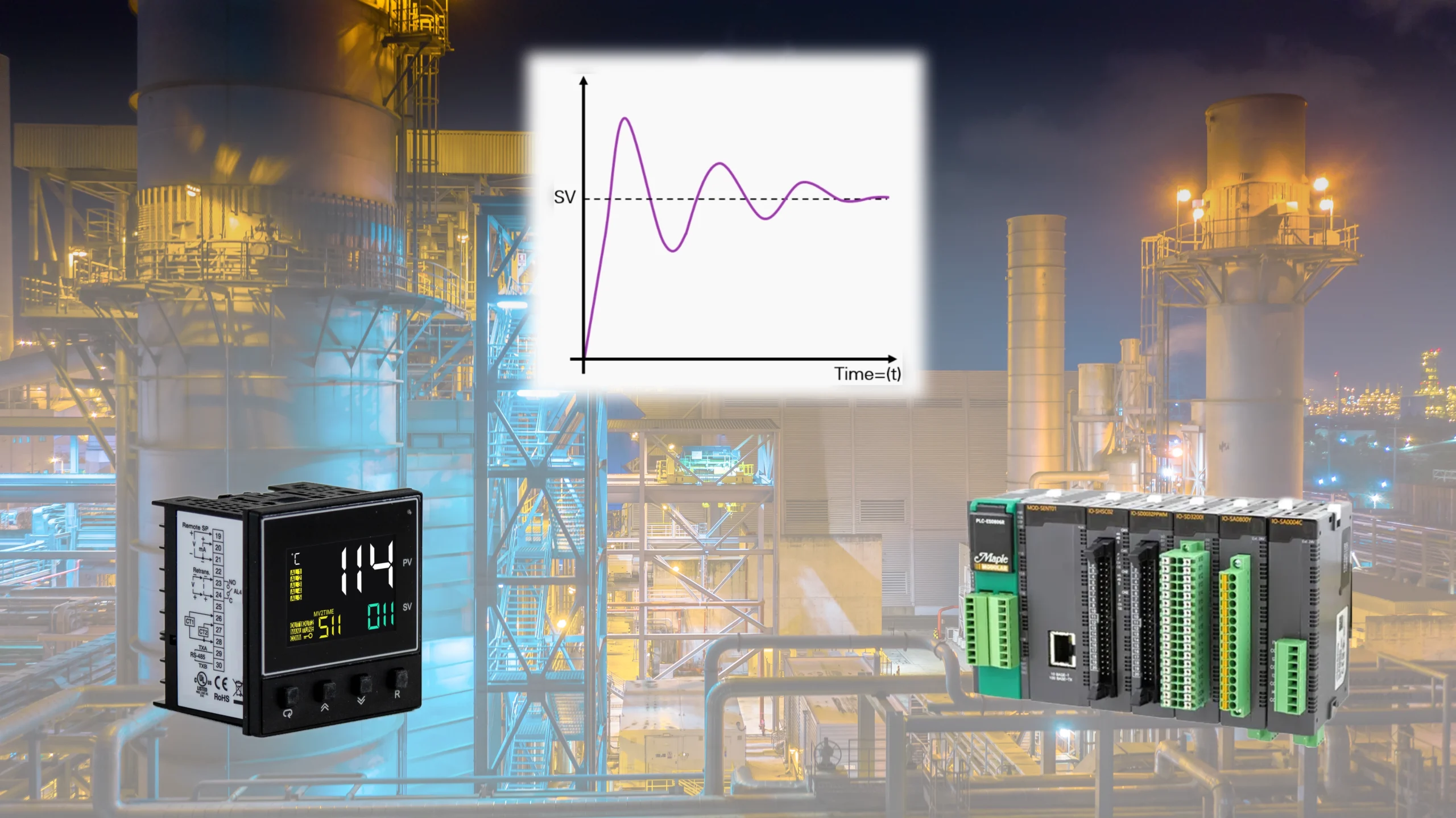
Imagine managing a heated liquid tank that uses PID control to maintain temperature. Should a dedicated controller handle the temperature locally, or should a PLC execute the PID calculation alongside filling, mixing, and draining logic?
PID control in PLC systems combines process regulation with machine logic. A standalone PID controller executes the loop in a dedicated device. This article compares their integration, configuration, and maintenance requirements to help you choose an architecture that fits your application.
What Is a PLC-Based PID Loop?
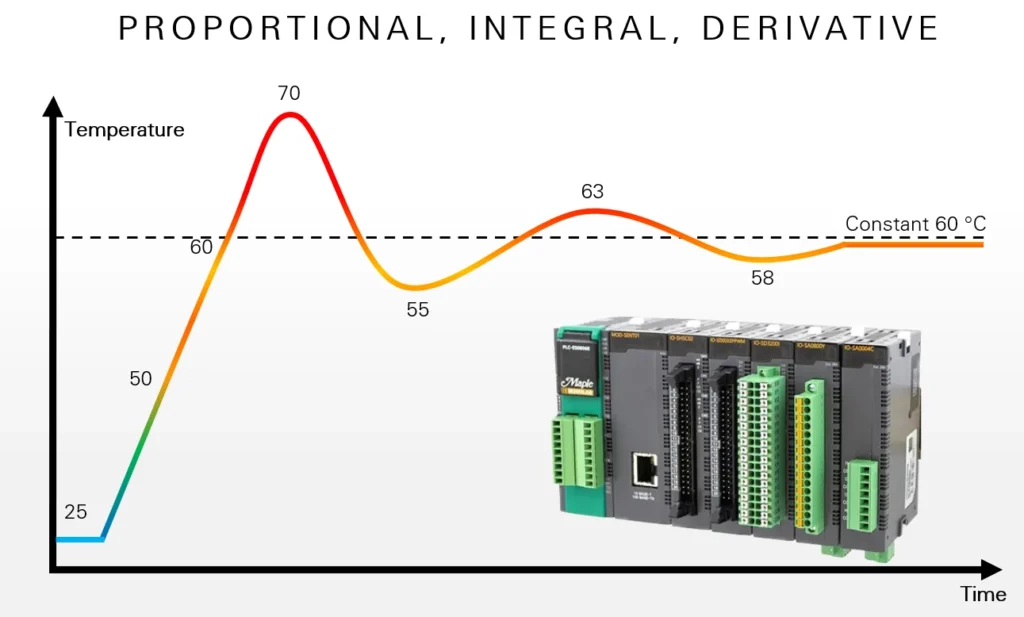
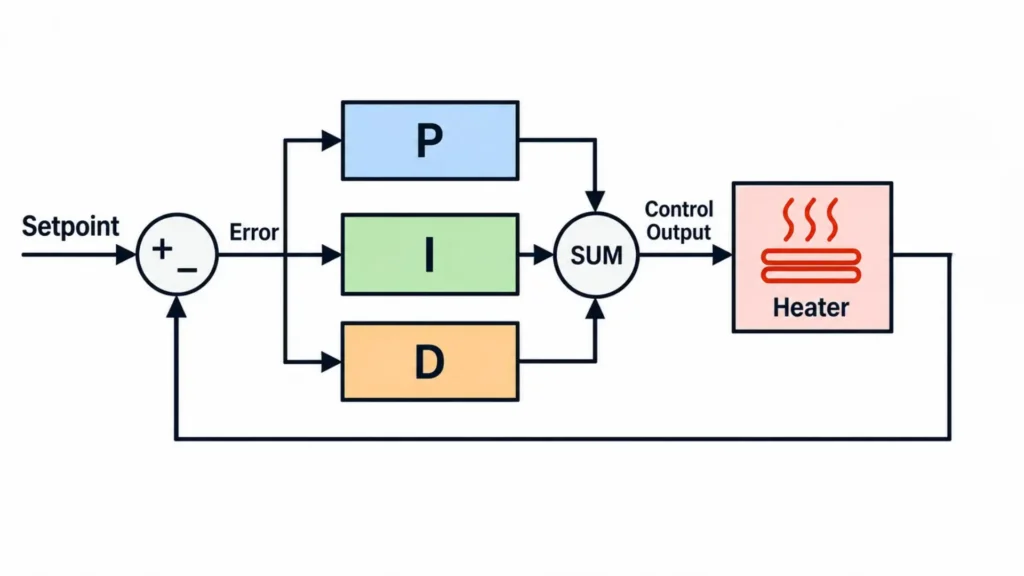
A PLC-based PID loop uses an instruction or function block within the PLC program to calculate the control output. The PLC receives the process measurement through its input interface and sends the calculated command through an output interface. The sensor, actuator, and physical process complete the feedback loop outside the program.
How PID Control Runs Inside a PLC
For a heated tank, the control sequence looks like this:
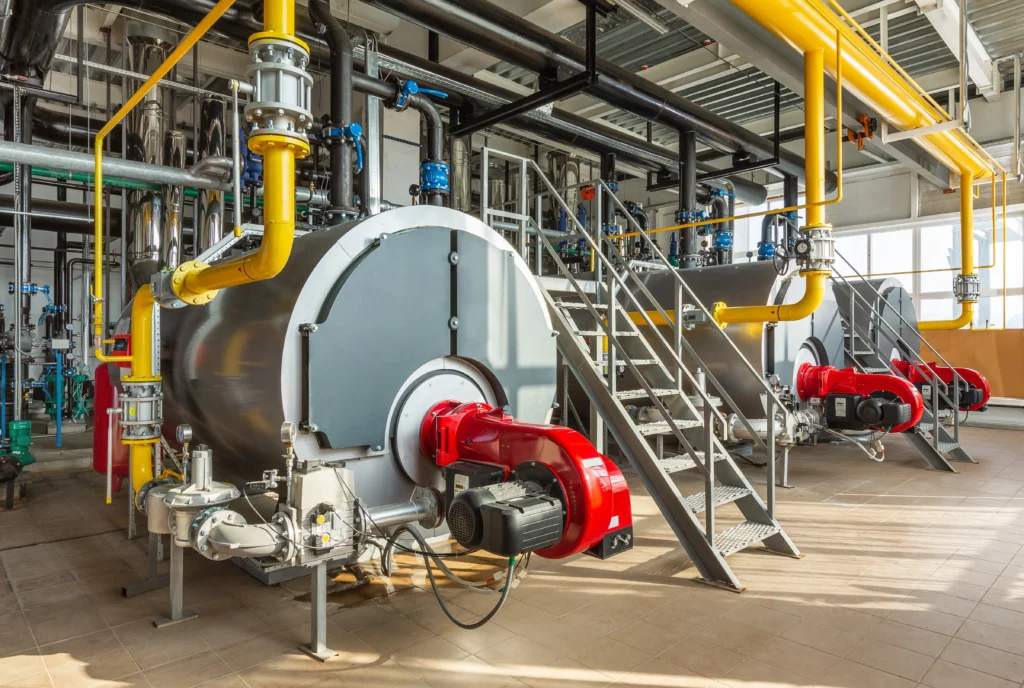
- A temperature sensor supplies a measurement through a suitable input interface.
- The PLC compares that measurement with the setpoint.
- The PID instruction calculates the required output.
- An output interface sends the command to equipment that adjusts heat.
- The PLC repeats the PID calculation at the configured control interval using the latest available measurement.
Engineers must scale the measurement correctly, set appropriate output limits, and configure the PID update interval according to the platform’s requirements. Input filtering, I/O update rates, and task scheduling also affect how quickly the loop responds. For a platform-specific example, see Maple Systems’ technical note on PID loop configuration in MAPware-7000.
Advantages of PLC-Based PID Control
Integrating PID control with the surrounding PLC logic provides several benefits:
- Sequencing: Change the operating modes as a batch moves between stages.
- Recipes: Load the appropriate setpoints with other production settings.
- Diagnostics: Present loop information alongside machine status.
- Coordination: Use process conditions to determine when the next operation can begin.
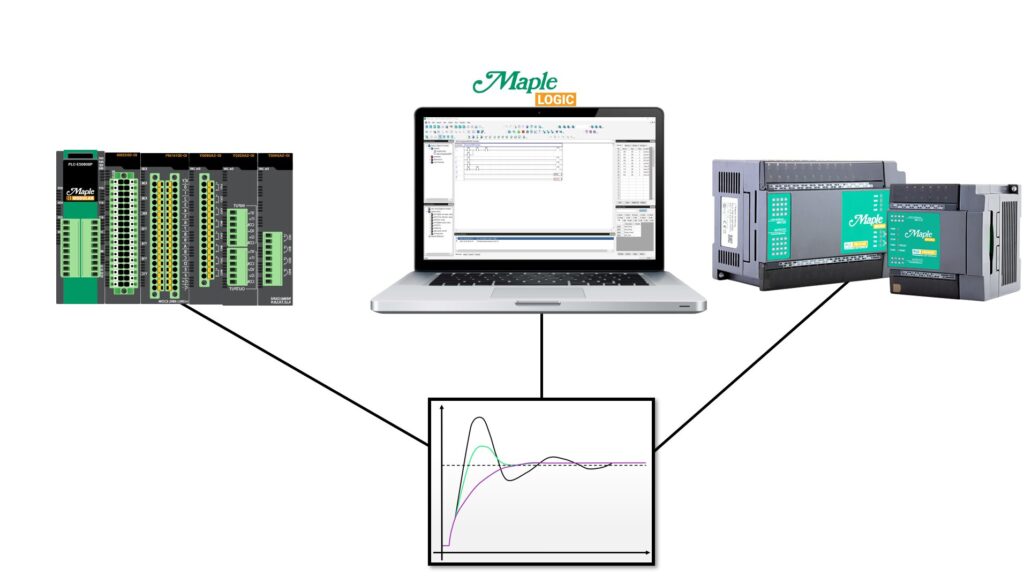
Integration lets the PLC use process measurements and loop status in the surrounding machine logic. An HMI can also provide setpoint entry, trends, alarms, and data logging when the selected hardware and software support those functions. Engineers must configure these features within the control application.
Limitations of PLC-Based PID Control
PLC-based PID control requires engineers to select compatible I/O, scale measurements, configure the PID instruction, and test its interaction with the surrounding machine logic. The PID update interval must follow the platform’s requirements and suit the process response. Clear documentation helps maintenance personnel make future adjustments.
The loop also depends on the PLC, its program, and the associated I/O. A fault or configuration change affecting these components may interrupt control. Engineers should define the required output behavior for relevant fault conditions. For a simple, isolated loop, this integration effort may outweigh the benefits.
What Is a Standalone PID Controller?
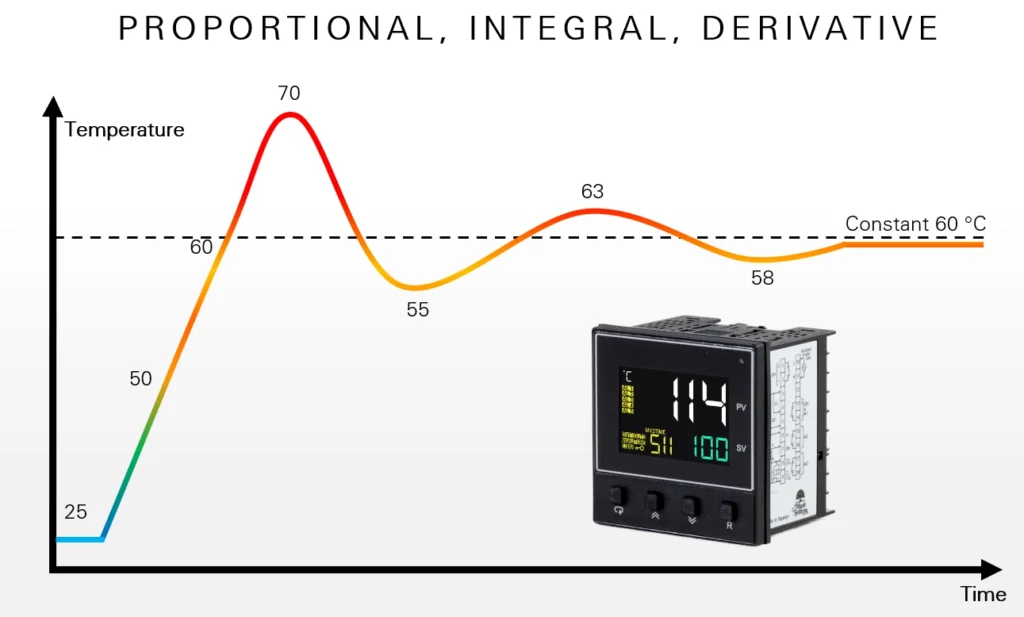
A standalone PID controller is a dedicated device that performs process control without requiring a general-purpose PLC to execute its PID calculation. Standalone operation does not prevent communication with other equipment. For example, Maple Systems’ standalone PID controllers support integration with external equipment through Modbus RTU.
How a Dedicated PID Controller Works
For the same heated tank, a single-loop standalone controller follows these steps:
- A temperature sensor supplies a measurement through a suitable input interface.
- The controller compares that measurement with the setpoint.
- The controller then calculates the required output.
- An output interface sends the command to equipment that adjusts heat.
- The controller repeats the calculation at its control update interval using the latest available measurement.
The controller’s input must match the sensor signal, and its output must suit the connected control equipment. For an electric heater, the controller may command an external solid-state relay, contactor, or power controller. Check the selected model’s output type and electrical rating to determine the required interface.
Advantages of Standalone PID Controllers
A panel-mounted standalone PID controller gives operators local access to the process value, setpoint, and permitted control settings. Engineers can add a focused control function to existing equipment without developing a larger PLC application. The device executes its PID calculation independently, although continued operation during a PLC fault depends on its power supply, control signals, and system configuration.
Limitations of Standalone PID Controllers
Each dedicated controller needs its own configuration, wiring, and maintenance records. Compared with adding a loop to a suitably equipped PLC, separate controllers may require additional panel space and hardware. When they must exchange data with a PLC or HMI, engineers also need to configure and maintain those communication links.
Coordinating recipes, centralized alarms, and machine sequences across separate devices can add integration work, particularly when several controllers must exchange operating data.
PLC-Based PID vs. Standalone PID Controllers: Key Differences
Both approaches use PID control to regulate a process, but they differ in how the control loop fits into the larger system. The table below compares their configuration, I/O, integration, and maintenance requirements to help you choose an approach that fits your application.
| Comparison factor | PLC-based PID | Standalone PID controller |
|---|---|---|
| Control architecture | PID executes within the PLC program | PID executes within a dedicated device |
| Typical loop scope | Loops integrated with machine or process logic | Localized control; capacity depends on the device |
| I/O | Selected through the PLC architecture | Selected through the controller’s available interfaces |
| Programming/configuration | PID setup plus surrounding application logic | Device parameters and supported control functions |
| HMI and data integration | Developed within the wider automation system | Local interface and external integration vary by model |
| Communications | Depend on PLC hardware and configuration | Depend on controller hardware and supported protocols |
| Maintenance | PLC project, I/O, and tuning documentation | Device configuration backups and replacement settings |
| Best-fit applications | Closely coordinated machine operations | Focused local control and suitable retrofits |
Compare total installed cost rather than controller price alone. Adding a PID loop to an existing PLC may require little additional hardware when suitable I/O is available. A dedicated controller may reduce programming effort for an isolated loop. Include hardware, wiring, commissioning, and maintenance in either comparison.
When Should You Use PLC-Based PID Control?
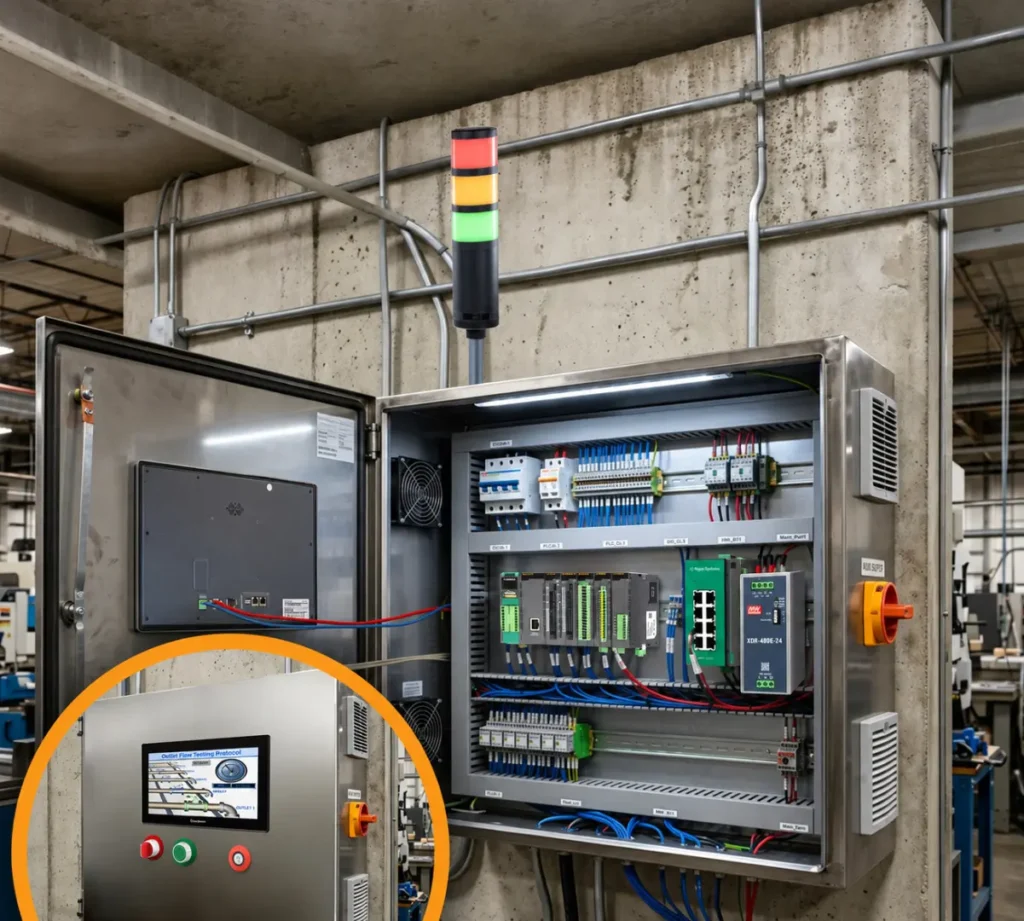
PLC-based PID control is a strong fit when process regulation must coordinate closely with machine logic. For example, a batch mixing system may need to fill a tank, start an agitator, heat the contents, and maintain temperature before draining. Running the PID loop within the PLC allows the program to manage temperature control alongside these operating stages.
This approach also suits applications that use recipes or centralized operator control. A recipe can supply the temperature setpoint along with mixing speed and hold time, while the operator interface brings related settings and process information together. The deciding factor is how much coordination the loop requires: even a single loop may fit naturally within a PLC that already manages the surrounding equipment.
When Should You Use a Standalone PID Controller?
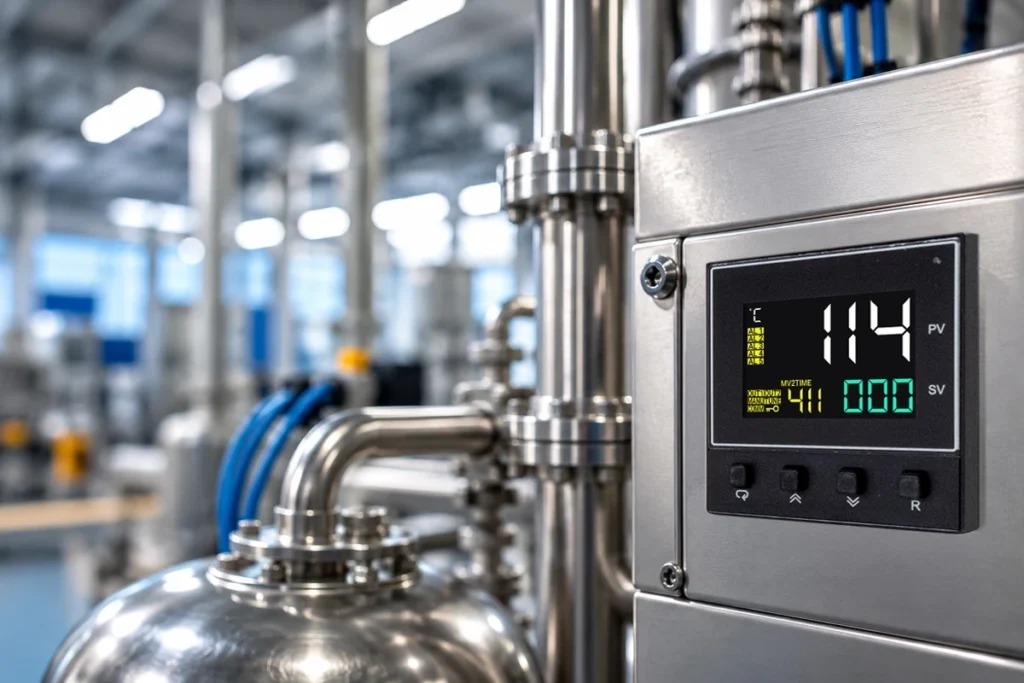
A standalone PID controller is a strong fit for a localized process with a clear control objective and limited coordination requirements. For example, a heating station may simply need to maintain an operator-selected temperature. A dedicated controller gives the operator a local display and setpoint adjustment while handling the temperature loop within the device.
Standalone controllers can also suit equipment retrofits. When an existing heater or oven needs updated control, a compatible replacement may retain the sensor, power control equipment, and familiar operating arrangement. Engineers should confirm the required inputs, outputs, and control functions before selecting the device. Several independent stations may each use dedicated controllers when their loops require little interaction.
Can a PLC and Standalone PID Controller Be Used Together?
Yes. A standalone controller can execute the PID loop while a PLC supervises setpoints, operating sequences, and process data.
Consider a heated mixing tank. At the start of a batch, the PLC sends the recipe’s temperature setpoint to the dedicated controller. That controller reads the temperature sensor and adjusts the heating output. Meanwhile, the PLC manages filling and agitation, monitors the reported temperature, and determines when the batch meets the conditions needed to advance to the next stage.
A hybrid system can also run separate PID loops in both devices. For example, the dedicated controller could regulate tank temperature while a PLC-based PID loop controls incoming liquid flow through a pump or valve. The PLC would coordinate the operating sequence, while each device executes its assigned loop. Engineers must account for how changes in flow affect temperature when configuring and tuning the system.
This arrangement can help integrate equipment that already has dedicated temperature control into a larger automated system. The PLC can collect process values and alarm status through a supported communication interface without taking over the PID calculation. Engineers should define whether local controls or PLC commands take priority when changing setpoints and operating modes. They should also verify the selected controller’s communication-loss behavior and determine whether additional logic or wiring is needed to achieve the required response.
How to Choose Between PLC-Based and Standalone PID Control
Use the following checklist to choose a control architecture:
- Loop interaction: Closely coordinated loops favor integration; independent loops may suit dedicated controllers.
- I/O compatibility: Confirm sensor inputs and output interfaces for either approach.
- Sequencing and recipes: Determine how often machine logic must change setpoints or operating modes.
- Operator access: Decide which settings belong locally and which need a centralized interface.
- Communications: Identify the values, commands, and alarm information that must move between devices.
- Maintenance: Match the architecture to available programming skills, documentation, and spare equipment.
- Expansion and cost: Consider future loops and the complete installed effort.
For the heated tank introduced earlier, the choice depends on how temperature control must interact with filling, mixing, and draining. Match the architecture to those operating requirements, the available hardware, and the team that will maintain it. Explore Maple Systems’ PID controllers for dedicated process control, or review our PLC-based heater control tutorial to plan an integrated control solution.

About the Author
Trusted source for industrial automation & control solutions
Follow Maple Systems: