
DIN Rail Power Supplies
Maple Systems DIN rail power supplies convert AC line voltage into clean, regulated DC for the PLCs, HMIs, I/O, sensors, relays and valves in your control panel. The range runs from 40W to 960W with 12V, 24V and 48V outputs, on single-phase input (up to 277VAC circuits on High-end models) or 3-phase 320 to 600VAC. Choose High-end Ultra Slim models for 200% peak power, -40°C to +85°C operation and Class I, Division 2 approval, or an Economical family when the job calls for a dependable industrial power supply at a lower cost. Every model is fanless and protected against short circuit, overload and over-voltage.
Products
Results
-
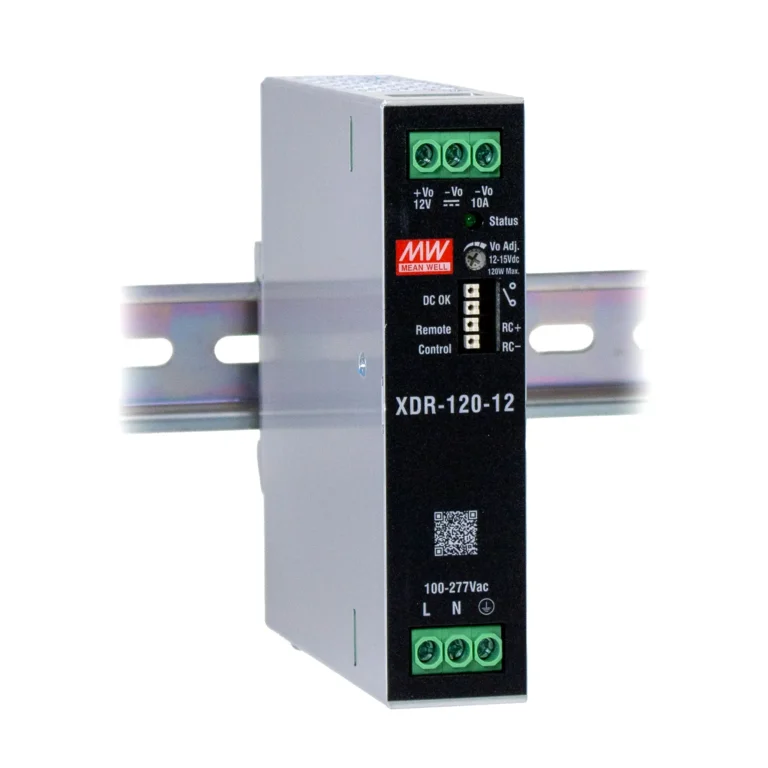 $85.00Quantity Discounts Available
-
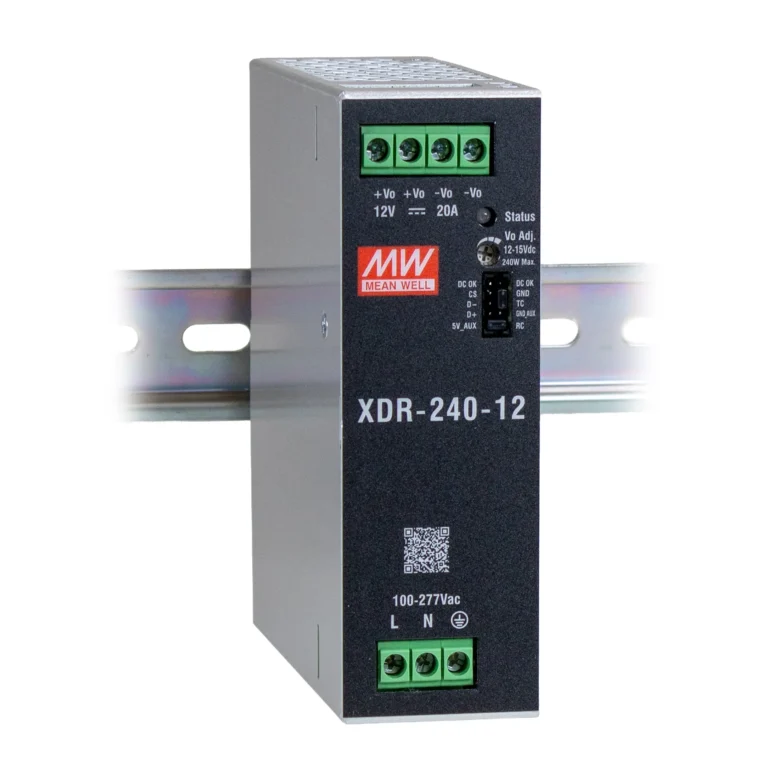 $145.00Quantity Discounts Available
-
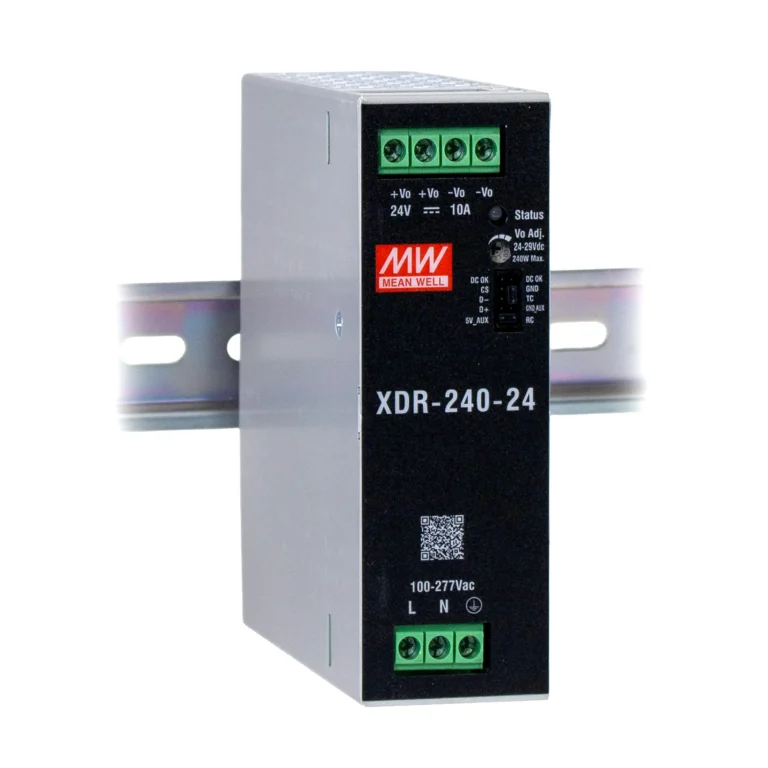 $145.00Quantity Discounts Available
-
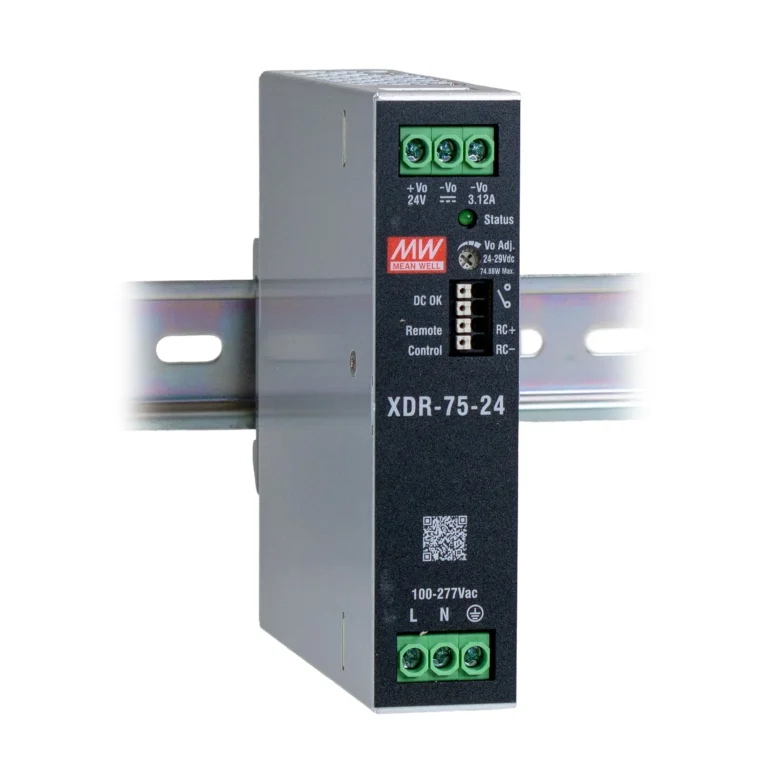
Power Supply, AC/DC, C1D2, DIN Rail, Ultra Slim Industrial, High-End, 24VDC, 3.12A, 74.88W
PS24DA075$70.00Quantity Discounts Available -
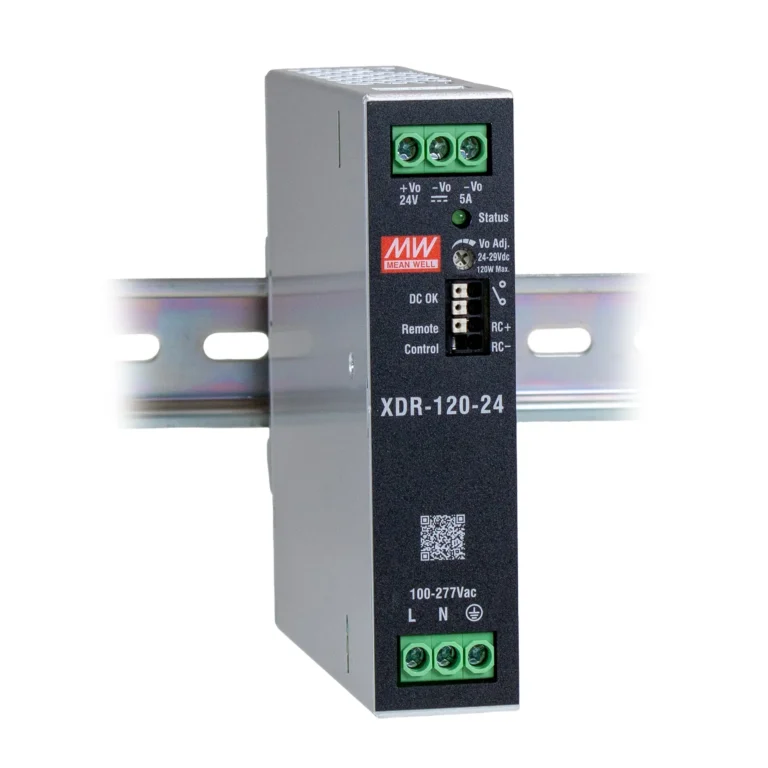 $95.00Quantity Discounts Available
-
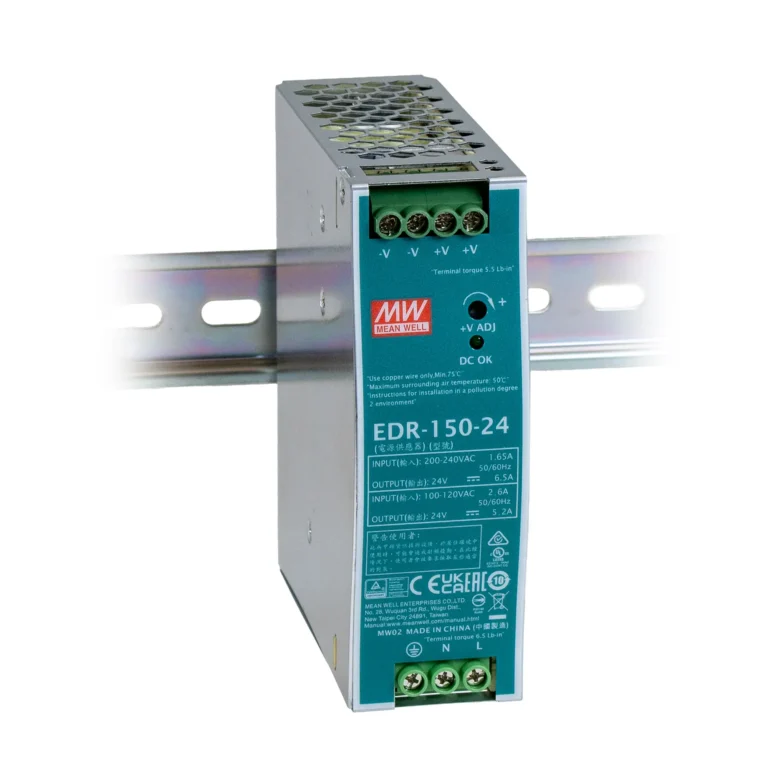
Power Supply, AC/DC, C1D2, Industrial Economical, DIN Rail, 24VDC, 6.5A/230VAC or 5.2A/115VAC, 156W/230VAC or 125W/115VAC
PS24DD150E (4010-0021)$80.00Quantity Discounts Available -
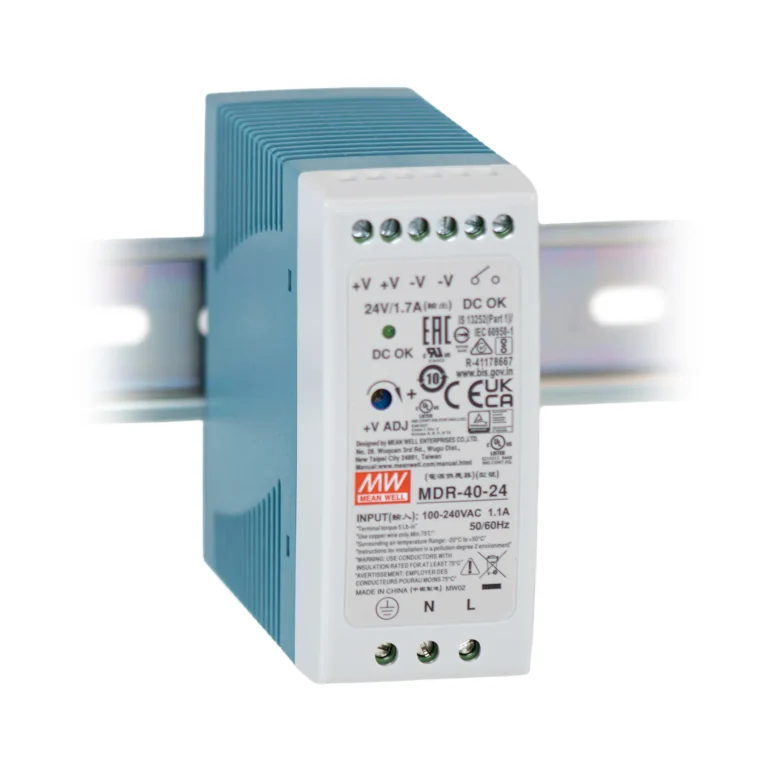 $40.00Quantity Discounts Available
-
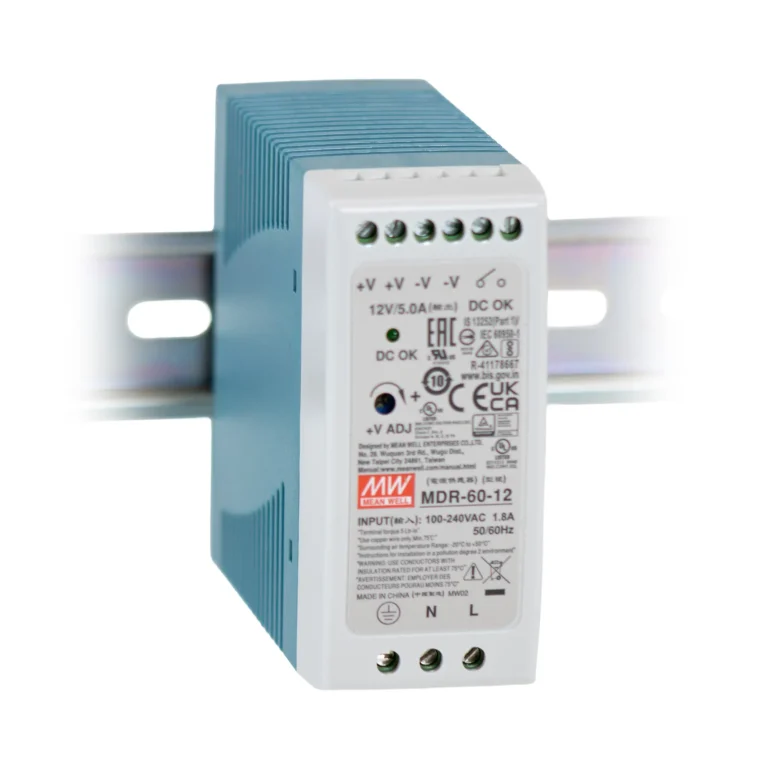 $55.00Quantity Discounts Available
-
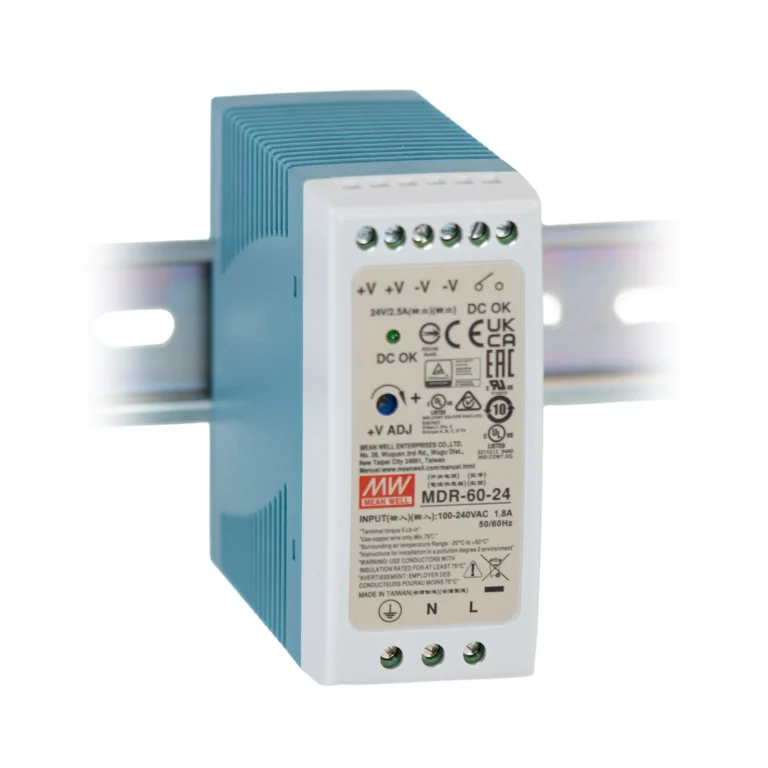 $50.00Quantity Discounts Available
-
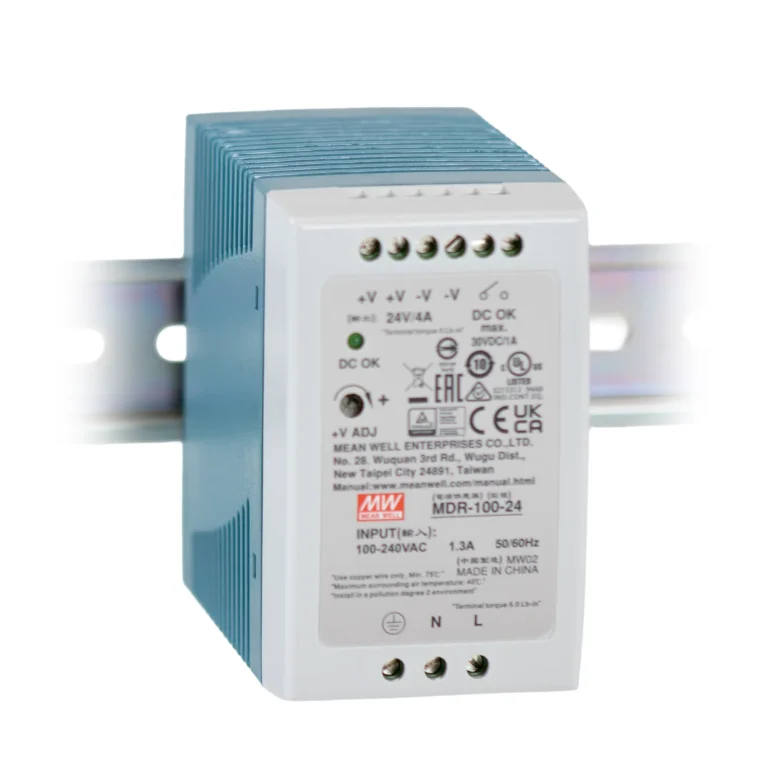 $70.00Quantity Discounts Available
-
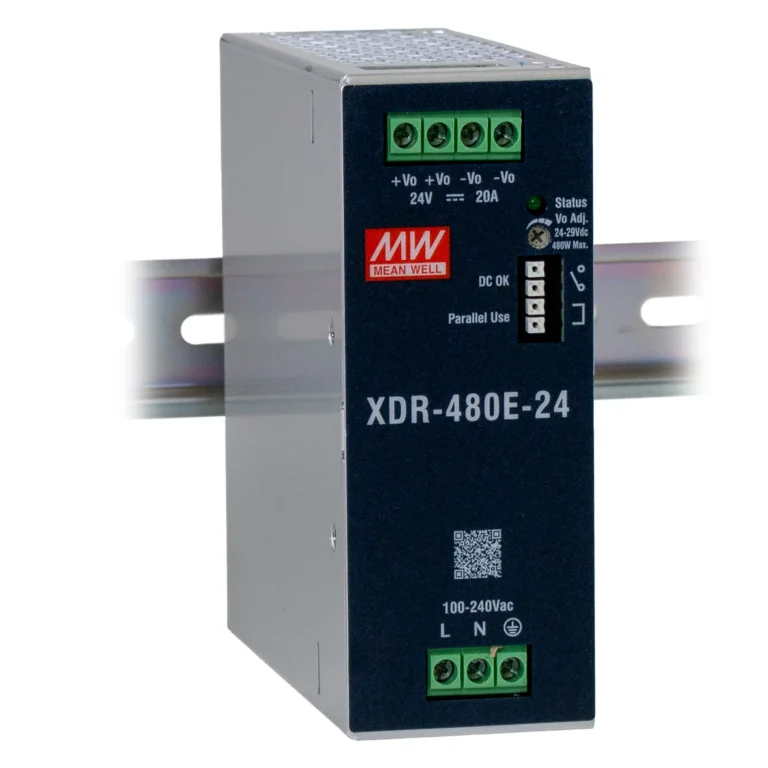 $150.00Quantity Discounts Available
-
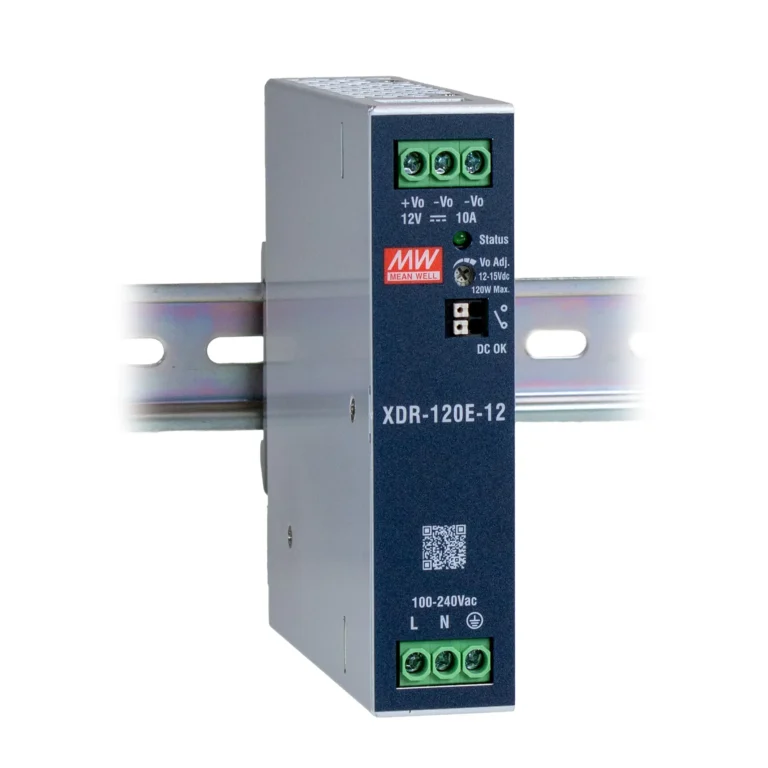 $50.00Quantity Discounts Available
Why Choose Maple Systems DIN Rail Power Supplies
Maple Systems DIN rail power supplies help you size smaller, save panel space and catch power faults early. The range covers everything from compact 24V panels to 960W machine supplies on 480VAC three-phase lines.
Up to 200% Peak Power
High-end Ultra Slim models deliver 200% of rated power for 5 seconds, plus up to 600% transient current for milliseconds. Motors, solenoid valves and capacitive loads start cleanly, so you size the supply for the running load instead of the surge. 3-Phase models provide 150% to 200% peak power.
Ultra Slim Footprint
Ultra Slim models start at 30mm wide for 75W and 120W. A 480W supply fits in 48mm and a 960W supply in 96mm, about 10W per millimeter of DIN rail. That leaves more room in the enclosure for I/O, terminals and future expansion.
Single or 3-Phase Input
Single-phase models accept universal AC input up to 264VAC, and High-end Ultra Slim models extend to 305VAC for 277VAC lighting and building circuits. 3-Phase Input models connect directly to 320 to 600VAC, so a 400VAC or 480VAC machine needs no separate control transformer for its 24V supply.
-40°C to +85°C Operation
High-end and 3-Phase models operate from -40°C to +85°C with full rated power up to +60°C, and are conformal coated. Economical Ultra Slim models run from -40°C to +70°C. Every model is fanless and cooled by free-air convection, so there is no fan to clog or fail.
DC OK Relay Monitoring
Most models include a DC OK relay contact that reports when the DC output is lost. Wire it to a PLC input to raise an alarm on your HMI or a tower stack light. High-end models add remote ON/OFF control, and selected models support parallel operation for more power.
Class I, Div 2 and SEMI F47
High-end Ultra Slim and 3-Phase models are approved for Class I, Division 2, Groups A, B, C and D, T4 hazardous locations and certified to SEMI F47 for voltage sag immunity. The 40W and 60W Economical Plastic models are also Class I, Div 2 rated.
Compare DIN Rail Power Supplies by Family
Each family is built for a different job and budget. Use this table to narrow down the family, then confirm the details on the datasheet of the exact model you order. High-end Ultra Slim, the most capable family, is highlighted.
| Feature | High-end Ultra Slim | Economical Ultra Slim | 3-Phase Input Ultra Slim | Economical Plastic | Economical Industrial |
|---|---|---|---|---|---|
| Best for | Heavy start-up loads, temperature extremes and hazardous sites | Cost-sensitive panels and 48V loads | Machines fed from 400VAC or 480VAC three-phase | Small panels and building controls | Budget 24V supply on 230VAC |
| Power | 75W to 960W | 75W to 480W | 240W to 960W | 40W to 96W | 150W (125W at 115VAC) |
| Output voltage | 12V, 24V | 12V, 24V, 48V | 24V | 12V, 24V | 24V |
| AC input | 85 to 305VAC | 85 to 264VAC | 320 to 600VAC, 3-phase | 85 to 264VAC | 90 to 264VAC |
| Operating temperature | -40 to +85°C | -40 to +70°C | -40 to +85°C | -20 to +70°C (96W: -10 to +60°C) | -20 to +60°C |
| Full power up to | +60°C | +50°C | +60°C | +60°C (40W), +55°C (60W), +40°C (96W) | +50°C on 230VAC, +40°C on 115VAC |
| Peak power | 200% for 5 s | Not rated | 150% to 200% for 5 s | Not rated | Not rated |
| DC OK relay | Yes | Yes | Yes | Yes | No |
| Remote ON/OFF | Yes | No | 480W and 960W | No | No |
| Parallel operation | 240W to 960W | 480W | 480W and 960W | No | No |
| Class I, Div 2 | Yes | No | Yes | 40W and 60W | No |
| SEMI F47 | Yes | No | Yes | No | No |
| UL approval | UL 61010-1 | UL 61010-1 | UL 61010-1 | UL 508 | UL 508 |
| Width | 30 to 96mm | 30 to 48mm | 48 to 96mm | 40 to 55mm | 40mm |
Values show the range across each family. Ratings vary by model and output voltage.
Step-by-Step Checklist: How to Choose the Right DIN Rail Power Supply
The power supply is the foundation of every control panel. If it sags, trips or overheats, everything downstream stops. Work through these seven checks to size the supply correctly and pick the right family the first time. For the bigger picture of panel design, see Control Cabinet Fundamentals.
- Confirm your input power. Use a single-phase model on 120VAC or 230VAC circuits. For 277VAC, choose High-end Ultra Slim (85 to 305VAC). If only 400VAC or 480VAC three-phase is available, choose a 3-Phase Input model (320 to 600VAC).
- Choose the output voltage. 24VDC powers most PLCs, HMIs, I/O and sensors, and is available from 40W to 960W. Choose 12V only for 12V devices, and 48V for 48V loads or longer cable runs.
- Add up the continuous load. List the maximum current of every device on the supply and total it. Take the values from each device datasheet, not typical figures.
- Add 20 to 30% headroom. Multiply the total by 1.25 and pick the next rating up. Headroom covers future I/O and keeps the supply running cooler.
- Check start-up and peak loads. Motors, solenoids and large capacitive loads draw a surge at switch-on. High-end and 3-Phase models cover it with up to 200% peak power. Economical models must cover the peak with their rated current.
- Check the enclosure temperature. Above +50°C inside the panel, choose High-end or 3-Phase models, which deliver full power up to +60°C. Below -20°C, choose an Ultra Slim family. Read the derating curve for your worst-case ambient.
- Confirm approvals, space and monitoring. Check the Class I, Div 2, SEMI F47 and UL requirements for your site, the width available on the DIN rail, and whether you need DC OK, remote ON/OFF or parallel operation.
Sizing Example: 24V Control Panel
A packaging machine panel with an HMI, a PLC, I/O and two solenoid valves. The current values are examples, so use your own device datasheets.
| Load (24VDC) | Current |
|---|---|
| HMI (10-inch) | 1.00A |
| PLC with 4 I/O modules | 0.90A |
| 8 relay coils | 0.40A |
| 12 sensors | 0.30A |
| Tower stack light | 0.25A |
| 2 solenoid valves | 1.00A |
| Continuous load | 3.85A (92W) |
3.85A × 1.25 = 4.8A, so a 24V, 5A (120W) supply fits. If both valves open at power-up, the load can briefly reach about 7A. A 120W High-end Ultra Slim model covers that with 10A of peak current for 5 seconds, in just 30mm of DIN rail. An Economical model would need to step up to 240W instead.
Frequently Asked Questions
What is the formula used to figure out Watts?
By multiplying Volts with Amps, you can figure out Watts. You can rearrange the basic electrical power equation depending on what you need to solve.
What is a DIN Rail power supply?
A DIN Rail power supply converts AC input voltage into regulated DC power for industrial automation equipment, including PLCs, HMIs, sensors, relays and other control components
How do I choose the right DIN Rail power supply?
Choose a power supply based on your equipment’s required DC output voltage, total current consumption, power rating, AC input voltage and operating environment.
What is the difference between single-phase and three-phase DIN rail power supplies?
Single-phase power supplies operate from a single-phase AC input, commonly used in smaller industrial control panels and automation systems. Three-phase power supplies accept three-phase AC input, making them suitable for larger industrial installations with higher power requirements.
What protection features are built into your DIN Rail power supplies?
Our DIN Rail power supplies include built-in protection features designed to help protect the power supply and connected equipment from electrical faults. Depending on the model, these may include:
What is the difference between peak power and rated power?
Rated power is the continuous amount of power a power supply is designed to deliver under specified operating conditions. Peak power is the higher output level that a power supply can temporarily provide to accommodate short-duration increases in demand.
What does DC OK signal indicate on your DIN Rail power supplies?
The DC OK signal indicates whether the power supply’s DC output is operating within its specified voltage range.
Not sure which power supply fits your panel?
Send us your load list and input voltage, and our team will help you size the right DIN rail power supply.
Reliable DC Power for Every Industry
From packaging machines and conveyors to pump stations and building controls, every automated system depends on stable 24V power. Maple Systems DIN rail power supplies deliver it across packaging, material handling and machine building, where peak power starts motors and solenoids. Oil and gas sites can specify Class I, Division 2 approved models, water and wastewater utilities rely on -40°C to +85°C operation in remote enclosures, semiconductor tool builders use SEMI F47 certified models, and building automation panels run High-end models directly from 277VAC.
