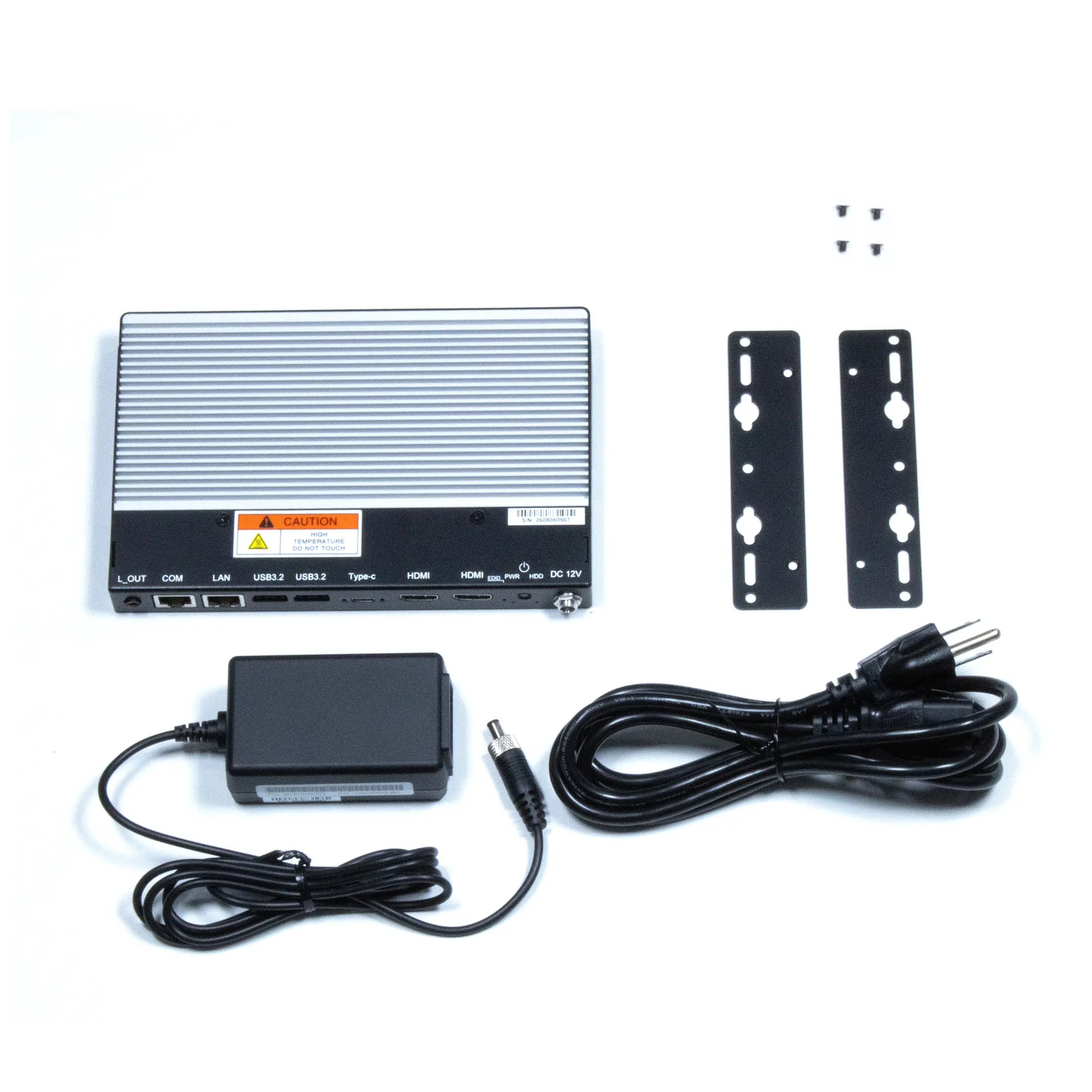
UL Certified, Dual 4K Fanless Digital Signage Player
$1,200.00
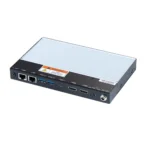
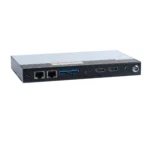
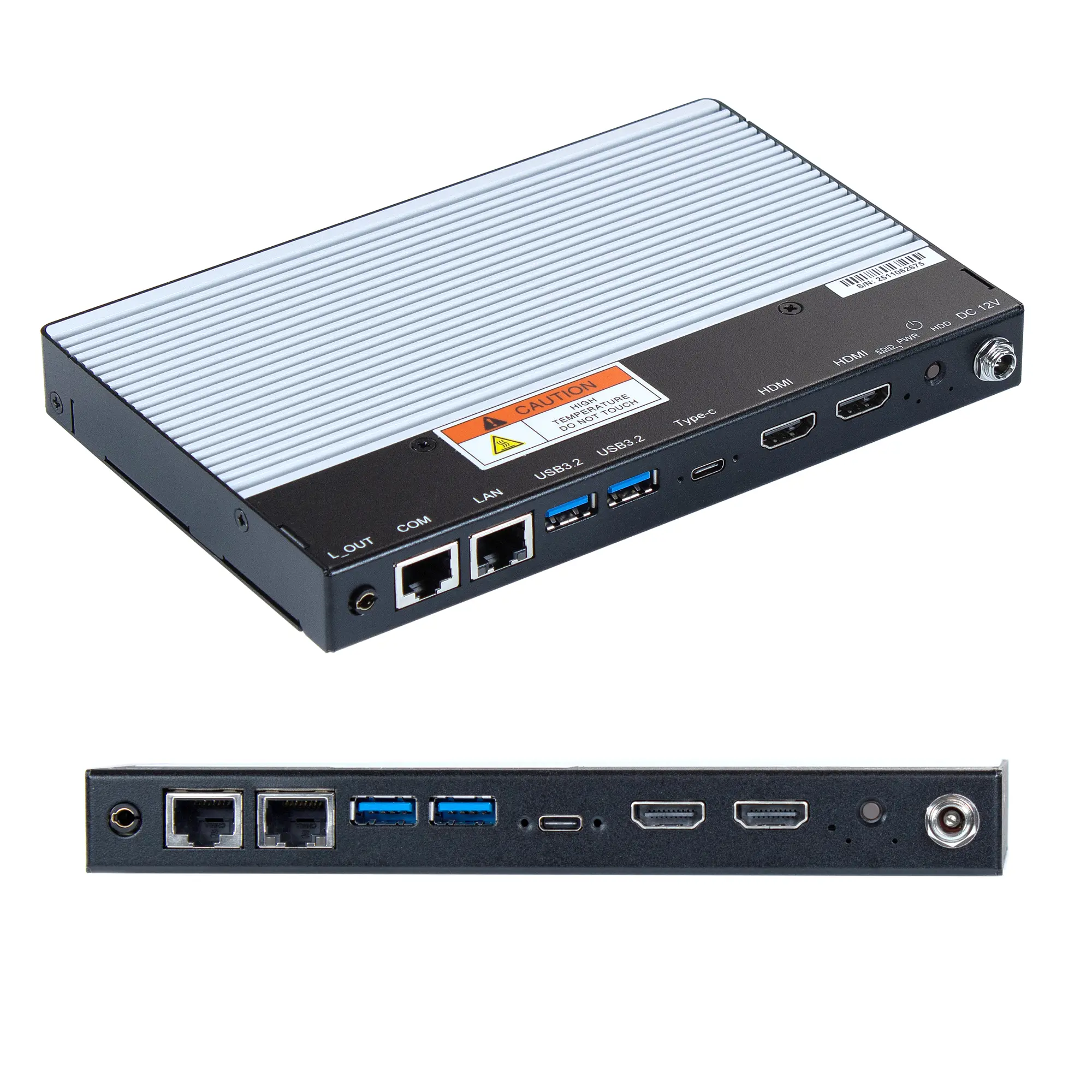
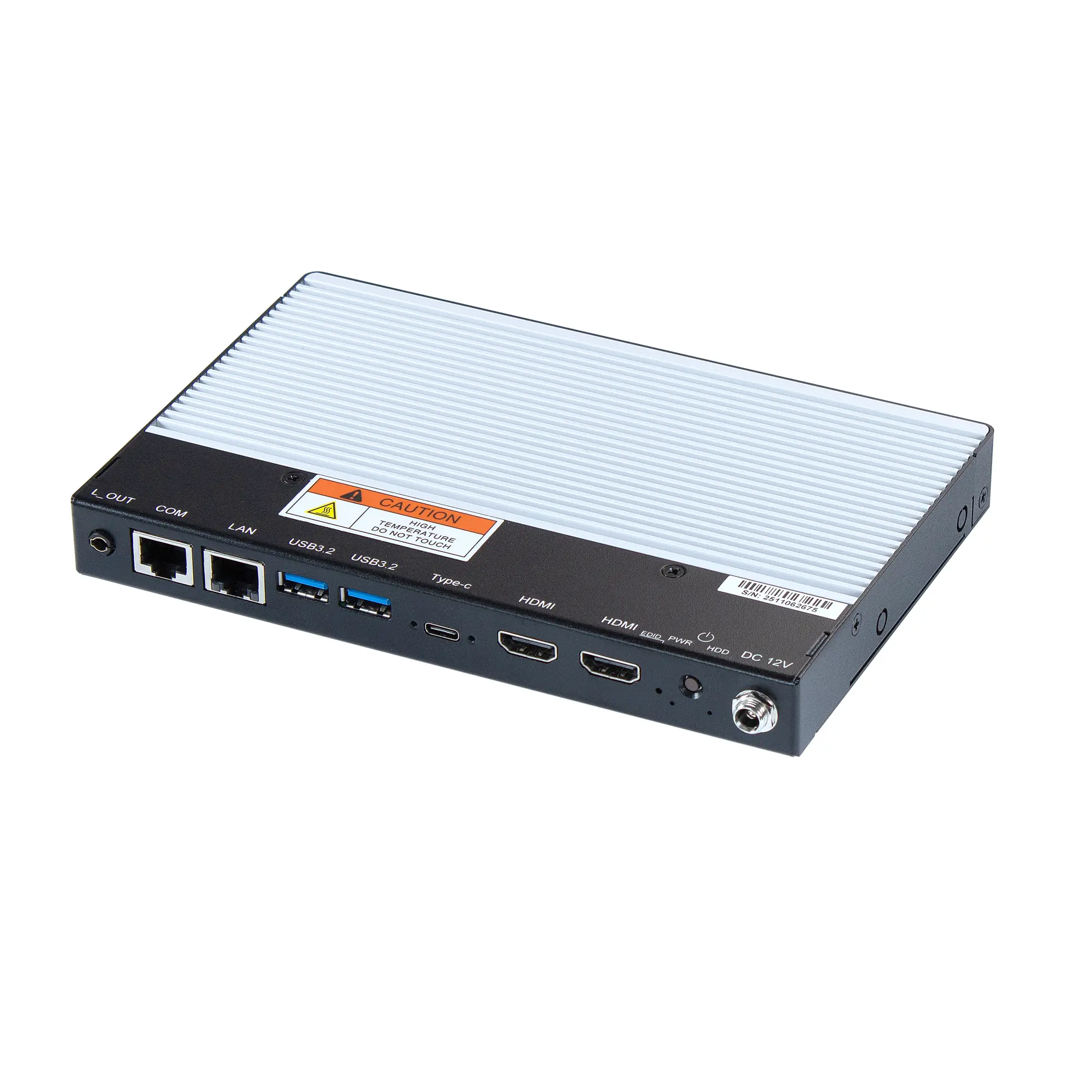
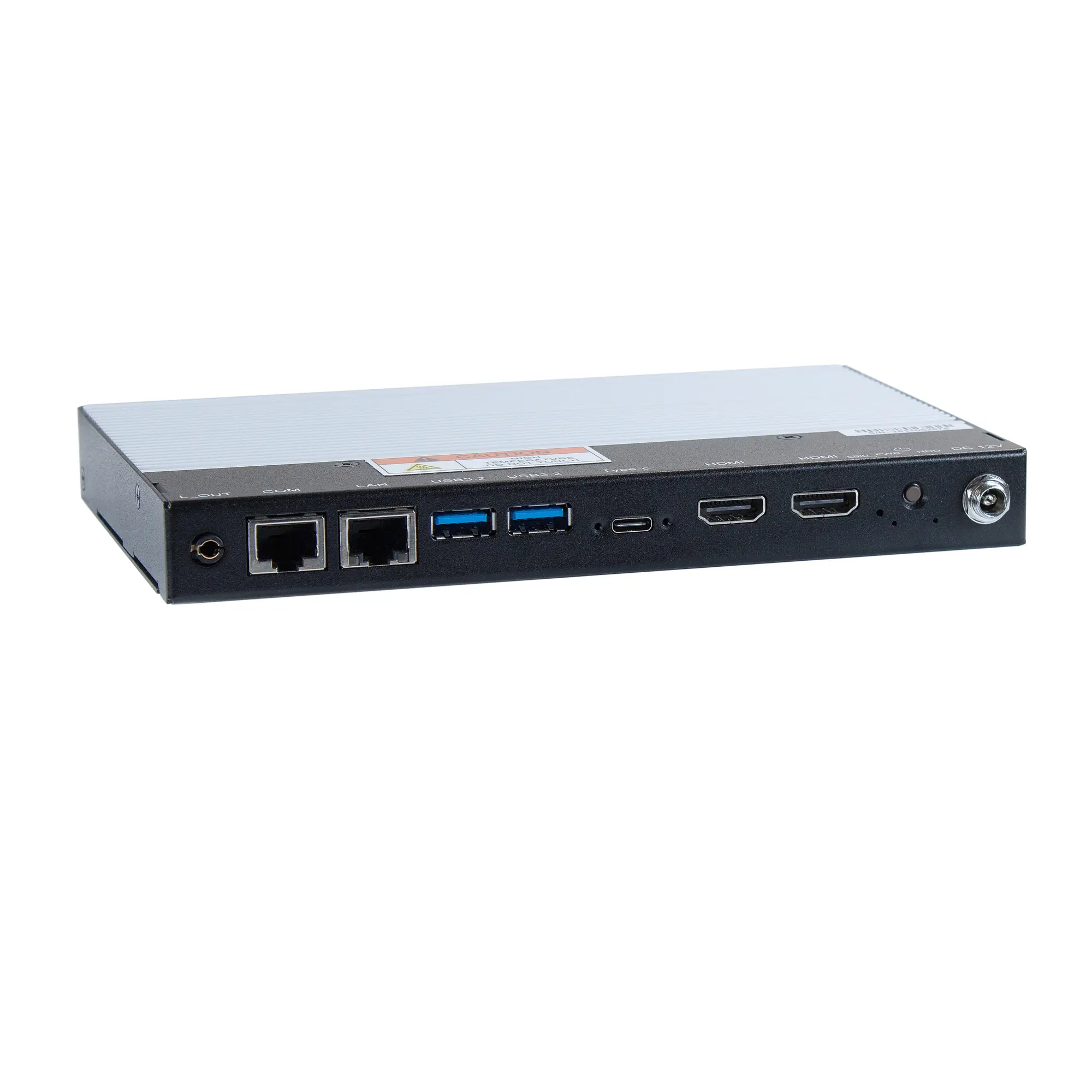
The BPC5023A is a compact, fanless digital signage player designed for reliable 24/7 operation in retail, transportation, corporate, and public environments. Powered by the latest Intel® Amston Lake, Atom® x7433RE Quad-Core™ processor, it delivers smooth 4K multimedia playback with dual HDMI 2.0 outputs for independent dual-display support. With high-speed DDR5 memory, NVMe SSD storage, optional Wi-Fi and Bluetooth expansion, TPM 2.0 security, and advanced features like CEC, hardware EDID emulation, Peripheral Device Power Control (PDPC), & Energy Saving Technology, the BPC5023A provides a powerful, efficient, and easy-to-manage solution for modern digital signage applications. Works with all cloud-based digital signage software platforms like Nimbus808, Yodeck, OptiSigns, and NoviSign.
- Customize product with your company logo. Minimum quantities apply.
- US-based technical support.
Share the product:
- Intel® Amston Lake, Atom® x7433RE Quad-Core™ Processor
- Intelligent Energy Saving Technology, CEC and EDID emulation built-in
- Wake on LAN (WoL) and PDPC technologies included
- High-Resolution Multi-Display Output
- cULus Listed, Wi-Fi/Bluetooth 5.2 Options
The base options are selected by default. Select the options to get the desired configuration.
System
| CPU | Intel® Amston Lake, Atom® x7433RE Quad-Core™ up to 3.40GHz Processor |
|---|---|
| Memory (RAM) | 1 x DDR5 SO-DIMM RAM (8, 16 GB) |
| System Chipset | SoC |
| Solid State Drive Type | SATA3 3D TLC (64GB) / NVMe 3D TLC (All Others)
|
| Solid State Drive Capacity | 64, 128, 256, 512 GB, 1TB, 2TB SSD |
| CPU Graphics | Gen 12 UHD Graphics (up to 32EU) |
| TPM Module | Yes (TPM 2.0) |
Storage
| Solid State Drive | 1 x M.2 2280 SATA3 3D TLC (64GB) / NVMe 3D TLC SSD (128GB, 256GB, 512GB, 1TB, 2TB)
|
|---|---|
| SD Card Slot | N/A |
Front I/O
| Wireless LAN | 2x Wireless LAN Antenna ports (covered unless optional Wi-Fi Expansion kit purchased) |
|---|---|
| Ethernet/LAN | 1 x GbE RJ45 |
| Audio Output | 1 x 3.5 mm Line-out |
| Power | 1 x DC Jack Input Connector |
| USB 2.0 Type A | 1 |
| USB 3.2 Type A | 2 |
| Power Switch | 1 x Momentary Pushbutton |
| Serial | 1 x RS-232 RJ45: COM 1 |
| Display Interface | 2 x HDMI 2.0b (max. 3840 x 2160 pixels @ 60Hz) |
| EDID | Yes
|
Auto Control and Monitoring
| Watchdog Timer | 256 Segments, 0, 1, 2…255 (sec/min)
|
|---|---|
| Energy Saving Technology | Yes
|
| EDID HW | Yes
|
| PDPC Support | Yes
|
| HDMI-CEC | Yes
|
| Wake on LAN (WoL) | Yes
|
Expansion I/O
| Expansion Option | Optional Wi-Fi kit (IEEE802.11ax card and 2 x antenna, Bluetooth 5.2 Support |
|---|
Electrical
| Input Power | 50 W |
|---|---|
| Input Voltage | 12 VDC +/- 10% |
| Input Current | 4.17A Max. |
| Power Supply | 50W Power Adaptor with locking DC plug included (does not support Op. Temp -40°-158°F) |
Mechanical
| Dimensions WxHxD | 8.54" x 0.88" x 4.84" [217 x 22.5 x 123 mm] |
|---|---|
| Weight | Approx. 2.2 lbs. [1.0 kg] |
| Mounting | Wall Mount kit included |
| Construction | Aluminum Heatsink, SGCC Chassis |
Environmental
| Operating Temperature | -40° – 158°F [-40° – 70°C] without the included power adapter 32° – 113°F [0° – 45°C] with the included power adapter |
|---|---|
| Storage Temperature | -40° – 185°F [-40° – 85°C] without the included power adapter |
| Storage Humidity | 10% ~ 90% (non-condensing) |
Certification
| IP Rating | IP30 |
|---|---|
| CE | Yes |
| UL | Yes |
| RoHS | Yes |
| FCC | Class B |
- Windows
Why is Intelligent Energy Saving highlighted on some of your PC products?
Intelligent Energy Saving is a built-in power management feature that allows users to schedule when the PC automatically turns on and off.
This feature helps reduce energy consumption by ensuring the system only runs during required operating hours. For example, in digital signage, or kiosk applications, the PC can be set to power on before business hours and shut down after closing, eliminating unnecessary runtime.
In addition to energy savings, this technology also supports:
- Improved system lifespan by reducing continuous usage
- Consistent daily scheduling for reliable deployment
Overall, this technology is an intelligent power scheduling feature that allows the PC to automatically turn on and off at set times, helping to reduce energy use and enable dependable, unattended operations in industrial and commercial environments.
Products:
Manuals & Guides:
Technical Articles:
What is EDID Emulation?
Extended Display Identification Data. EDID is the data a monitor sends to the PC telling it what its capabilities are. The emulator basically mimics that data so the IPC thinks the monitor is always connected and powered on, which prevents connection loss, even when changing out displays or providing maintenance, allowing for 24/7 operation.
EDID Emulation provides several important advantages:
- Prevents display resolution issues when monitors are disconnected
- Maintains stable video output during power cycling or hot-swapping
- Reduces system downtime in industrial environments
- Ensures consistent display configuration across reboots
- Improves reliability for remote or unattended systems
Without EDID Emulation:
- The system may lose display signal when a monitor is disconnected
- Resolution may default to a lower setting
- Applications may resize or fail to display correctly
- remote access sessions may be disrupted
Contact [email protected] today and learn more about how EDID Emulation can reduce your downtime and ensure dependable performance in all environments.
Products:
Manuals & Guides:
Technical Articles:
Are these digital signage players fanless?
Yes. Every Maple Systems signage player is fanless and solid-state, with no moving parts to fail, a design that makes 24/7 unattended operation reliable and dust/vibration tolerant. They’re cULus-listed for commercial installation.
Products:
Manuals & Guides:
Technical Articles:
What is a digital signage player?
A digital signage media player is a compact computer that stores, decodes, and outputs content (video, images, web pages, live data) to one or more commercial displays. Unlike a consumer streaming stick, a commercial signage player is built to run unattended 24/7 and to be managed remotely at scale. Maple Systems players are industrial box PCs running Windows or Linux, so they drive standard displays over HDMI/DisplayPort and run any signage software you choose.
Products:
Manuals & Guides:
Technical Articles:
What is Hardware Root of Trust (RoT) in Digital Signage?
A Hardware Root of Trust (RoT) is a built-in hardware security foundation that helps protect devices from unauthorized access, tampering, and malware. It verifies system integrity during startup, secures encryption keys, and helps ensure only trusted firmware and software can run.
For digital signage systems, Hardware Root of Trust can provide:
- Secure boot and system integrity verifcation
- Protection of encrypted keys and credentials
- Tamper and unauthorized modification detection
- Protection against malware during startup
- Secure device authentication and cloud connectivity
- Enhanced security for stolen or compromised devices
Hardware Root of Trust typically uses dedicated security hardware to verify critical system components and protect cryptographic keys throughout the device lifecycle.
Products:
Manuals & Guides:
Technical Articles:
What is Peripheral Device Power Control (PDPC) on your Digital Signage Players?
Peripheral Device Power Control is a advanced feature that intelligently manages power to connected USB peripherals such as touchscreens, barcode scanners, cameras, and RFID readers. By supplying power only when needed, PDPC helps reduce energy consumption, minimize heat, and improve overall system reliability, making it especially valuable for digital signage applications that require dependable 24/7 operation.
Benefits of Peripheral Device Power Control (PDPC)
- Power Management – Automates peripheral power
- Energy Savings – Reduces unnecessary power use
- Extended Equipment Life – Limits continuous operation
- Simplified Management – Controls connected devices from one system
- Improved Reliability – Ensures proper power cycling
- Remote Recovery – Resets unresponsive devices
- Unattended Operation – Ideal for remote signage deployments
In summary, PDPC helps digital signage operators improve security, simplify remote maintenance, and reduce power consumption by allowing hardware ports and peripherals to be remotely powered on or off as needed.
Products:
Manuals & Guides:
Technical Articles:
What does Wake on LAN (WoL) mean for Digital Signage Players?
Wake on LAN (WoL) is a networking feature that allows a device to be powered on remotely by sending a special “magic packet” over the network. This enables administrators to start, update, and troubleshoot signage systems without physical access, reducing maintenance time and improving efficiency. Wake on LAN is especially useful for large-scale digital signage deployments where remote management is essential.
Benefits of Wake-on-LAN include:
- Remotely powering on devices without physical access.
- Recovering systems after unexpected shutdowns or power interruptions.
- Simplifying maintenance for devices installed in hard-to-reach locations, such as kiosks, digital signage, and industrial PCs.
- Enabling after-hours software updates, security patches, and system maintenance.
- Reducing service calls and on-site technician visits.
In summary, Wake-on-LAN provides a simple and efficient way to remotely start, manage, and maintain network connected devices without requiring on-site access.
Products:
Manuals & Guides:
Technical Articles:
What does HDMI-CEC support mean for Digital Signage Players?
HDMI Consumer Electronics Control (HDMI-CEC) is a feature that allows compatible devices connected through HDMI to communicate and control one another. For Digital Signage Players, HDMI-CEC enables automatic control of connected displays, including powering the display on or off, switching inputs, and synchronizing operation without requiring additional control cables. This simplifies installation, reduces energy consumption, and makes managing digital signage deployments more efficient.
Products:
Manuals & Guides:
Technical Articles:
Do these players support digital signage CMS software?
Yes. Because each unit runs Windows or Linux, they support any browser-based or Windows/Linux-compatible digital signage CMS and cloud-based digital signage software platforms like Nimbus808, Yodeck, OptiSigns, and NoviSign, along with SCADA platforms like AVEVA ®, Ignition, and FactoryTalk for facilities that combine signage with operational dashboards.
Products:
Manuals & Guides:
Technical Articles:
How does a TPM (Trusted Platform Module) protect Digital Signage networks?
A TPM (Trusted Platform Module) is a dedicated hardware security chip built into a digital signage media player or industrial PC. TPM provides a hardware-based root of trust that helps protect devices, data, and network access from unauthorized use and tampering.
Benefits of TPM for digital signage include:
- Verifying device identity before network or CMS access
- Protecting data with hardware-based encryptions
- Securing credentials, keys, certificates, and configuration files
- Verifying BIOS, firmware, and OS integrity at startup
- Detecting unauthorized modifications and helping prevent malware during boot
- Reducing the risk of credential theft and device compromise.
How does TPM work?
TPM securely stores cryptographic keys and uses them to authenticate devices, support encryption, and verify system integrity, helping protect the device even if the operating system is compromised.
Products:
Manuals & Guides:
Technical Articles:
Documents
Manuals
Certifications
- UL Certification Declaration – IPC2610A, BPC2620A, BPC5023A, BPC5024A
- CE Declaration of Conformity – BPC502XX
- FCC Declaration of Conformity – BPC5023A, BPC5024A
- RoHS Declaration of Conformity (all series)
- REACH EU Declaration of Conformity
- Trade Agreement Act Declaration of Conformity
- Country of Origin Certification
CAD Files
When you order the BPC5023A the following items are included in the box:
- BPC5023A Series Box PC unit
- Wall Mounting Kit
- 12VDC, 50W Power Adapter
- Warranty Statement Insert