
Latching E-Stop
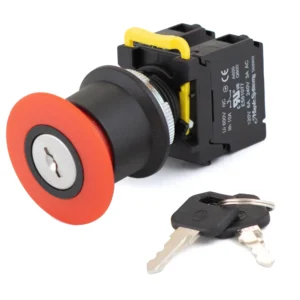
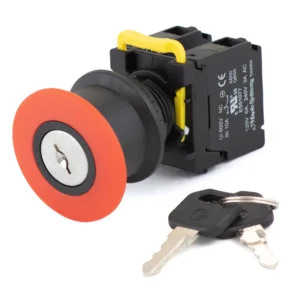
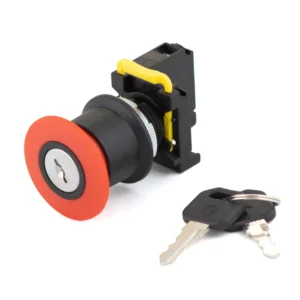
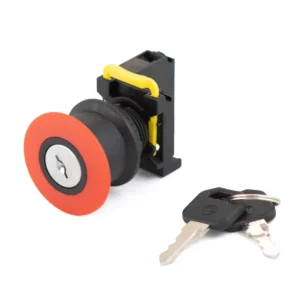
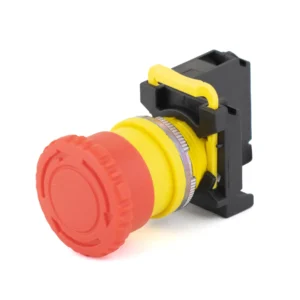
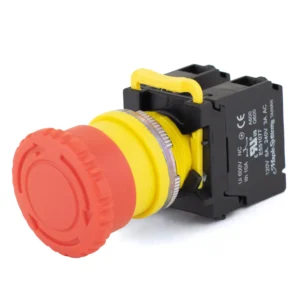
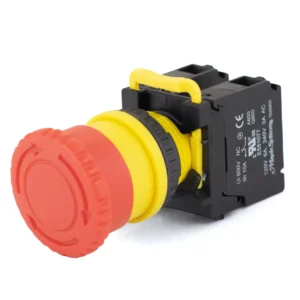
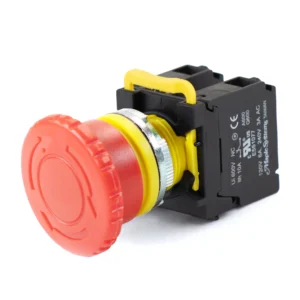
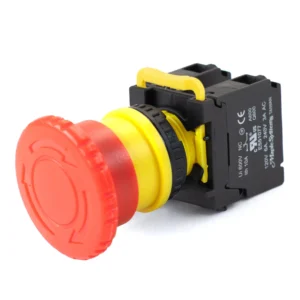
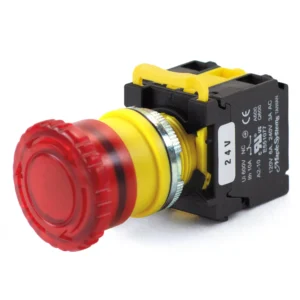
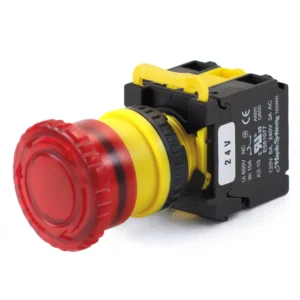
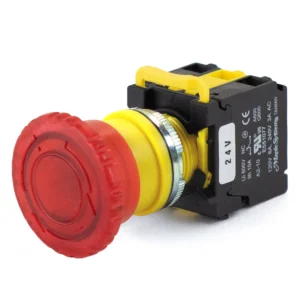
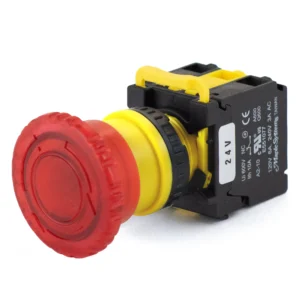
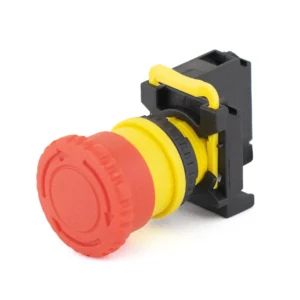
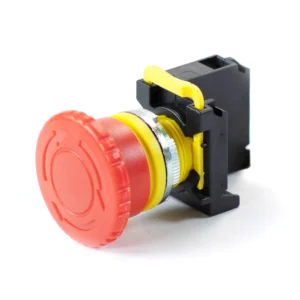
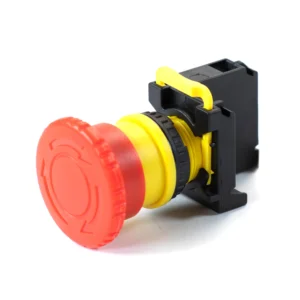
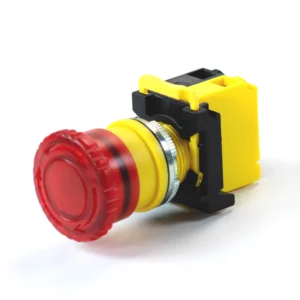
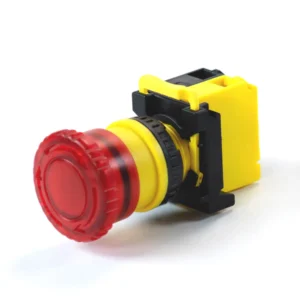
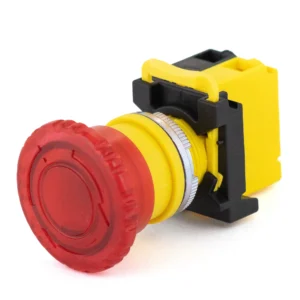
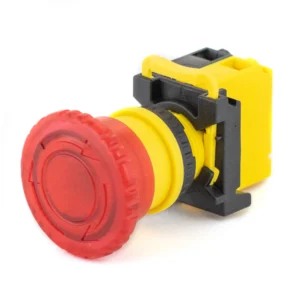
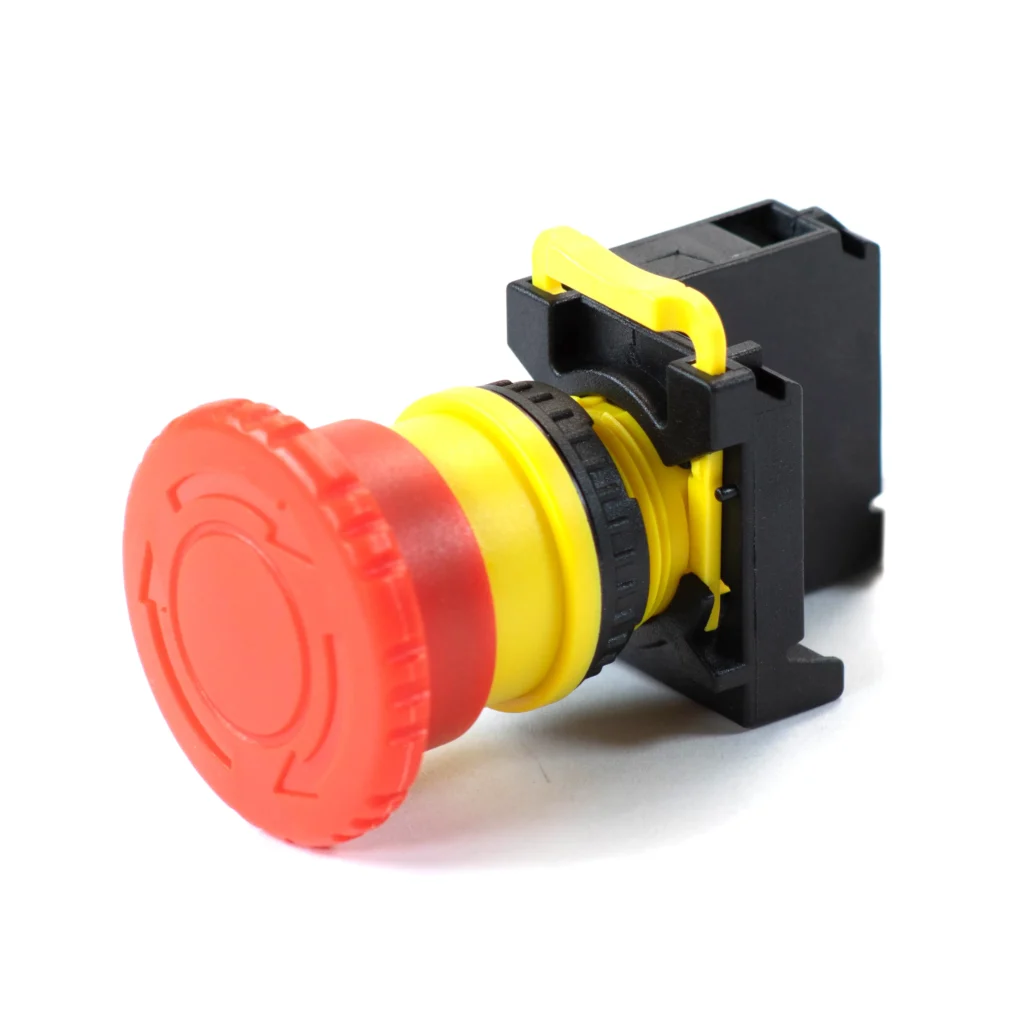
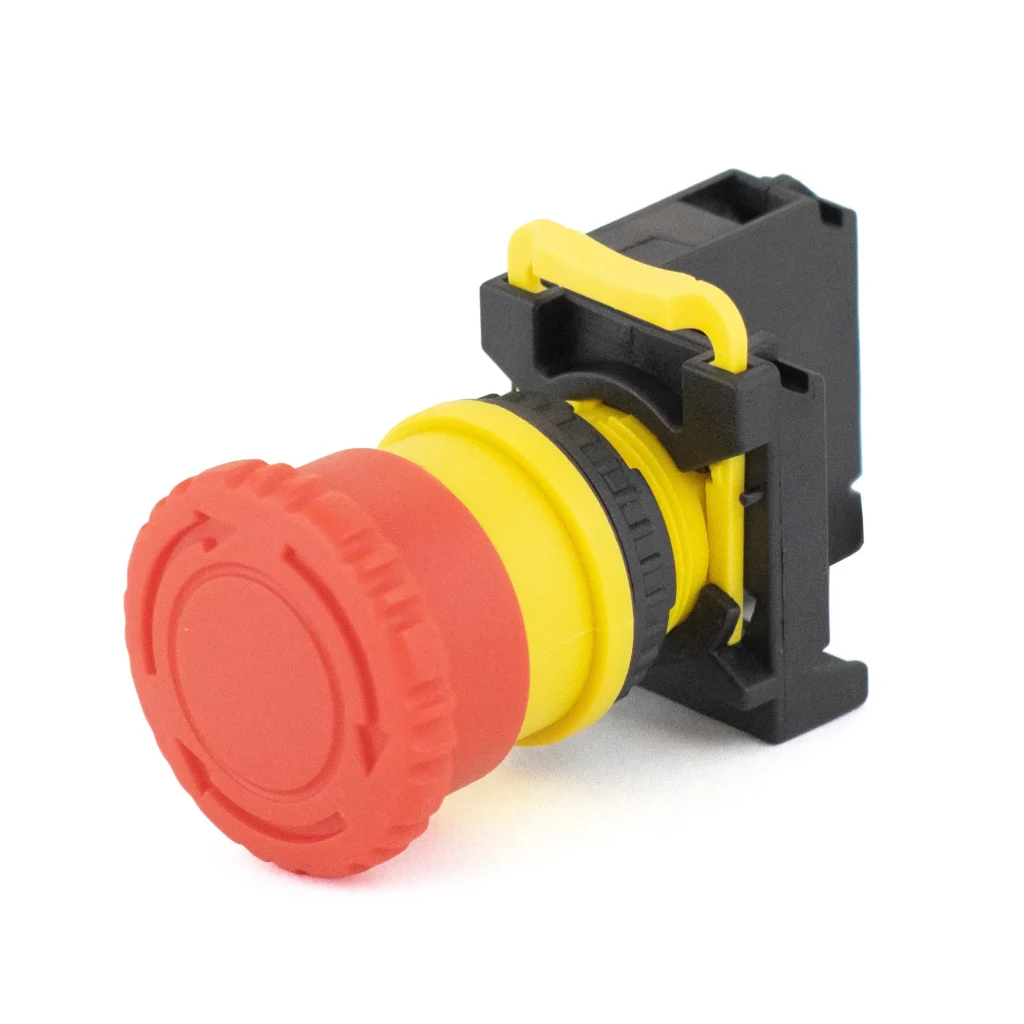
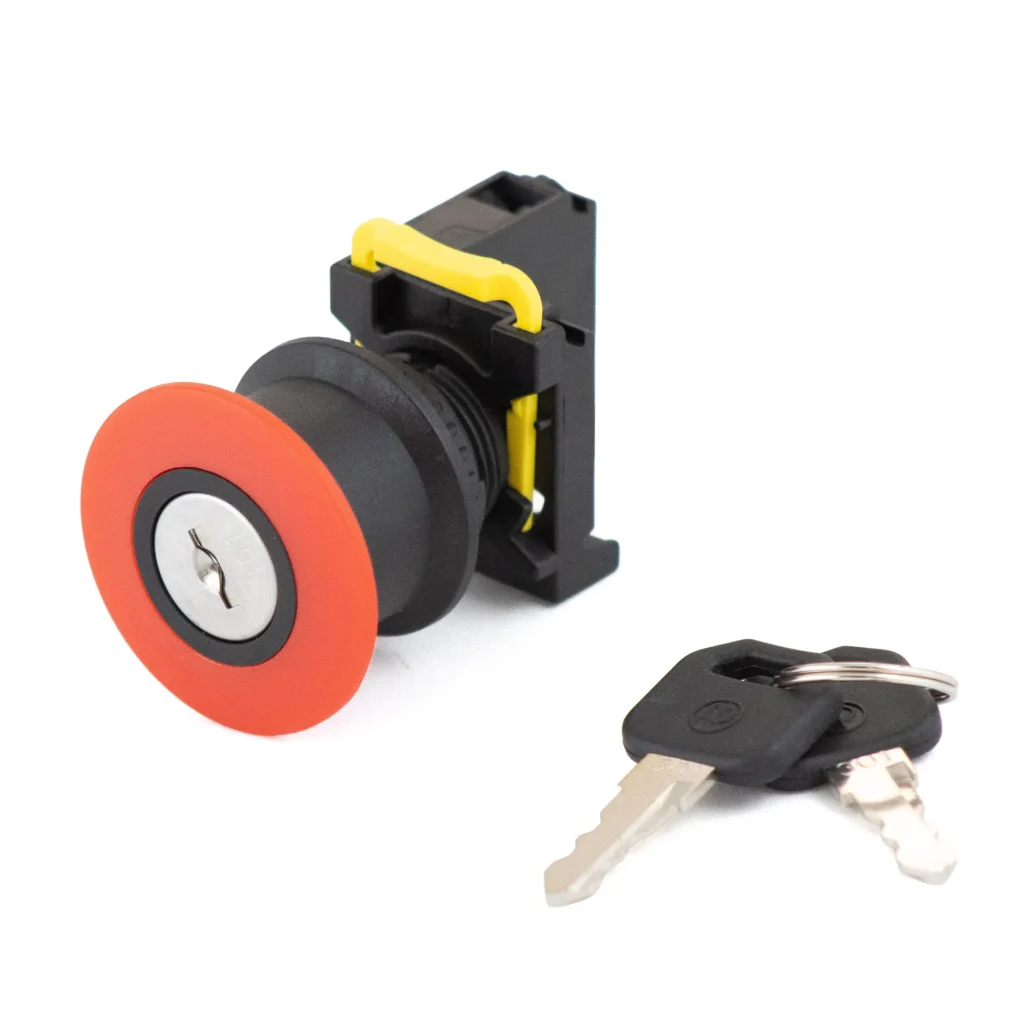
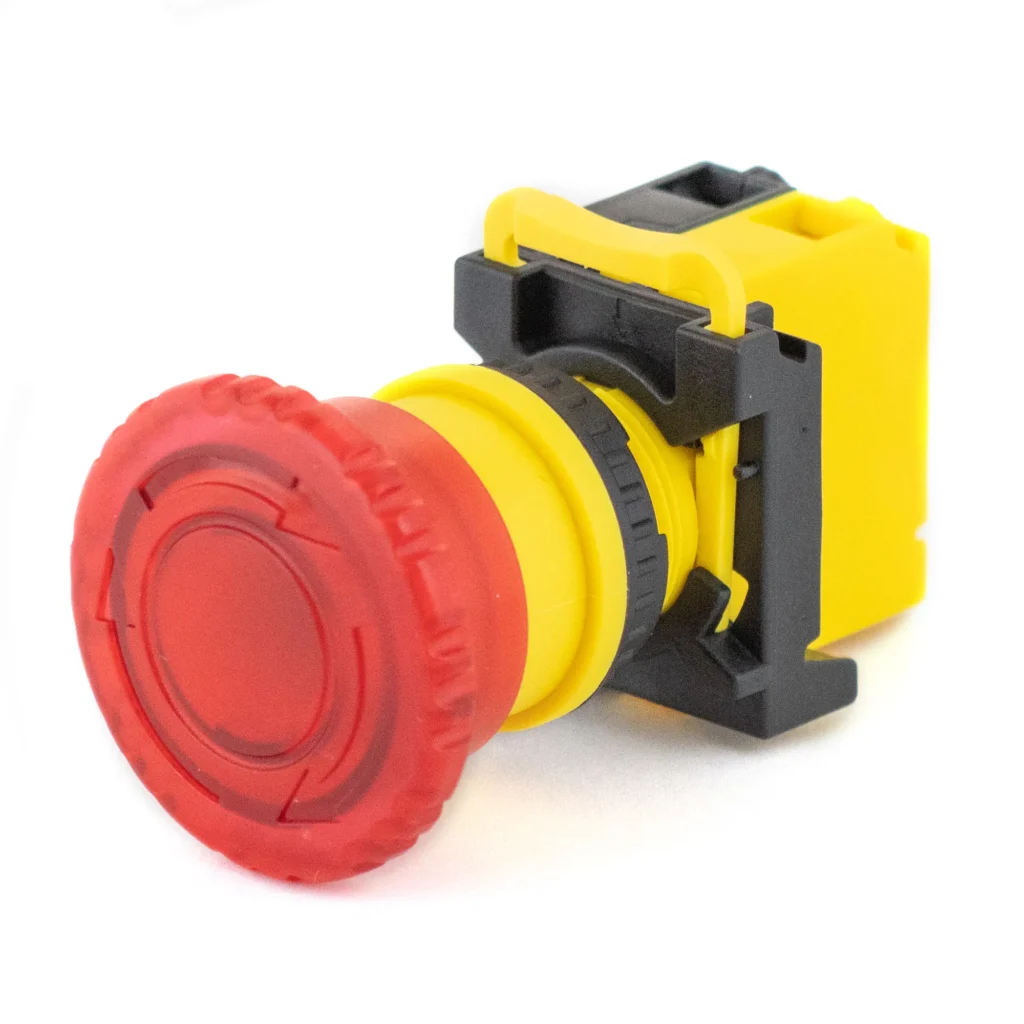
Latching E-stops are red mushroom-head pushbuttons that latch when pressed and stay latched until someone releases them, so the stop command does not end when the operator lets go. Maple Systems PBS113 latching E-stops are 22 mm panel-mount buttons, IP65 rated and cURus recognized, with a 35 or 40 mm knurled mushroom head, illuminated (24 V LED) or non-illuminated, or a mushroom head with a key lock, plastic or metal ring, and one or two NC contacts.
Filters
-
Red 22 mm Latching E-Stop, Mushroom Key Lock, 2 NC, Metal Ring / Metal Head & Ring
PBS113LM22R-02 $35.00 -
Red 22 mm Latching E-Stop, Mushroom Key Lock, 2 NC, Plastic
PBS113LP22R-02 $34.00 -
Red 22 mm Latching E-Stop, Mushroom Key Lock, 1 NC, Metal Ring / Metal Head & Ring
PBS113LM22R-01 $26.00 -
Red 22 mm Latching E-Stop, Mushroom Key Lock, 1 NC, Plastic
PBS113LP22R-01 $25.00 -
Red 22 mm Latching E-Stop, Knurled Mushroom head 35mm, 1 NC, Metal Ring / Metal Head & Ring
PBS113FM22R-01 $15.00 -
Red 22 mm Latching E-Stop, Knurled Mushroom head 35mm, 2 NC, Metal Ring / Metal Head & Ring
PBS113FM22R-02 $24.00 -
Red 22 mm Latching E-Stop, Knurled Mushroom head 35mm, 2 NC, Plastic
PBS113FP22R-02 $23.00 -
Red 22 mm Latching E-Stop, Knurled Mushroom head 40mm, 2 NC, Metal Ring / Metal Head & Ring
PBS113GM22R-02 $24.00 -
Red 22 mm Latching E-Stop, Knurled Mushroom head 40mm, 2 NC, Plastic
PBS113GP22R-02 $23.00 -
Red 22 mm LED Latching E-Stop, 24 VDC, Knurled Transparent Mushroom head, 35 mm dia (Illuminated Only), 2 NC, Metal Ring / Metal Head & Ring
PBS113JM22R-02L2 $25.00 -
Red 22 mm LED Latching E-Stop, 24 VDC, Knurled Transparent Mushroom head, 35 mm dia (Illuminated Only), 2 NC, Plastic
PBS113JP22R-02L2 $24.00 -
Red 22 mm LED Latching E-Stop, 24 VDC, Knurled Transparent Mushroom head, 40 mm dia (Illuminated Only), 2 NC, Metal Ring / Metal Head & Ring
PBS113KM22R-02L2 $25.00 -
Red 22 mm LED Latching E-Stop, 24 VDC, Knurled Transparent Mushroom head, 40 mm dia (Illuminated Only), 2 NC, Plastic
PBS113KP22R-02L2 $24.00 -
Red 22 mm Latching E-Stop, Knurled Mushroom head 35mm, 1 NC, Plastic
PBS113FP22R-01 $14.00 -
Red 22 mm Latching E-Stop, Knurled Mushroom head 40mm, 1 NC, Metal Ring / Metal Head & Ring
PBS113GM22R-01 $15.00 -
Red 22 mm Latching E-Stop, Knurled Mushroom head 40mm, 1 NC, Plastic
PBS113GP22R-01 $14.00 -
Red 22 mm LED Latching E-Stop, 24 VDC, Knurled Transparent Mushroom head, 35 mm dia (Illuminated Only), 1 NC, Metal Ring / Metal Head & Ring
PBS113JM22R-01L2 $16.00 -
Red 22 mm LED Latching E-Stop, 24 VDC, Knurled Transparent Mushroom head, 35 mm dia (Illuminated Only), 1 NC, Plastic
PBS113JP22R-01L2 $15.00 -
Red 22 mm LED Latching E-Stop, 24 VDC, Knurled Transparent Mushroom head, 40 mm dia (Illuminated Only), 1 NC, Metal Ring / Metal Head & Ring
PBS113KM22R-01L2 $16.00 -
Red 22 mm LED Latching E-Stop, 24 VDC, Knurled Transparent Mushroom head, 40 mm dia (Illuminated Only), 1 NC, Plastic
PBS113KP22R-01L2 $15.00
How to Choose a Latching E-Stop
An E-stop is the button an operator hits to stop a machine in an emergency. Unlike a momentary pushbutton, it stays pressed in after it is released; unlike a latching pushbutton, it does not release with the next press. For an E-stop, check these six points.
- Head. A red knurled mushroom head, 35 or 40 mm across, standing 28.5 mm in front of the panel, or a red mushroom head with a key lock, 41 mm across.
- Illuminated or not. The 35 and 40 mm heads also come as a transparent red head lit by a 24 V red LED, with the lamp holder included. The key lock head is non-illuminated.
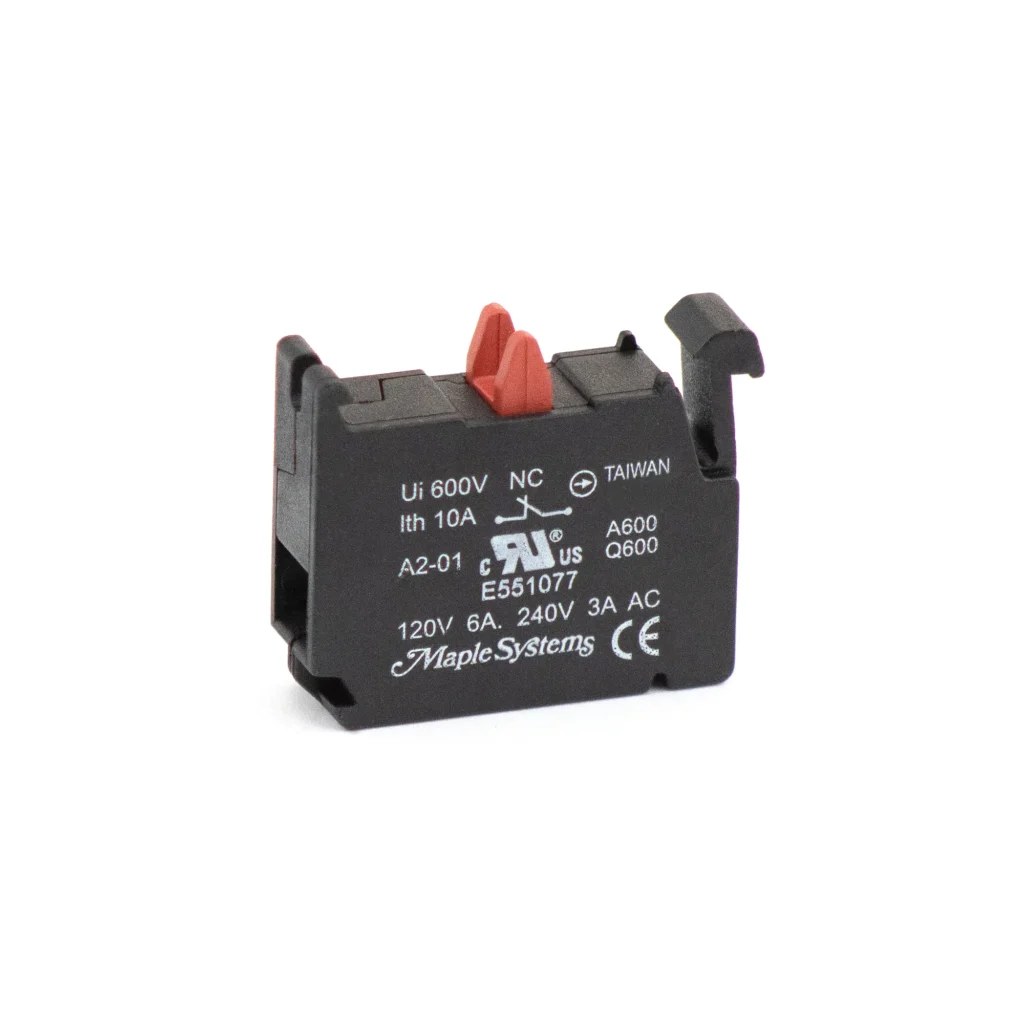
- Contacts. One or two normally closed (NC) contacts, assembled. A normally closed contact opens when the E-stop is pressed. One more contact block can be added to a one-contact E-stop; NC contact blocks are sold separately.
- Ring. Plastic or metal. The border is plastic on every PBS113.
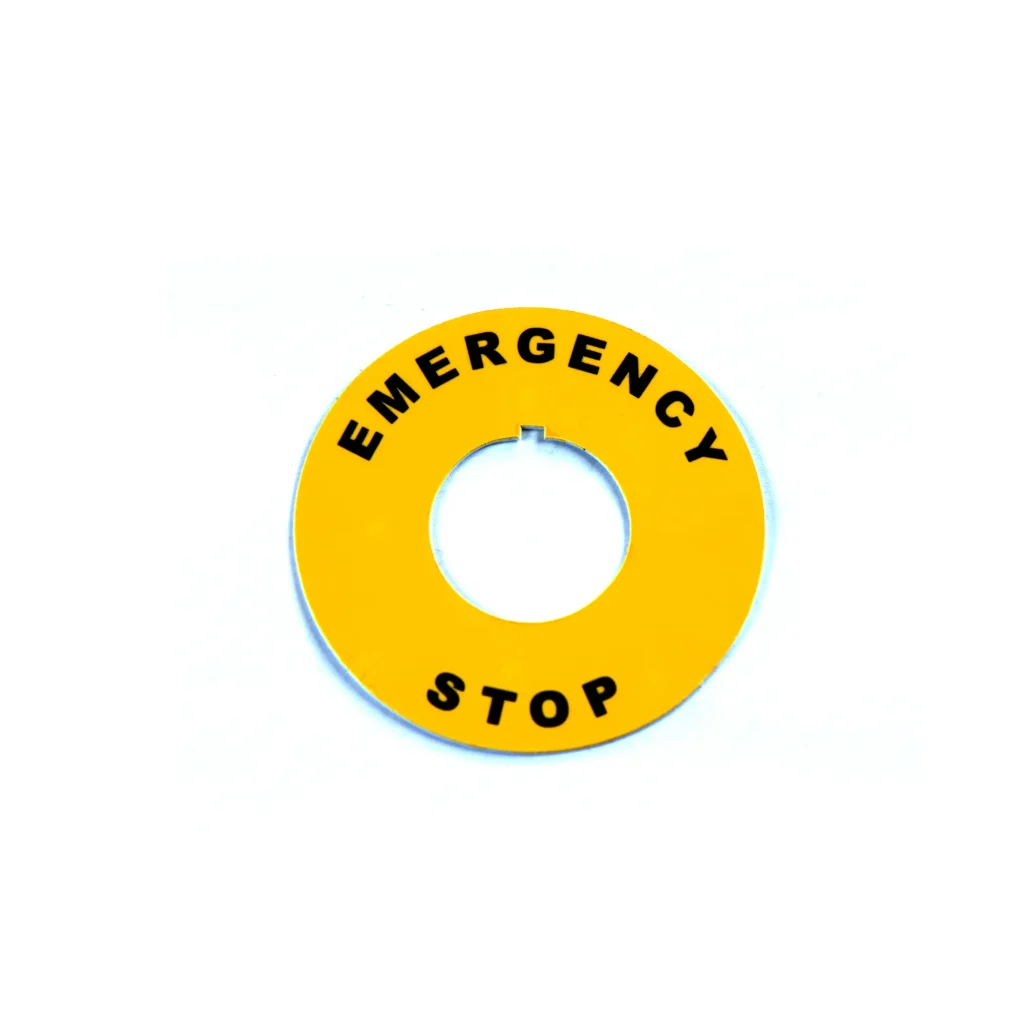
- Color. Every head is red, and the knurled heads sit on a yellow collar. A yellow EMERGENCY STOP legend plate is sold separately.
- Environment, approvals and mounting. Rated IP65. CE and cURus, a UL recognized component for use in UL listed equipment. Fits a standard 22 mm hole.
E-Stop Accessories and Replacement Parts
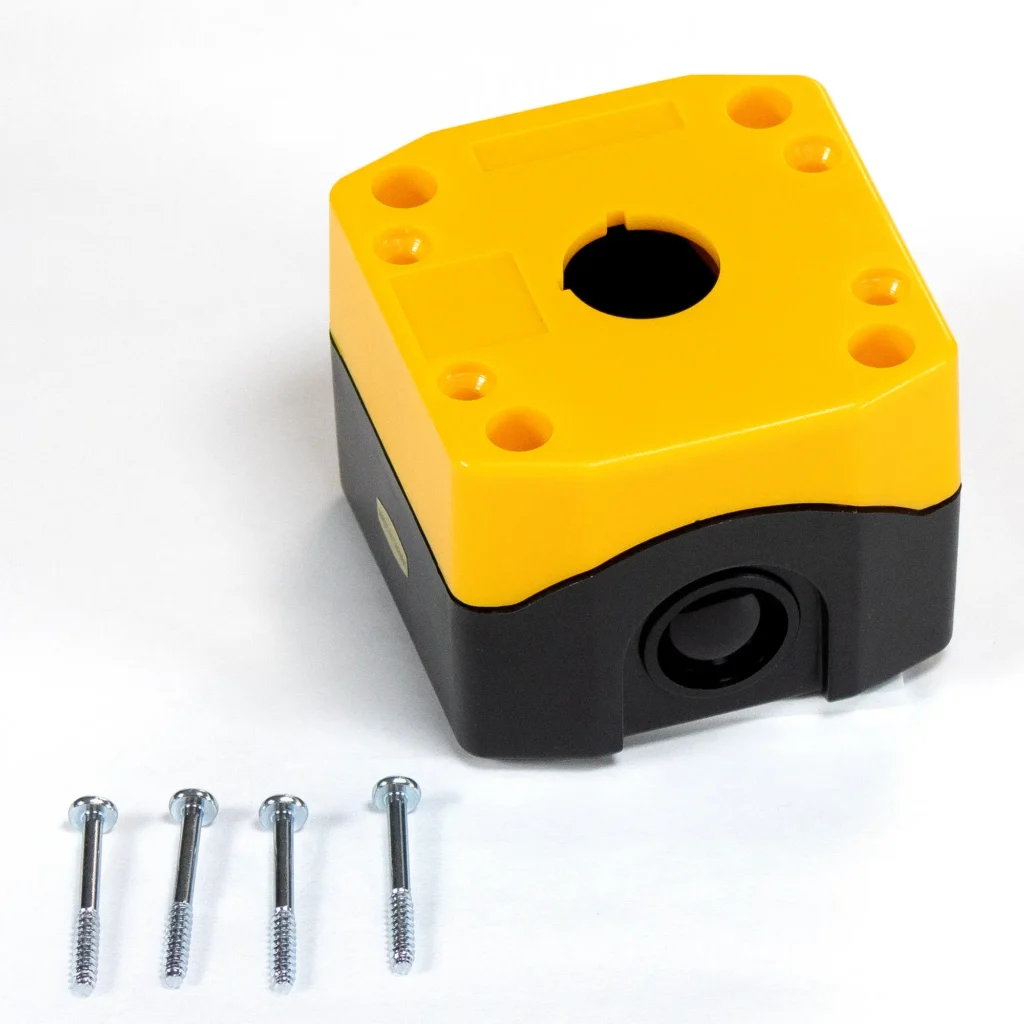
Every PBS113 ships assembled with its NC contacts and, on illuminated heads, the lamp holder. To finish the panel, add a yellow EMERGENCY STOP legend plate, add a second normally closed contact block to a one-contact E-stop, and mount the E-stop in a yellow pushbutton control station with 1 to 5 holes.
Latching E-Stop FAQs
What is the difference between an E-stop and a latching pushbutton?
Both stay pressed in after they are released. A latching pushbutton releases with the next press, so it suits a function that should stay on or off. An E-stop does not release with another press, so a stop command stays until someone releases the E-stop on purpose. For on/off functions, use a latching pushbutton.
Why do E-stops use normally closed contacts?
A normally closed contact is closed while the E-stop is out, so the stop circuit is complete and the machine can run. Pressing the E-stop opens the contact and the circuit, and so does a broken wire, so both stop the machine. Every PBS113 has one or two normally closed contacts.
Does an E-stop cut the power to the machine?
Not by itself. PBS113 opens a control circuit: its contacts are rated AC-15 for 6 A at 120 VAC and 3 A at 240 VAC. The machine’s control circuit, for example a contactor wired to the E-stop, is what stops the machine.
Should I choose one or two NC contacts?
One normally closed contact opens one circuit. Two open two separate circuits with one press, for example the stop circuit and a signal to a PLC. A one-contact PBS113 can take one more contact block later; two-contact versions come assembled.
Does releasing the E-stop restart the machine?
It should not. Releasing the E-stop closes its contacts again, so design the control circuit to need a separate start command, such as a press of a momentary start button, before the machine runs again.
Can an illuminated E-stop switch a 120 VAC circuit?
Yes. The contacts on every PBS113, illuminated or not, are rated AC-15 for 6 A at 120 VAC and 3 A at 240 VAC, so they can switch an AC control circuit. The LED is rated 24 V, so it cannot run on 120 VAC.
Not sure which E-stop fits your panel?
Tell us how the E-stop is wired into your control circuit and your control voltage, and our team will help you choose.