The leader in industrial automation and control solutions

Managed Network Switches in Industrial Automation: How Storm Control, QoS, and Advanced Features Optimize Network Performance

iqos

Introduction Unlike unmanaged switches that simply forward Ethernet frames, managed industrial switches provide fine-grained control and monitoring capabilities to help engineers shape, prioritize, and protect traffic on control networks. Features like storm control, Quality of Service (QoS), VLANs, and redundancy protocols ensure that time-critical data…

Storm Control in Industrial Networks — Preventing Broadcast Floods and Protecting PLC Communications

Maple Systems Network Switch Group Image

Introduction In Industrial Ethernet networks, reliability is everything. PLCs, HMIs, drives, and I/O modules rely on timely and consistent communication to maintain process control and safety. One of the most common—but often overlooked—threats to this reliability is the broadcast storm. Broadcast storms occur when excessive…

Monitoring and Diagnostics in Industrial Networks by Enabling Visibility, Predictive Maintenance, and Reliability

Introduction In a modern industrial environment, Ethernet networks are the nervous system connecting every part of the operation—from PLCs and drives on the plant floor to SCADA and MES systems in the control room. As production lines grow more complex and connected, network visibility becomes…

Quality of Service (QoS) in Industrial Networks — Prioritizing Control Traffic for Deterministic Performance

Introduction Programmable Logic Controllers (PLCs), drives, and sensors must exchange control data within precise time intervals. Even small variations in latency can cause jitter, disrupt synchronization, or trigger system faults. However, as modern plants integrate more devices—vision systems, data loggers, HMIs, and cloud gateways—the shared…

Redundancy and Link Aggregation in Industrial Networks — Designing for Continuous Operation and High Availability

Industrial Network Switches

Introduction In industrial automation, downtime isn’t just inconvenient—it’s expensive. Whether you’re running a bottling line, an oil processing system, or a semiconductor fab, even a few seconds of lost communication between controllers, drives, and I/O can halt production, damage equipment, or compromise safety. That’s why…

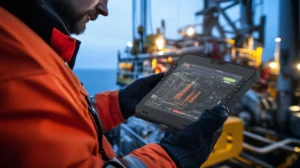
HMIs for Oil & Gas: Multi-Protocol Integration Without External Converters

Maple Systems Class I Division 2 HMI Lineup for Oil and Gas Industry

Rugged Design for Harsh Environments In the Oil & Gas industry, where operations are often spread across remote sites and harsh environments, reliable and efficient automation is critical. To meet these demands, Maple Systems HMIs provide a powerful solution by enabling easy integration with multiple…

When to use a Small Form-factor Pluggable (SFP) module

Network Switch with Fiber Optic Cable

In today’s data-intensive industrial landscape, enterprise network performance is a critical driver of productivity and business continuity. While traditional copper-based Ethernet cabling has long served as the standard for local area network (LAN) connections, it is increasingly reaching its limits regarding speed, distance, and environmental…