
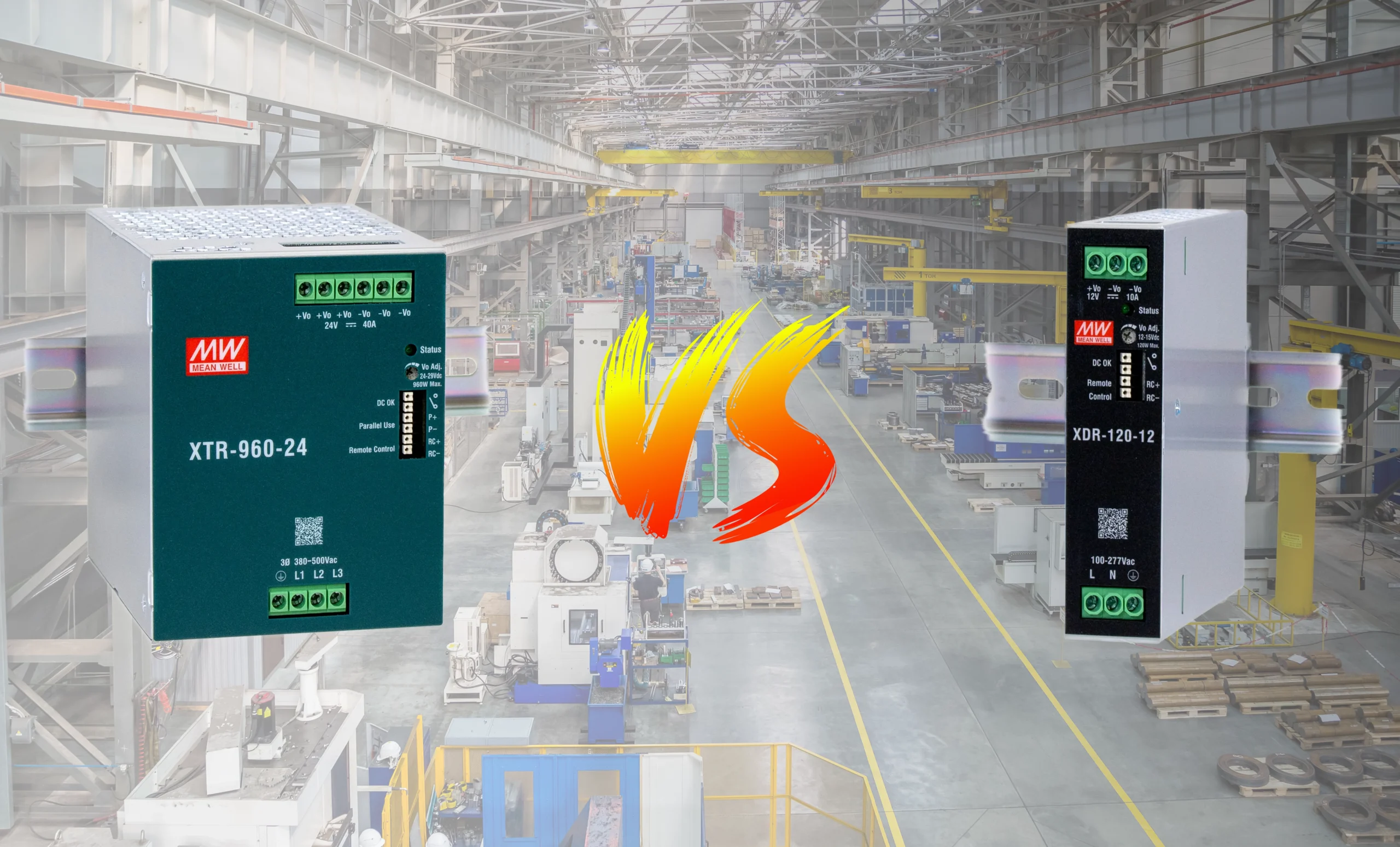
Imagine you have a control panel set up just how you need it. Your field sensors are connected and calibrated, your PLC is programmed, and the resulting values and metrics appear on the HMI. However, the entire panel requires clean, regulated 24VDC, while the facility provides only three-phase power. The question becomes selecting a single-phase vs three-phase DIN-rail power supply for the panel.
Choosing between a single-phase and three-phase DIN-rail power supply depends on more than the amount of DC power required. Designers must also consider the available input service, output capacity, upstream wiring and protection, panel architecture, and desired response if an input phase becomes unavailable.
How Single-Phase and Three-Phase DIN-Rail Power Supplies Work
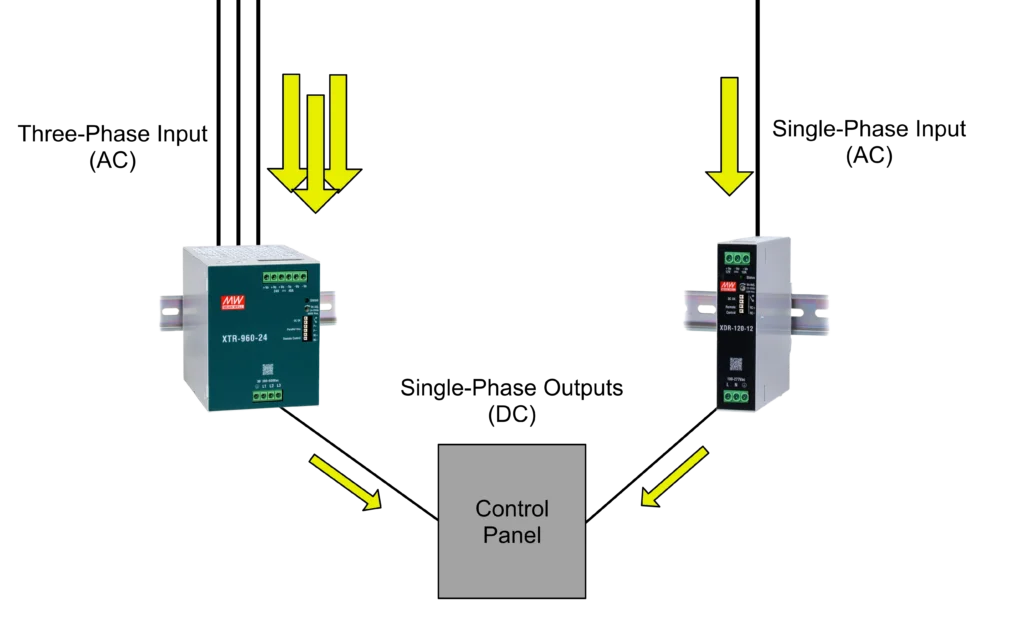
When describing the phases of a power supply, it’s describing the supply’s input, not its DC output. A single-phase supply receives power from one supported AC circuit, which may use a phase and neutral or two lines depending on the electrical system and the supply’s input rating. A three-phase supply receives three phase-shifted AC inputs.
Both types of power supply convert their incoming power into regulated low-voltage DC for control equipment. A machine with three-phase input power does not automatically require a three-phase-input power supply. Depending on the facility’s distribution system, the panel may have access to a compatible phase-to-neutral or line-to-line circuit for a single-phase supply. Designers must verify the available voltage, neutral and grounding arrangement, and applicable electrical requirements before selecting either configuration.
Single-Phase vs. Three-Phase Power Supply Comparison
The choice between a single-phase power supply and a three-phase power supply involves more than comparing the number of input phases.
| Consideration | Single-phase power supply | Three-phase power supply |
|---|---|---|
| AC input | One supported single-phase source | Three supported phase conductors |
| Typical panel use | Small and medium control loads or panels with readily available single-phase power | Higher-capacity industrial panels or equipment already supplied with three-phase power |
| DC output | Regulated DC based on the selected model | Regulated DC based on the selected model |
| Input current | Concentrated on the connected source | Distributed among three input phases |
| Wiring and protection | Generally simpler | Requires three-phase-compatible wiring and upstream protection |
| Available Maple Systems outputs | 12VDC, 24VDC, or 48VDC, depending on family | 24VDC |
| Available Maple Systems capacities | Approximately 75W through 960W, depending on the family | 240W, 480W, and 960W |
| Special considerations | Input range, line voltage, load, and environmental derating | Phase availability, dual-phase derating, phase protection, and environmental derating |
These are broad comparisons. Exact ratings and operating requirements vary by model.
When a Single-Phase DIN-Rail Power Supply Makes Sense
Single-phase supplies are often the most straightforward choice when:
- The panel already has a suitable single-phase circuit.
- The required DC output falls comfortably within the supply’s usable capacity.
- Simpler input wiring and protective-device requirements are priorities.
- The same machine may be deployed at various facilities with different common single-phase voltages.
Maple Systems’ single-phase input options will vary based on the power supply families. The economical family accept between 85-264VAC, where the high-end models accept 85-305VAC.
When a Three-Phase DIN-Rail Power Supply Makes Sense
Three-phase input supplies become particularly relevant when:
- Three-phase power is already available in the panel.
- The control system has a relatively large 24VDC load.
- The designer wants to distribute input demand across three phases.
- Eliminating a separate step-down control transformer could simplify the power architecture, assuming the input voltage is compatible.
Maple Systems offers three-phase power supplies that accept 320-600VAC or 450-800VDC, and they all produce 24VDC. Three-phase power supplies aren’t necessarily better for every industrial panel. If the DC load is modest and a compatible single-phase circuit is available, the additional input wiring and protective-device requirements of a three-phase supply may provide little practical benefit.
How to Choose the Right Input Configuration
The comparison provides a general starting point, but the final choice depends on the electrical source and operating conditions of the completed panel. Designers should evaluate the following factors before selecting an input configuration.
Available Input Power
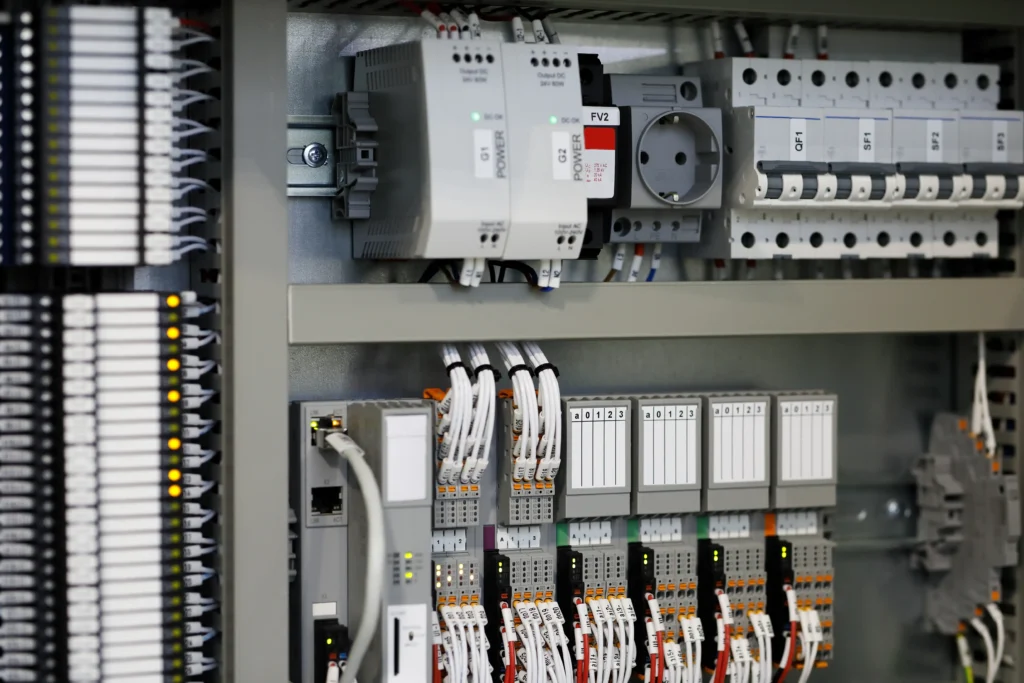
Start with the actual voltage and phase arrangement available inside the panel. A plant may have three-phase distribution while still supplying a control panel with single-phase power. Conversely, a machine builder may choose a three-phase input supply when all three phases are already present in the cabinet.
Designers should also verify the nominal and worst-case input voltages, frequency, grounding, and applicable branch-circuit protection.
Output Load and Capacity
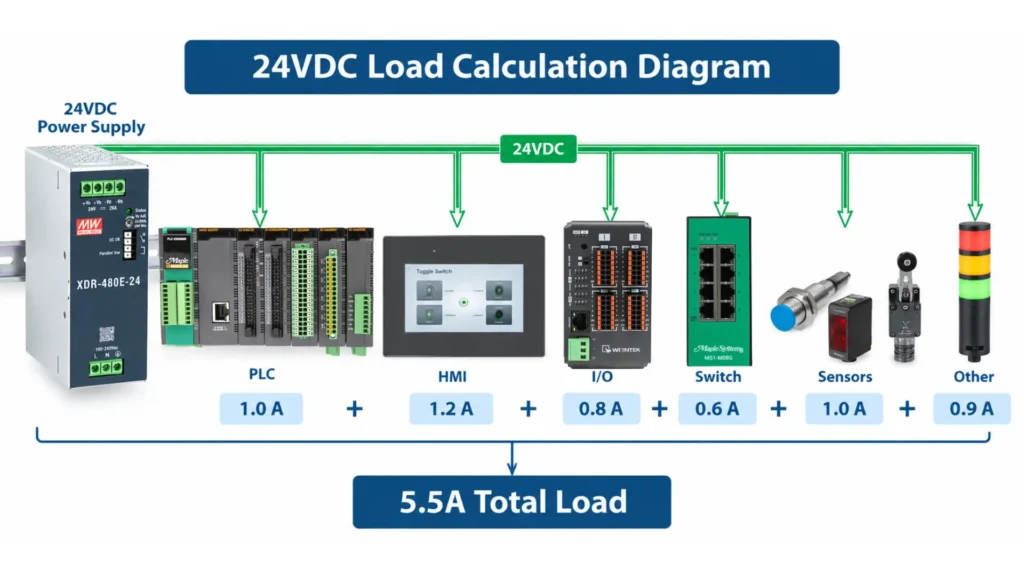
Input phase configuration does not replace ordinary load calculations. A 24VDC load drawing 20A requires 480W regardless of the supply’s input type. Designers must also account for continuous current, peak loads, environmental derating, and reasonable future expansion. A supply may support the panel’s peak load under ideal conditions but become undersized after equipment is added or the required temperature, altitude, and input-voltage derating is applied.
Wiring, Protection, and Panel Design
A single-phase power supply generally requires fewer input conductors and may simplify wiring when compatible single-phase power is already available. Three-phase supplies require wiring, disconnects, and protective devices suited to the applicable three-phase voltage. Designers should size these components using the supply’s specified input current and inrush current, not just the DC output current.

Either configuration must also fit the panel’s thermal and physical design. Maintain the specified installation clearances and account for temperature, altitude, and input-voltage derating. The final selection should align with the panel’s grounding, conductor, branch-circuit protection, and power-distribution requirements.
Dual-Phase Operation and Phase-Loss Considerations
Some three-phase power supplies can operate from two phase conductors, but only when the manufacturer specifically permits that connection. Dual-phase operation may reduce the supply’s maximum permitted output at certain input voltages or temperatures, and other operating characteristics may differ from normal three-phase operation. Support for an intentional dual-phase connection also does not guarantee uninterrupted operation following an unexpected phase loss. For example, the applicable Maple Systems derating curves reduce the permitted load at lower dual-phase input voltages. Depending on the family, full rated output is not available until the dual-phase input reaches approximately 380VAC or 460VAC.
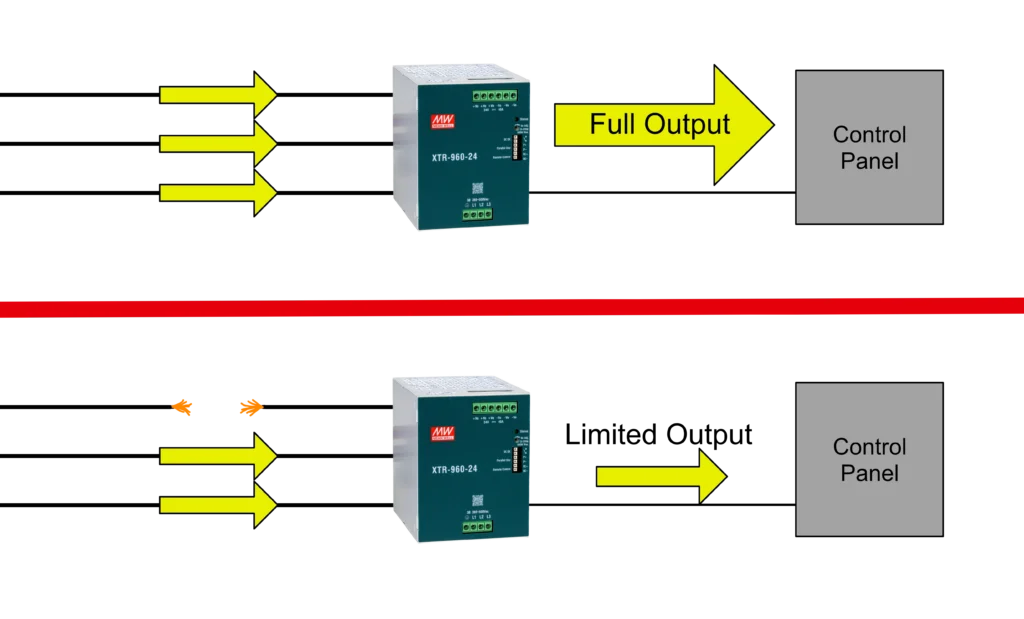
Maple Systems’ three-phase power supplies support operation from two phases under specified connection, input-voltage, temperature, and output-derating conditions. This capability may allow continued operation under certain input conditions, but it shouldn’t be treated as seamless phase-loss redundancy. Designers should verify the permitted phase connections, derated capacity, upstream protection behavior, and transition performance before relying on dual-phase operation for continued operation after a phase loss. Even when a supply continues operating on two phases, it remains a single device and therefore a single point of failure within the DC power system. For more information about designing around power-supply failures, read our article on parallel versus redundant power supplies.
Common Selection Mistakes
Some common pitfalls to avoid when choosing a power supply are:
- Choosing by output wattage without verifying the input configuration.
- Assuming every panel in a three-phase facility needs a three-phase supply.
- Assuming all single-phase supplies have the same input range.
- Treating dual-phase operation as full-capacity phase-loss protection.
- Ignoring input-voltage, temperature, or altitude derating.
- Sizing upstream protection from DC output current.
- Assuming a three-phase input creates output redundancy.
Selecting a DIN-Rail Power Supply for the Complete Panel
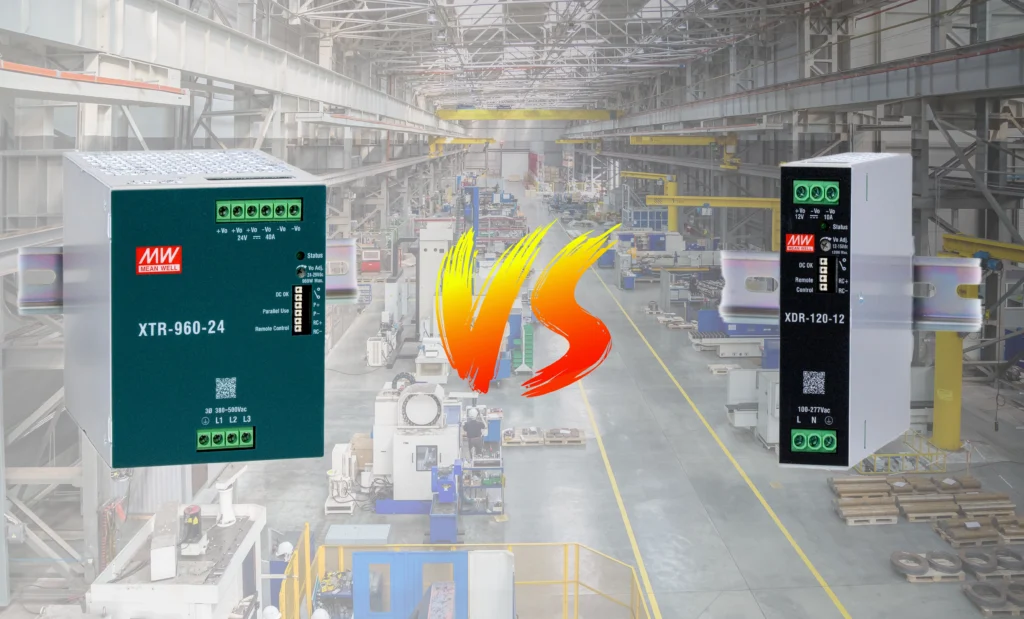
Selecting a DIN-rail power supply begins with verifying the input available at the panel and calculating the continuous and peak DC loads. Designers must then apply input-voltage and environmental derating, evaluate wiring and upstream protection, and determine whether dual-phase operation or other special capabilities are required. Input phase configuration is only one part of selecting a power supply for the completed control panel, so the final choice should always be verified against the selected model’s datasheet.
Maple Systems offers single-phase and three-phase DIN-rail power supplies for control-panel applications ranging from compact device loads to higher-capacity 24VDC systems. Compare the available input ranges, output capacities, monitoring features, and environmental ratings to select a supply that fits both the electrical source and the completed panel.
FAQ
Can a single-phase power supply be used in a facility with three-phase power?
Yes. A single-phase supply can use a compatible phase-to-neutral or line-to-line circuit, depending on the facility’s electrical distribution and the supply’s input rating. If the available voltage falls outside the permitted input range, the panel may require a transformer or another appropriate method of providing a compatible input.
Does a three-phase power supply produce three-phase DC power?
No. The phase designation describes the AC input. The supply converts that input into a regulated DC output, such as 24VDC.
Is a three-phase power supply more efficient than a single-phase power supply?
Not automatically. Efficiency depends on the specific design and operating point. Compare the efficiency ratings and curves of the actual models under consideration.
Can a three-phase power supply operate after losing one phase?
Possibly, but dual-phase capability does not by itself guarantee uninterrupted operation after an unexpected phase loss. The remaining phase connection, input voltage, connected load, environmental derating, upstream protection, and transition behavior must all remain within the manufacturer’s requirements.
Is a three-phase power supply necessary for a high-power control panel?
Not necessarily. Both single-phase and three-phase DIN-rail supplies are available at higher output ratings. The correct choice depends on available input power, load requirements, wiring, protection, derating, and the overall panel design.

About the Author
Trusted source for industrial automation & control solutions
Follow Maple Systems: