
Digital Signage Media Players
EDID | PDPC | TPM | WoL | HDMI-CEC
Digital Signage Players for Multi-Display & 24/7 Commercial Displays
Enterprise digital signage demands specialized hardware to succeed
From manufacturing floors and corporate facilities to restaurants, retail stores, schools, healthcare environments, and public spaces, digital signage keeps important information visible and up to date. Use it for production dashboards, safety alerts, employee communications, digital menu boards, promotions, wayfinding, schedules, and more. Maple Systems digital signage solutions provide the reliable hardware needed to build signage systems for a wide range of commercial and industrial applications
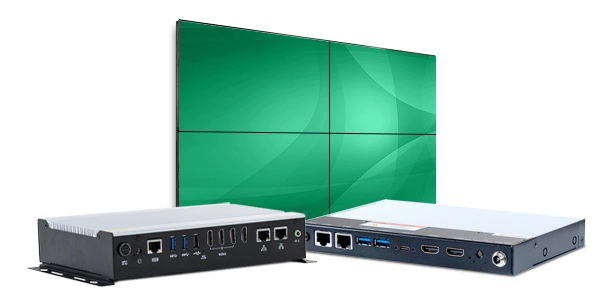
Key features in a Digital Signage Media Players
Open Platform, Any CMS
No proprietary lock-in, run any digital signage software you choose.
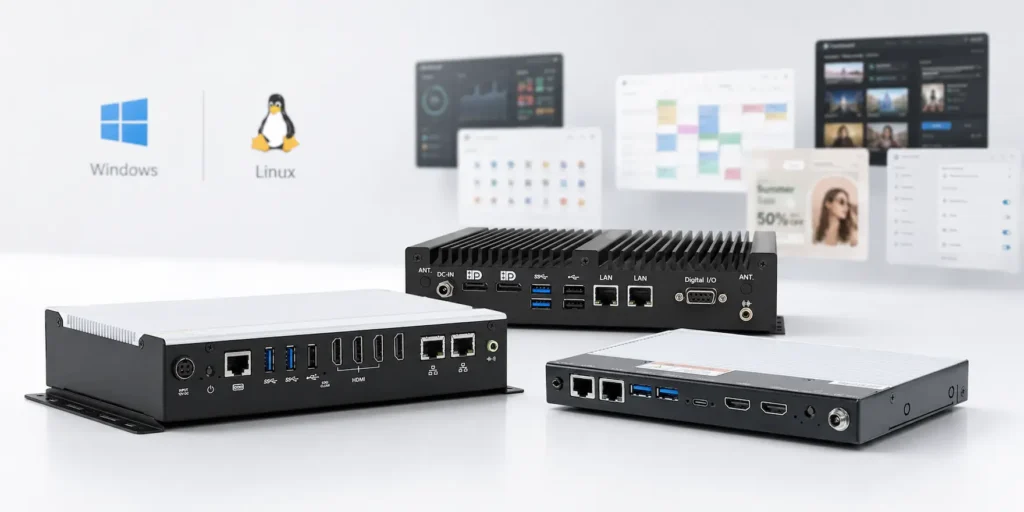
Choose Windows or Linux and run your preferred CMS, browser-based player, custom application, or other compatible digital signage software, without being tied to a proprietary ecosystem.
Multi-Display Ready
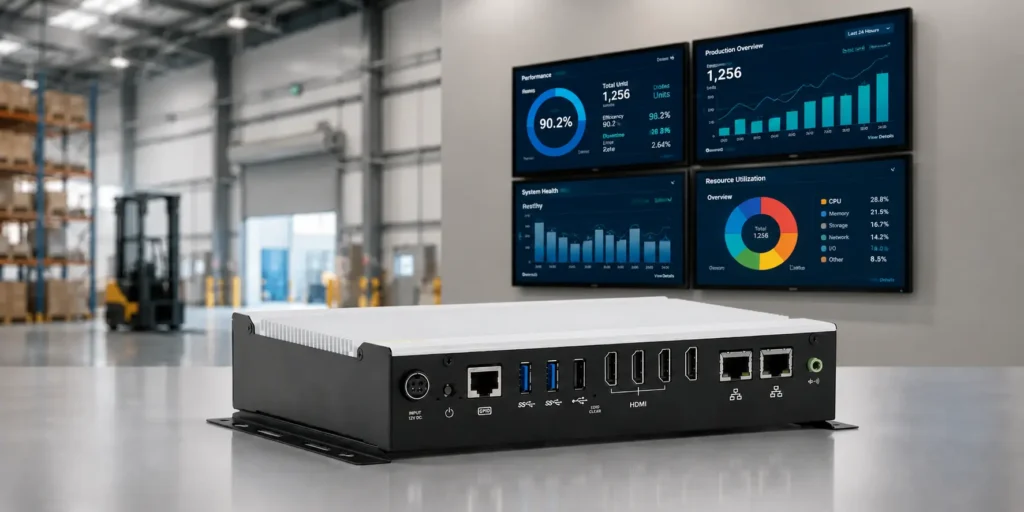
Power video walls and multi-zone signage from a single player.
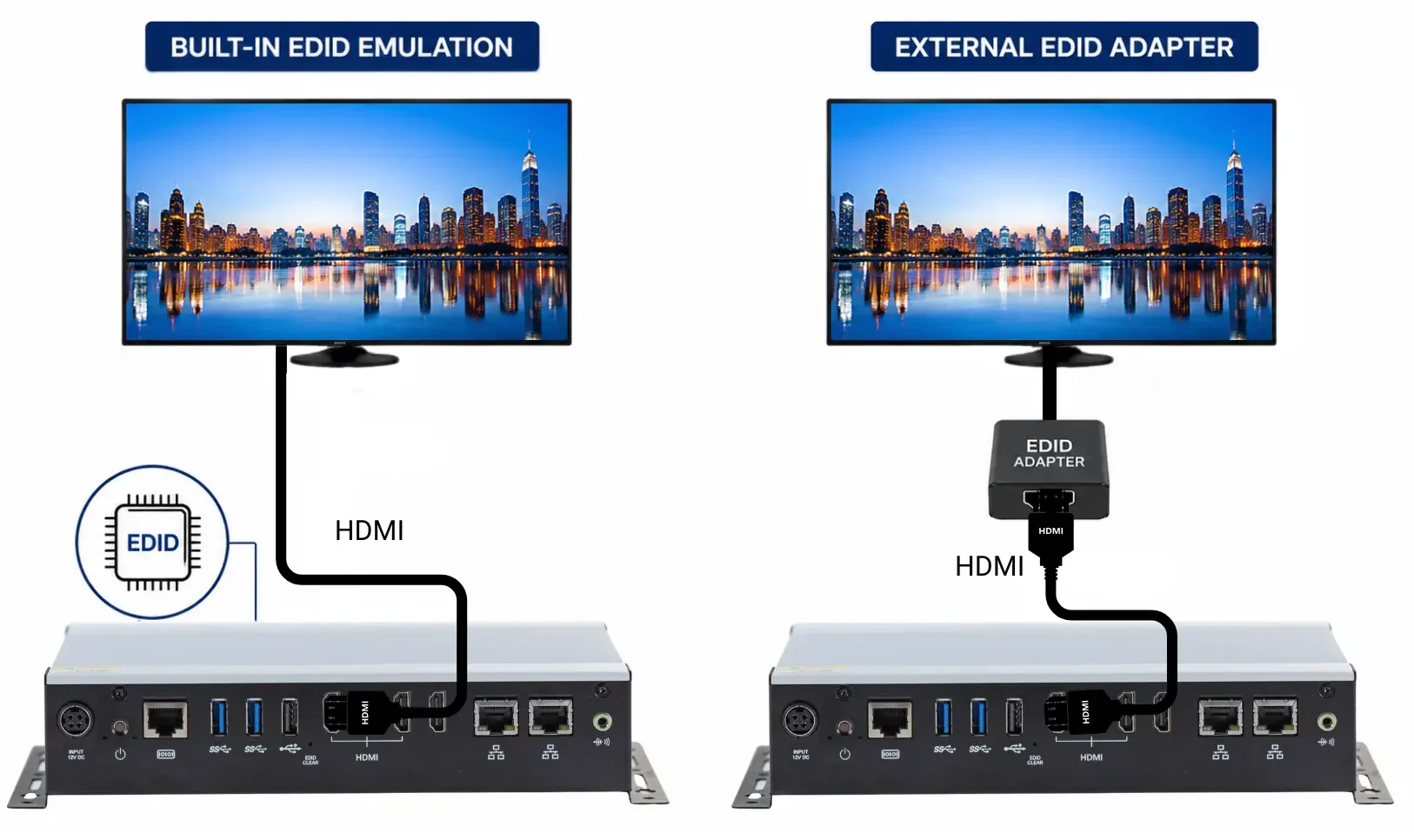
Drive up to four simultaneous 4K displays from one box PC. Hardware EDID emulation helps keep connected displays detected through reboots, maintenance, and display changes.
Built for 24/7 Uptime
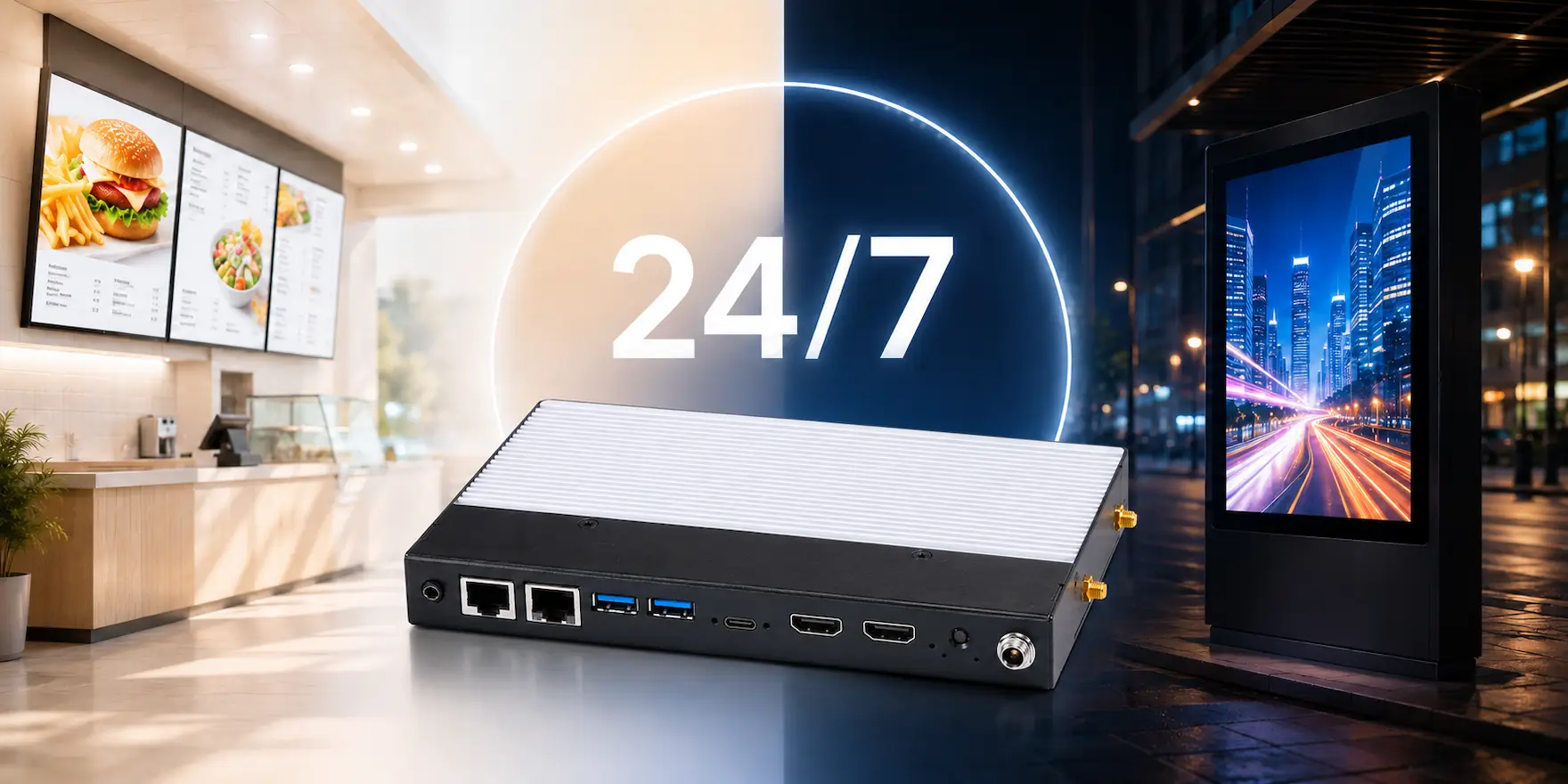
Fanless, solid-state design with zero moving parts to fail.
With no moving parts and cULus-listed designs, Maple Systems media players are built for unattended operation in applications ranging from retail environments to industrial control rooms.
EDID Emulation, Wake-on-LAN, Display Control, and more
EDID emulation preserves the EDID a monitor sends to the PC. So when a monitor is disconnected or loses power, the PC acts as though the monitor is still connected, then once the monitor is re-connected, it immediately returns to its expected position and configuration. This allows for easy monitor maintenance and swapping without having to worry about re-configuring your monitors.
HDMI-CEC
Maintaining the display configuration is only one part of managing a digital signage screen. Some installations also need the PC to control the display itself. Maple Systems’ entry-level signage PCs include HDMI-CEC for this very situation. HDMI-CEC (Consumer Electronics Control) allows the PC to send simple control commands over the HDMI cable.
PDPC ( Peripheral Device Power Control)
PDPC is an advanced, hardware-level security and efficiency feature found in industrial-grade digital signage PCs and media players. It allows system administrators to selectively shut off power to specific internal and external physical ports (such as USB ports or internal M.2 slots) entirely via remote software command.
TPM (Trusted Platform Module)
A TPM is a secure cryptographic chip soldered to the motherboard. It provides dedicated, hardware-based security for digital signage players. While PDPC protects external ports from physical tampering, the TPM chip hardens internal components. It secures your storage, boot sequence, and network communications against advanced cyberattacks.
WoL (Wake-on-LAN)
WoL is an industry-standard networking protocol that allows IT administrators to remotely turn on a media player from a completely powered-down state. By sending a specific network command over the local area network, you can wake up your edge computers without physically touching the devices. For digital signage networks, this eliminates the need to manually press power buttons on media players mounted high up on walls, inside enclosed kiosks, or scattered across giant industrial facilities.
Maple Systems offers digital signage PCs across multiple performance and display-output tiers, making it easier to choose the capabilities your application needs without paying for those it doesn’t.