
Pushbuttons and Selector Switches
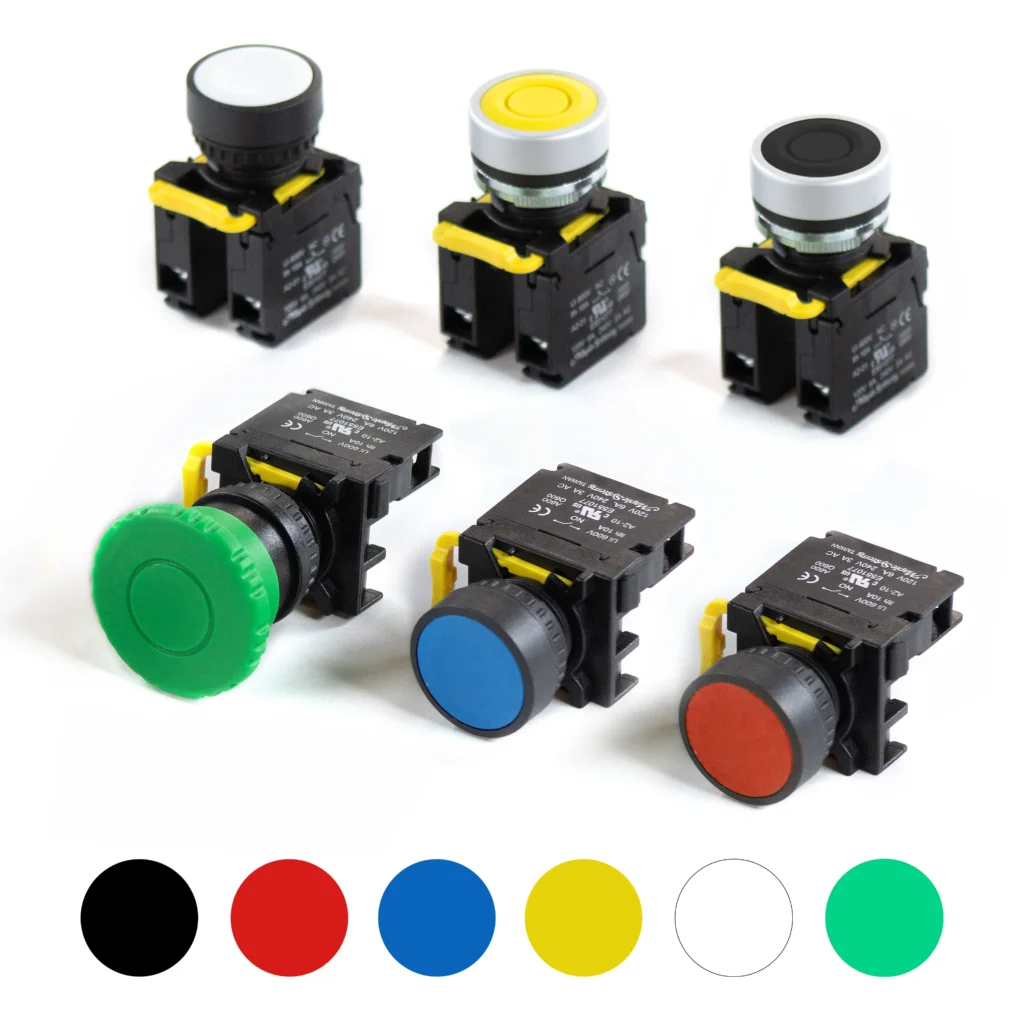
Pushbuttons and switches provide dependable control for electrical and automation systems. Choose momentary or maintained action with options for illuminated, selector, emergency stop, and toggle designs. Designed to support panel mounting, PCB installation, and enclosure use with common contact arrangements, these devices offer sealed protection and crisp tactile feedback for reliable operation. Built for frequent use and harsh conditions, they are used across manufacturing, transportation, energy, medical, and commercial applications.
Save 10-20% with volume pricing
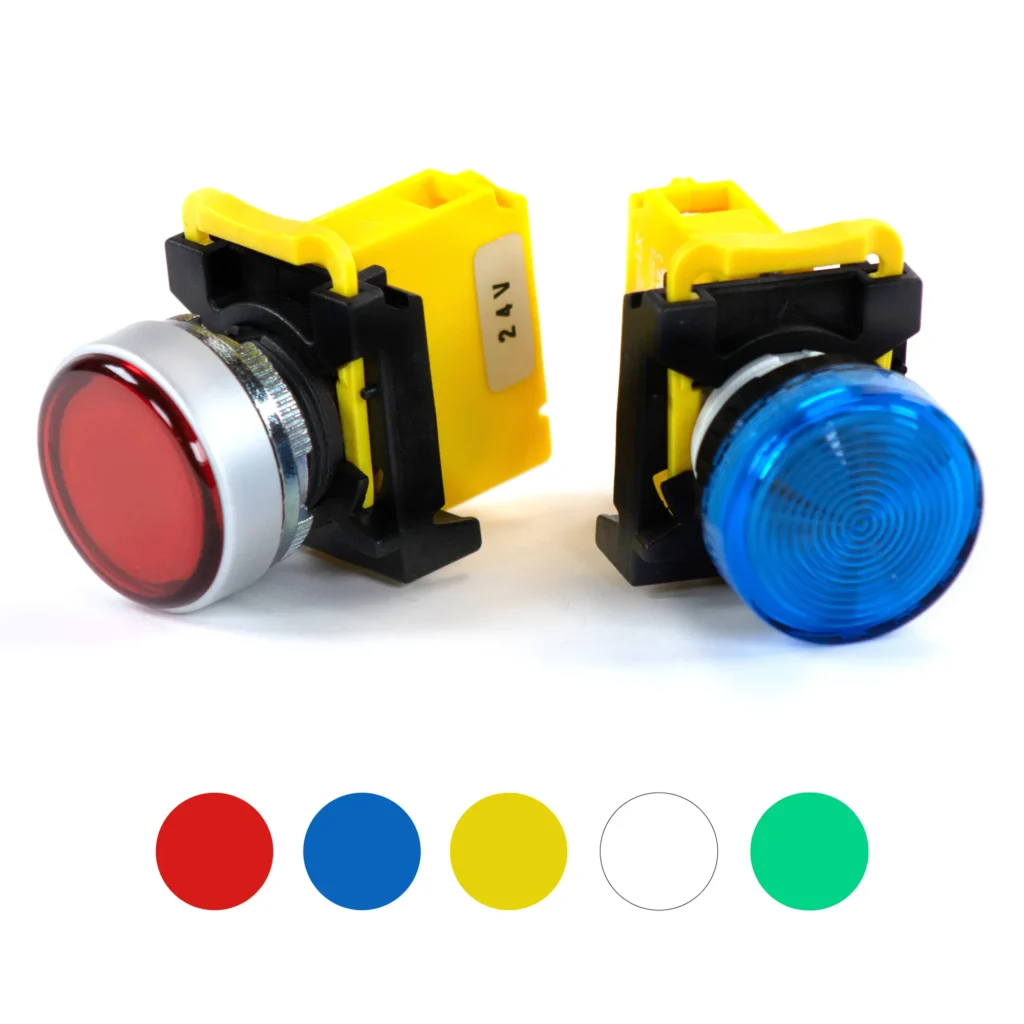
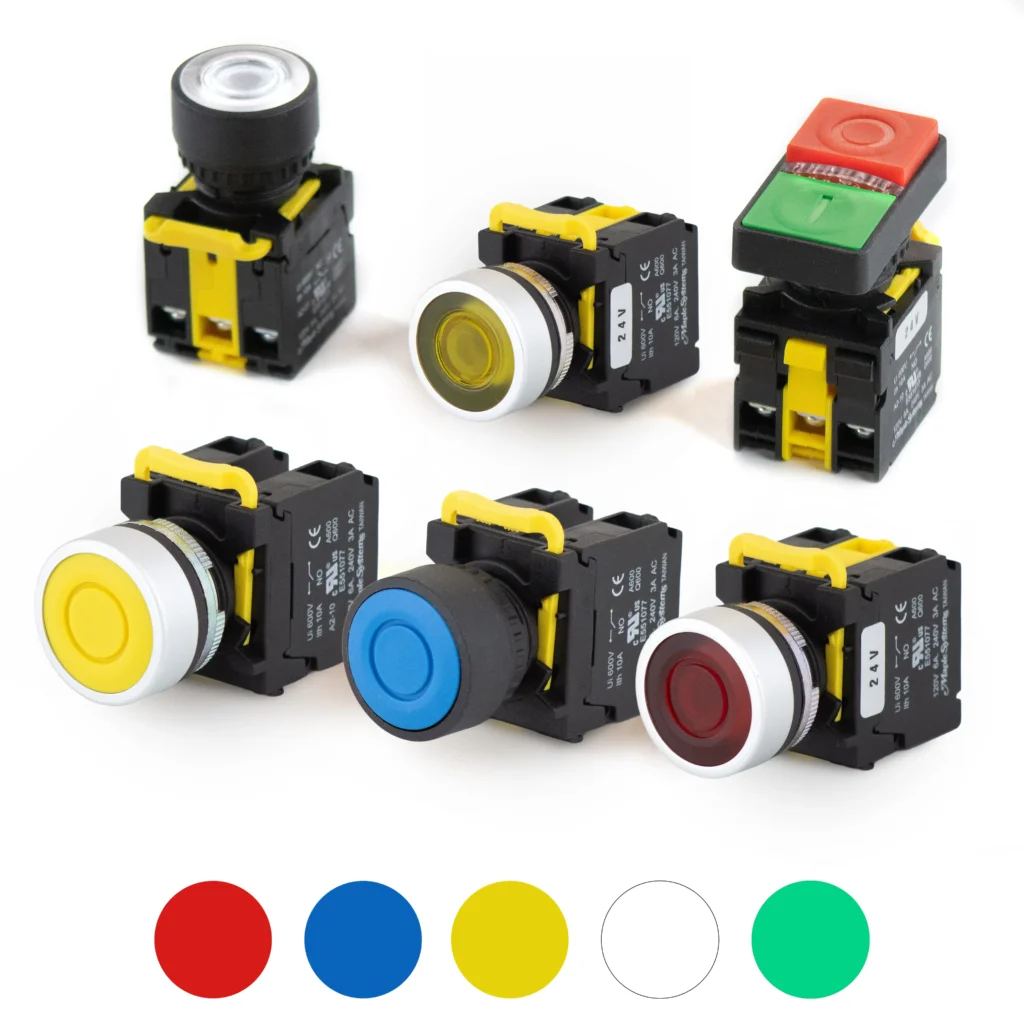
Status indication for control systems, industrial panels, and machinery with clear visual feedback.
Press-to-actuate with immediate release. Ideal for start, reset, and signal inputs for responsive machine and panel control.
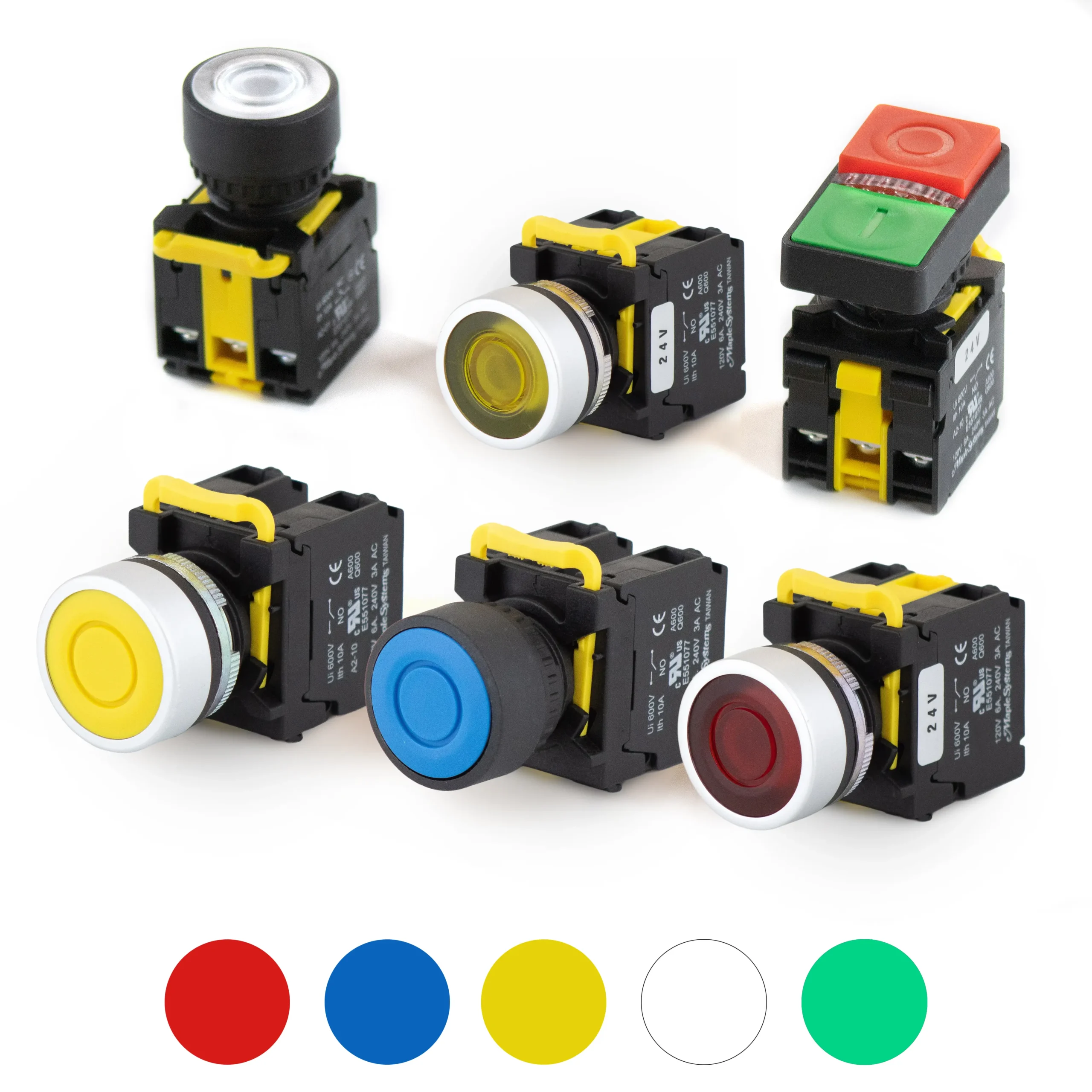
Latching (or maintained) pushbuttons stay in locked position until manually switched back for dependable on-off control.
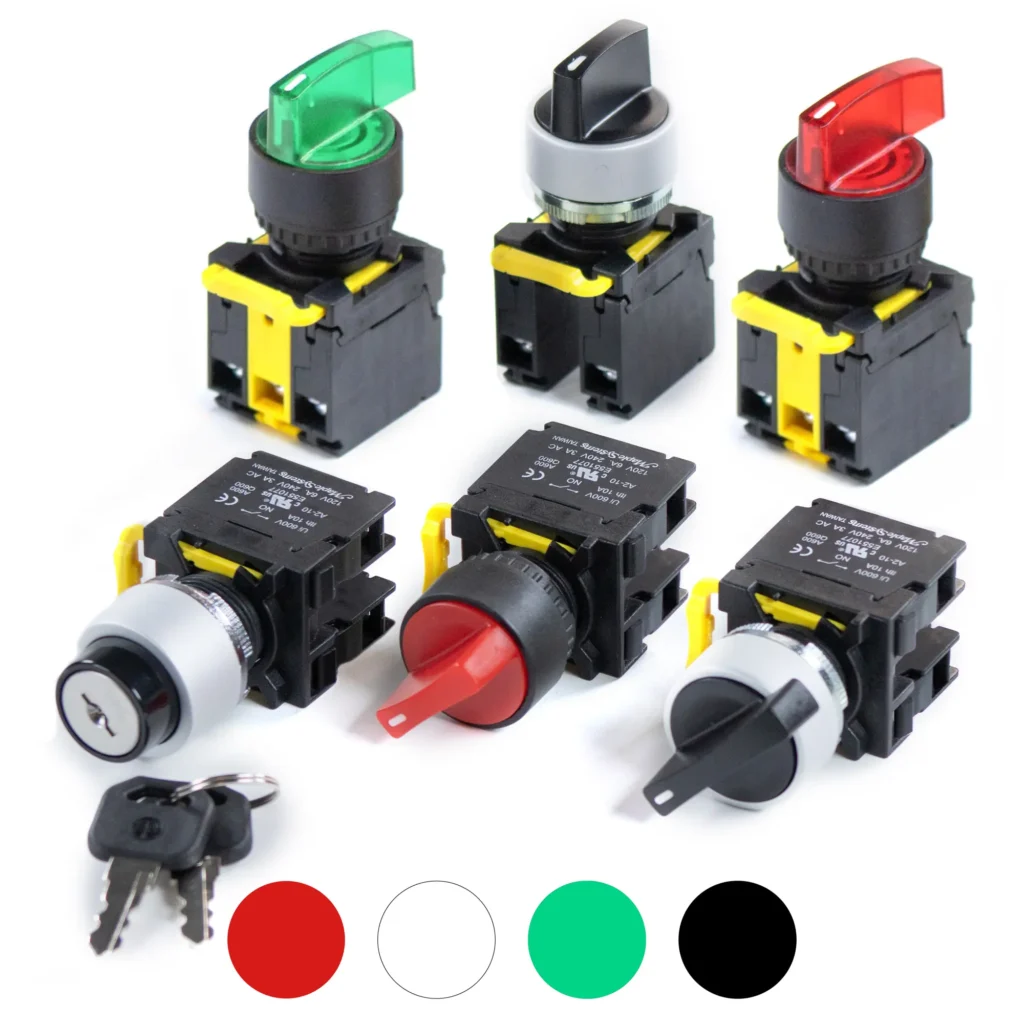
Simple on-off and forward/reverse control with tactile feedback. Suited for panels and compact enclosures.
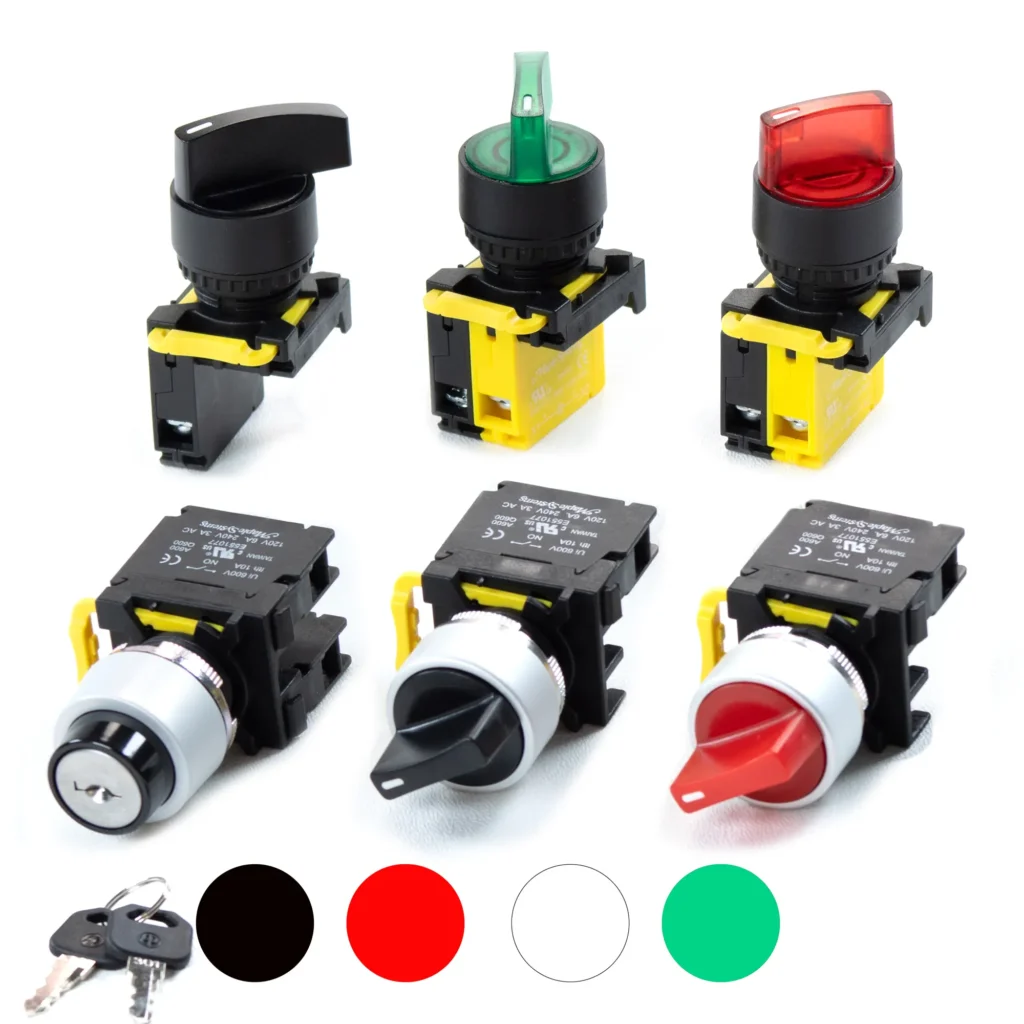
3-position selector switches for maintained control of multiple machine functions such as forward/off/reverse operations.
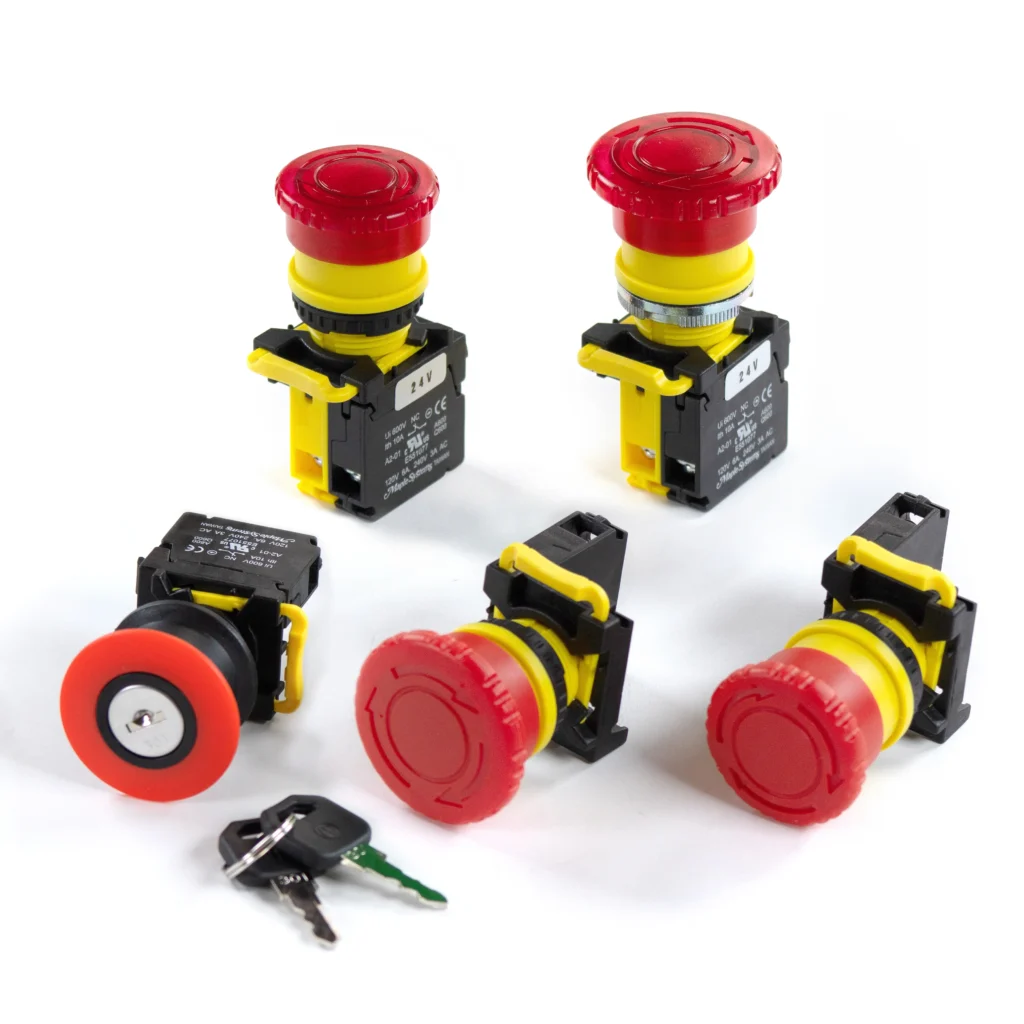
Latching emergency stop switches that lock in place when pressed to provide safe and reliable emergency shutdown control.
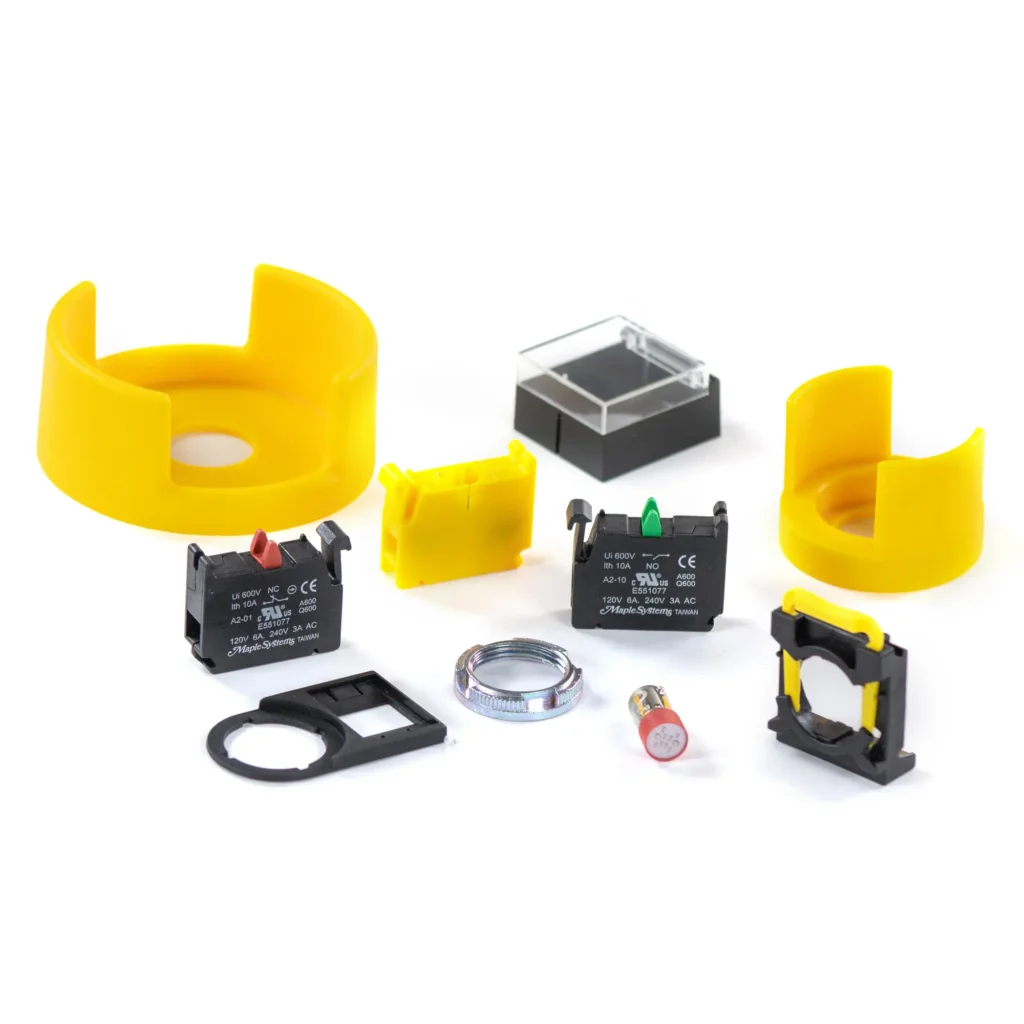
Components for pushbutton switches designed for easy repair and long-lasting performance.
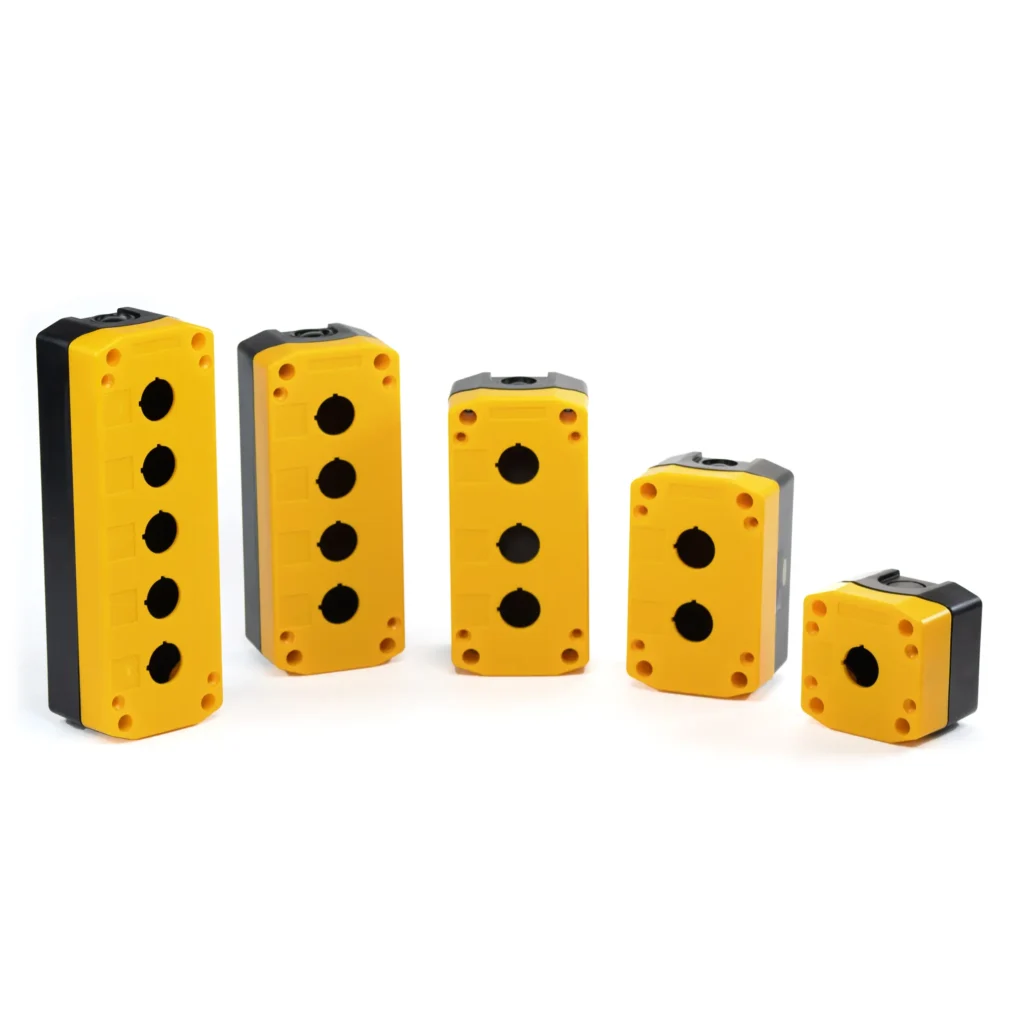
Rugged control boxes built for reliability, safety, and long‑term performance in industrial applications.
How to Choose Pushbuttons and Switches
Choosing the right operator control starts with function, then fit, then ratings. Use the guide below to match the device type to your panel and your application. If you already know what you need, browse a product type above.
Quick Pick Guide
Need a simple press signal?
Choose Momentary Pushbuttons. Common uses: start, reset, acknowledge, jog.
Need an ON or OFF state that stays set?
Choose Toggle Pushbuttons. Common uses: enable, power, manual override.
Need clear machine status?
Choose Indicator Lights. Common uses: run, fault, ready.
Need a safety stop with manual reset?
Choose Latching E‑Stop. Common uses: emergency stop circuits.
Need simple mode selection?
Choose 2-Position Selector Switches. Common uses: A/B selection, on/off modes.
Need multi-mode selection?
Choose 3-Position Selector Switches. Common uses: Auto/Off/Manual control.
Step-by-Step Checklist
Define the action
- Consider momentary action when the signal is active only while pressed.
- Consider maintained action when the state must remain set until changed.
- Use switches when the operator needs fixed positions for mode selection.
Choose signaling vs control
- Use pushbuttons and selector switches to command actions.
- Use indicator lights to show status, faults, or readiness.
- Use illuminated devices when one unit must control and signal.
Confirm mounting and space
- Verify the required panel or enclosure mounting approach.
- Check available clearance behind the panel, especially in tight enclosures.
- Confirm whether the device will mount in a panel, box, door, or station.
Review electrical compatibility
- Ensure the device aligns with your control circuit design.
- Confirm the control logic behavior required for your application.
- Verify that the connection method fits your wiring approach.
Consider environment and duty
- Plan for frequent operation where consistent tactile feel matters.
- Account for dust, oil, moisture, or washdown conditions if present.
- Consider vibration or movement in mobile or industrial environments.
Review safety notes for E‑Stops
- Consider placement and accessibility as part of the overall system design.
- Coordinate device selection with your broader safety strategy.
- Use latching emergency stops where the stop condition must remain active until reset.
Not sure what fits your panel or circuit?
Contact our team and we will help you choose the right option.
Implement with Maple Systems Products
Pushbuttons and switches are rarely used alone. Maple Systems provides a broader portfolio of operator interfaces, control hardware, and industrial computing products to support complete, maintainable automation systems.

HMIs
Provide industrial operator visualization and interaction for machines and automation systems.

HMI + PLC
Combine control logic and operator interface in a single compact industrial automation device.

PLCs & Control
Deliver centralized control and coordination for industrial automation applications.
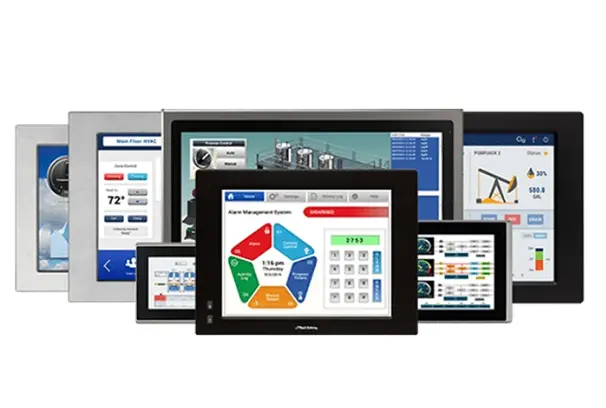
Industrial Panel PCs
Offer panel-mounted industrial computing for visualization, control, and data-driven systems.
Industrial Box PCs
Provide flexible industrial computing for enclosure-mounted and distributed control systems.
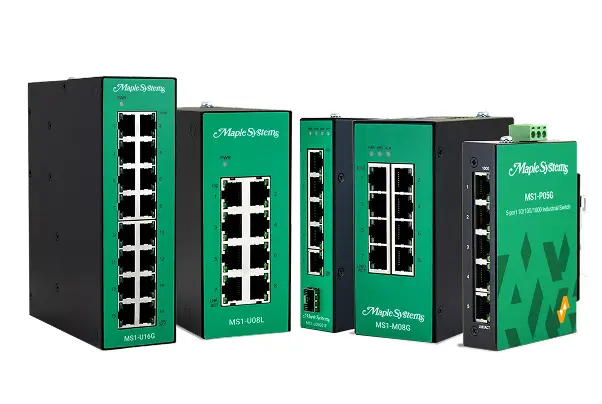
Network & Communication
Enable connectivity and data exchange between devices across industrial control systems.

Rugged Tablets
Enable remote access to industrial systems for monitoring, diagnostics, and on-site interaction.
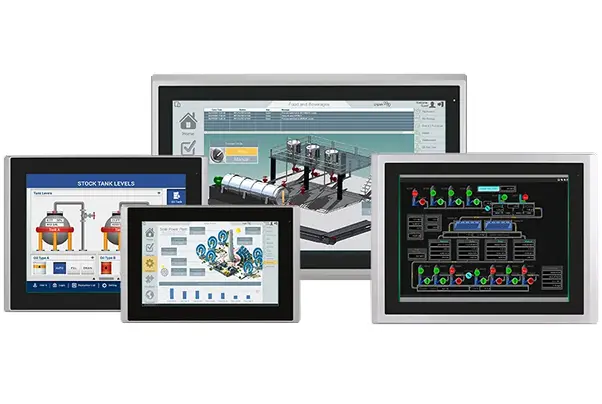
Industrial Monitors
Provide durable display solutions for visualizing data in control rooms, panels, and industrial environments.