
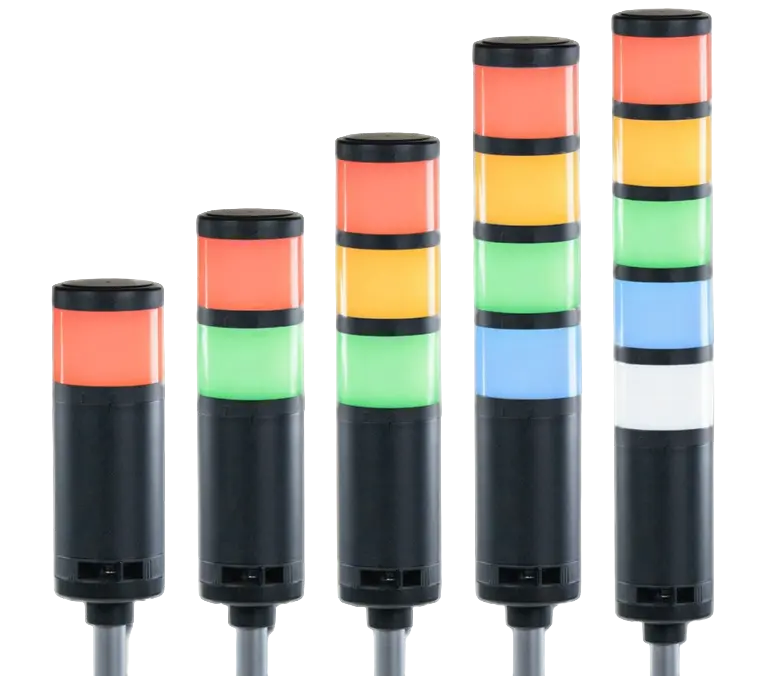
Modern industrial automation systems rely on fast, clear communication between machines and operators. While HMIs and SCADA systems provide detailed machine information, tower stack lights remain one of the most effective ways to communicate machine status at a glance.
From packaging lines and material handling systems to assembly equipment and processing machinery, tower stack lights provide immediate visual and audible indication of machine conditions. Operators can quickly identify normal operation, warnings, faults, or process changes without needing to access a control panel or diagnostic screen.
Choosing the right tower stack light can improve machine visibility, reduce response times, increase safety, and help minimize costly downtime.
Why Tower Stack Lights Matter
Manufacturing environments often contain multiple machines operating simultaneously. Operators, maintenance personnel, and supervisors need to quickly identify equipment status from a distance without interrupting production.
Tower stack lights provide a simple but highly effective visual communication system that helps personnel respond faster to machine events.
Common machine conditions communicated through tower lights include:
- Normal machine operation
- Material shortages
- Process warnings
- Machine faults
- Maintenance requests
- Operator assistance calls
- Production status changes
Because tower lights provide continuous visibility across a production floor, they often serve as the first indication that a machine requires attention.
Visibility and Machine Status Indication
The primary purpose of a tower stack light is to communicate machine status quickly and clearly.
Modern LED tower lights use multiple color segments to display different machine conditions. Standard color conventions typically include:
- Green for normal operation
- Amber or yellow for warnings
- Red for faults or machine stoppages
- Blue for operator assistance
- White for special process conditions
Direct Visibility Across the Production Floor
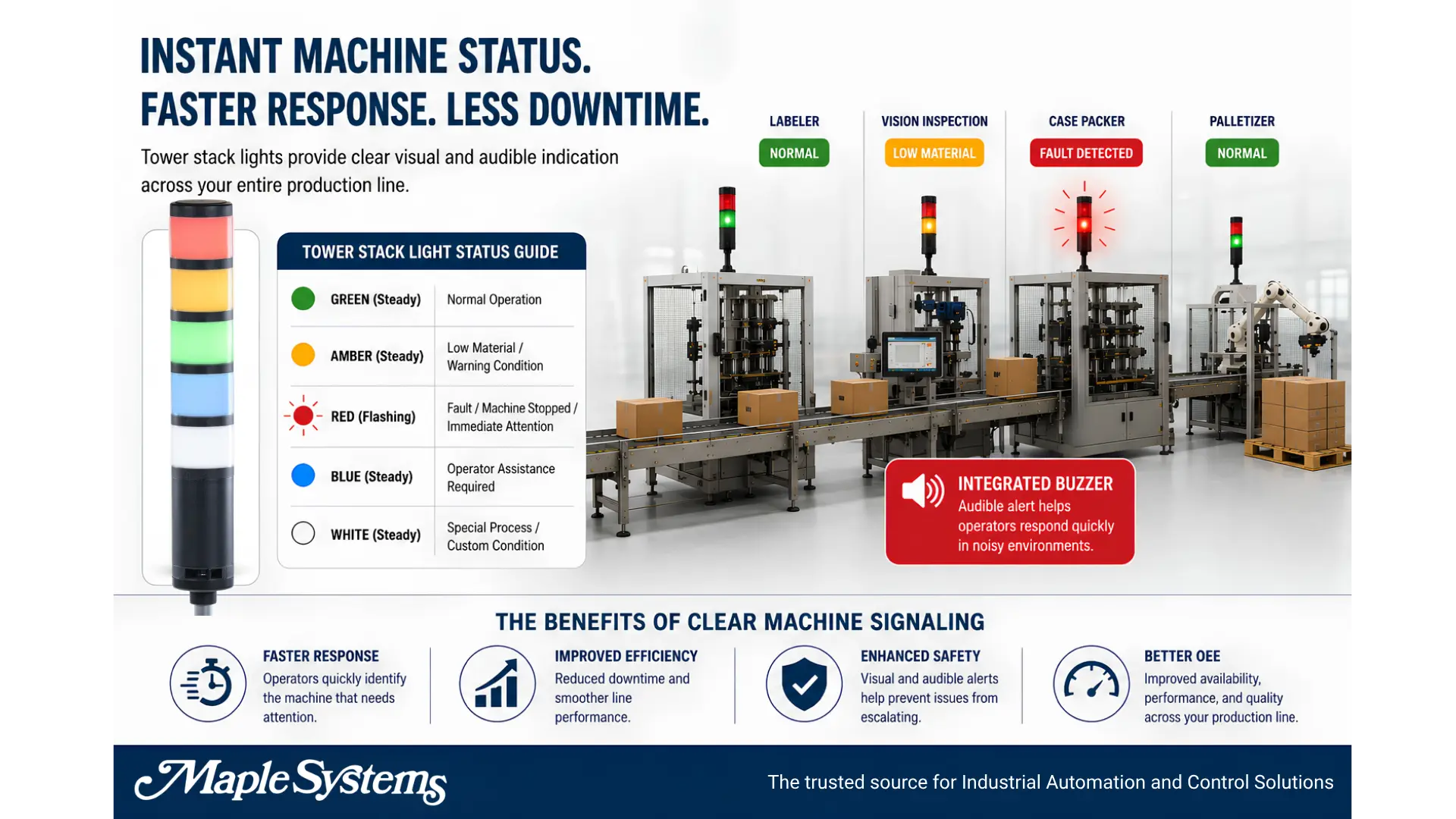
A high-speed packaging line may include conveyors, labelers, vision inspection systems, case packers, and palletizers operating simultaneously. When a fault occurs, operators need to identify the affected machine immediately to prevent production bottlenecks and minimize downtime.
A tower stack light allows personnel to quickly determine machine status from across the production floor. For example, a green light may indicate normal operation, an amber light may signal a low-material condition, and a flashing red light may indicate a machine fault requiring immediate attention. An integrated buzzer can further alert operators to critical events in noisy production environments.
By providing instant visual and audible feedback, tower lights help reduce response times, improve production efficiency, and support overall equipment effectiveness (OEE).
Steady vs Flashing Indication
Different machine events often require different levels of urgency.
Steady illumination is commonly used for normal machine status, while flashing operation helps draw attention to warnings, alarms, or fault conditions.
The TL1 Series supports both steady and flashing operation modes, providing flexibility for a wide range of industrial applications.
Modular Design and Expandability
Industrial equipment requirements frequently change throughout the lifecycle of a machine.
A tower light that supports modular expansion allows machine builders and maintenance personnel to adapt signaling requirements without replacing the entire assembly.
Flexible Configuration
Some machines may only require a single status indicator, while others need multiple status levels for production, maintenance, quality control, and fault conditions.
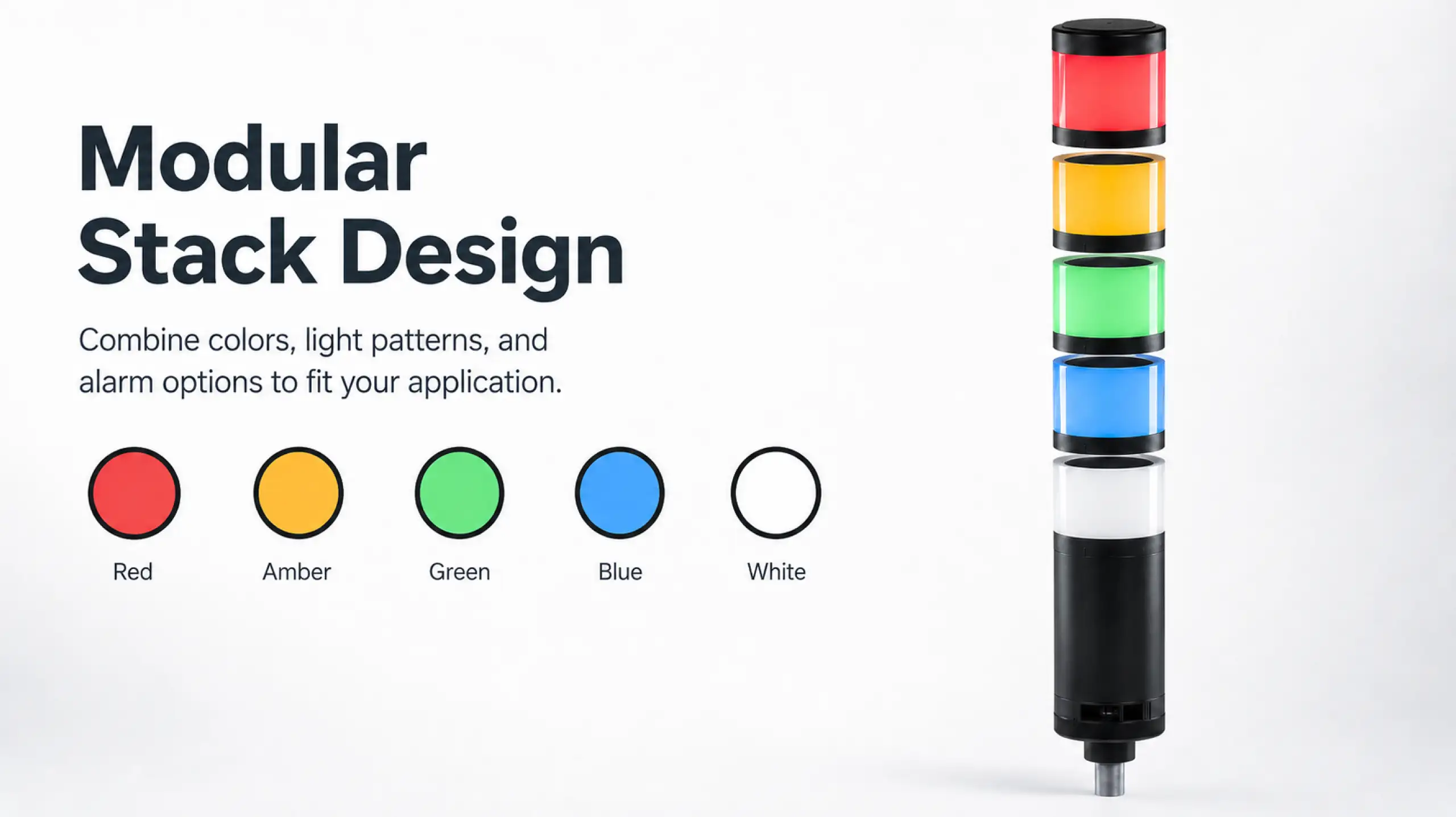
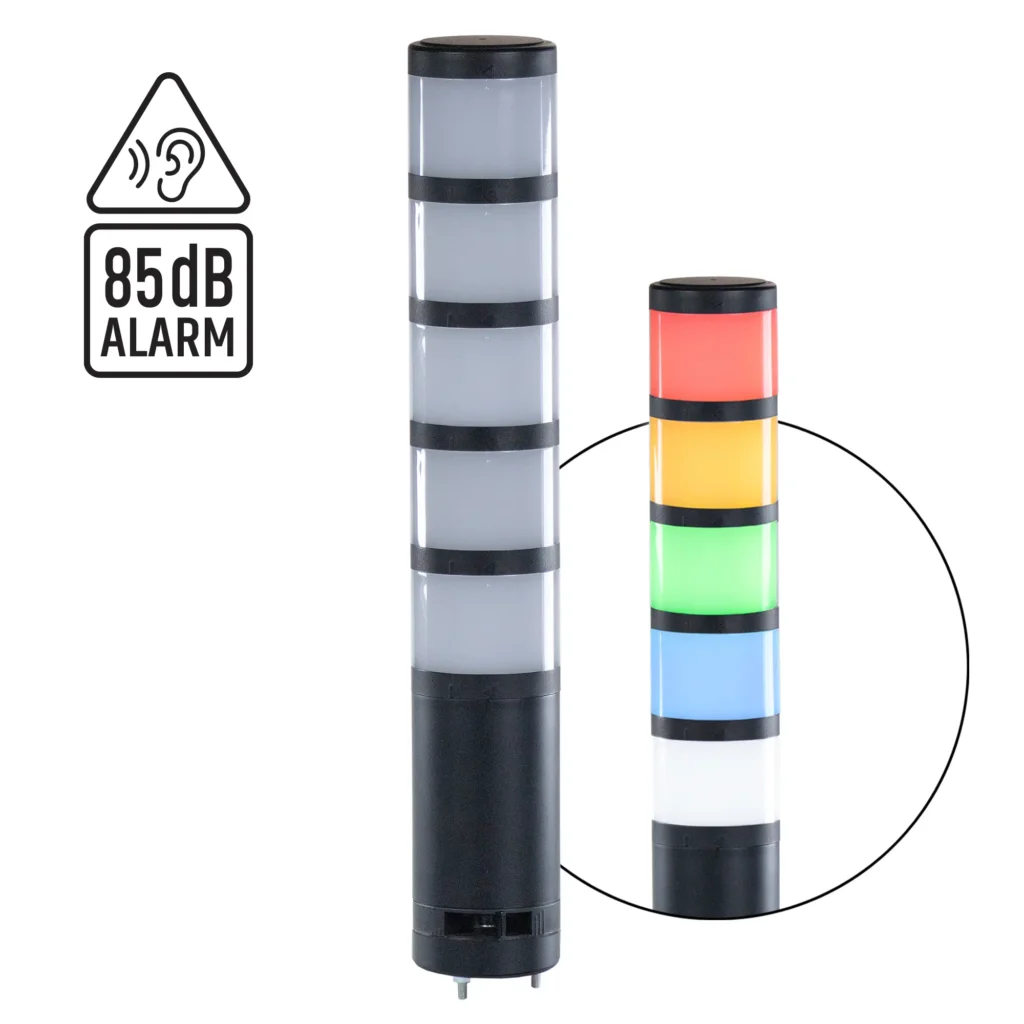
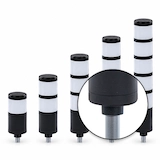
The Maple Systems TL1 Series supports tool-less stackable modules that allow users to quickly add, remove, or reconfigure light segments as application requirements evolve. Multiple color combinations and up to five light layers are available.
Simplified Maintenance and Standardization
OEMs often standardize on a single tower light platform across multiple machine types. Modular designs simplify spare parts management and reduce inventory requirements while allowing consistent machine signaling throughout a facility.
Audible Alerts and Operator Notification
Visual indication alone may not always be sufficient in busy industrial environments.
High-noise production floors often require audible alarms to ensure operators are aware of machine faults, maintenance requests, or process interruptions.
Visual and Audible Signaling
Combining visual and audible alerts improves response times and helps ensure critical machine events are not overlooked.
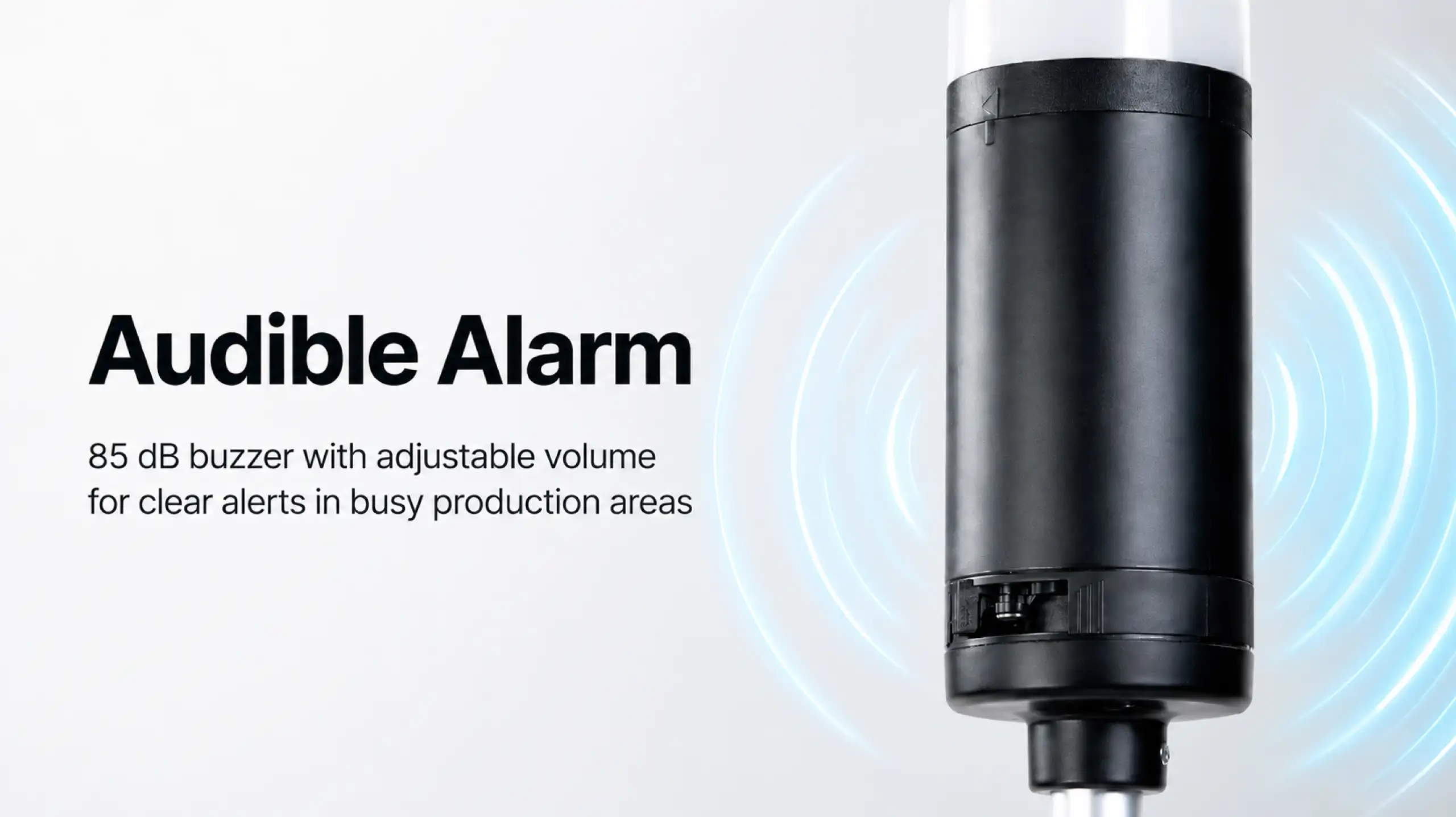
The TL1 Series offers an optional integrated buzzer with adjustable volume control and sound levels up to 85 dB at three feet. This allows users to tailor audible notifications based on the operating environment.
Industrial Durability and Environmental Protection
Industrial signaling devices must withstand challenging operating conditions.
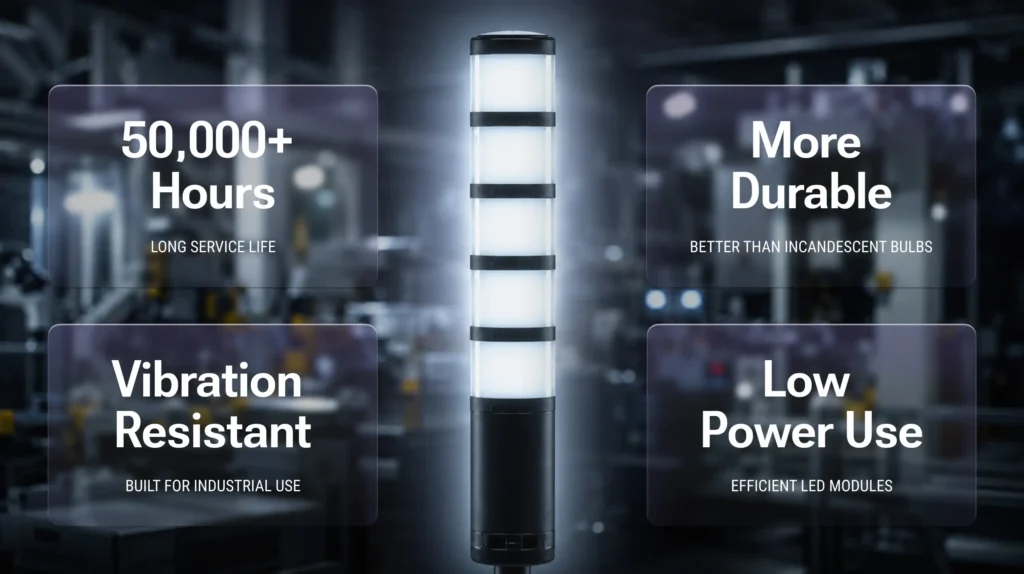
Dust, vibration, electrical noise, and temperature fluctuations can all affect long-term reliability if products are not designed for industrial environments.
Built for Industrial Automation
Tower lights used in manufacturing, material handling, packaging, and processing applications require durable construction and reliable operation.
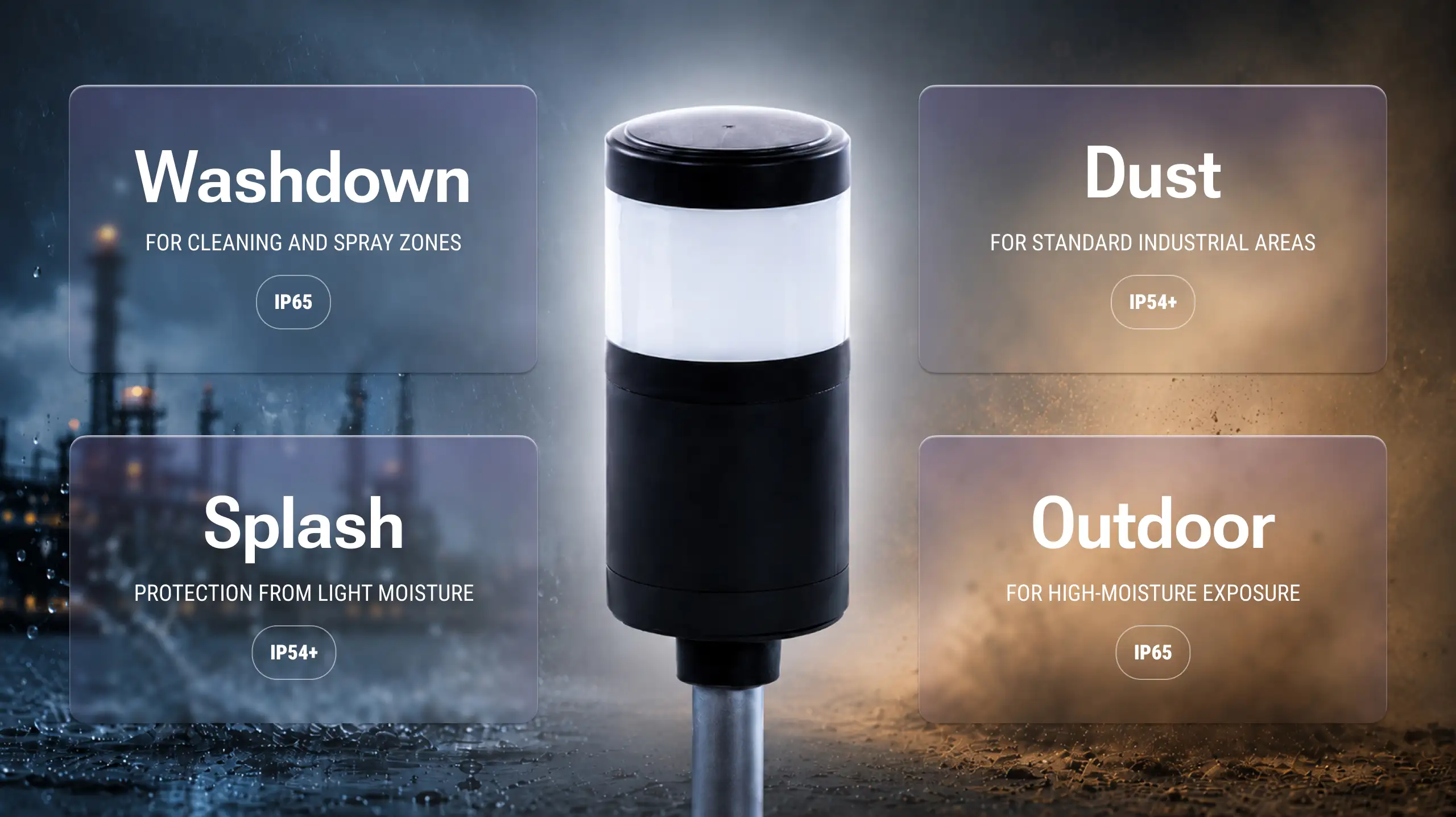
The Maple Systems TL1 Series utilizes ABS housings, polycarbonate lenses, and industrial-rated construction designed for demanding environments. The lights are rated up to IP65 protection and operate in temperatures ranging from -30°C to 50°C.
Direct-Mount vs Pole-Mount Considerations
Selecting the proper mounting style is an important part of tower light design.
Direct-Mount Tower Lights
Direct-mount tower lights are ideal when machine space is limited and the signaling device can be mounted directly on an enclosure or machine frame.
These installations provide a compact solution while maintaining clear machine status indication.
Pole-Mount Tower Lights
Pole-mounted tower lights elevate visual indicators above equipment, improving visibility across larger machines and production cells.
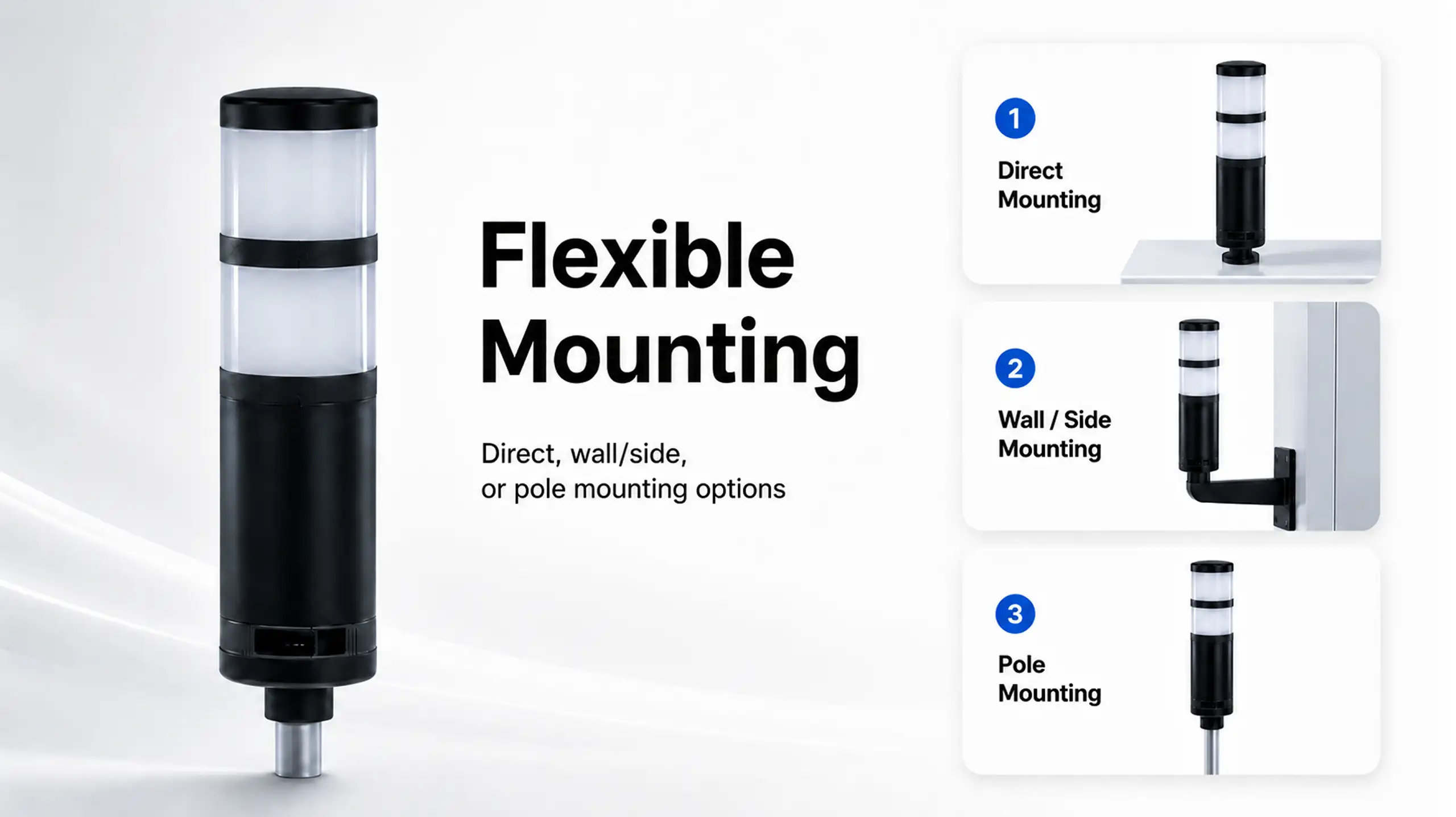
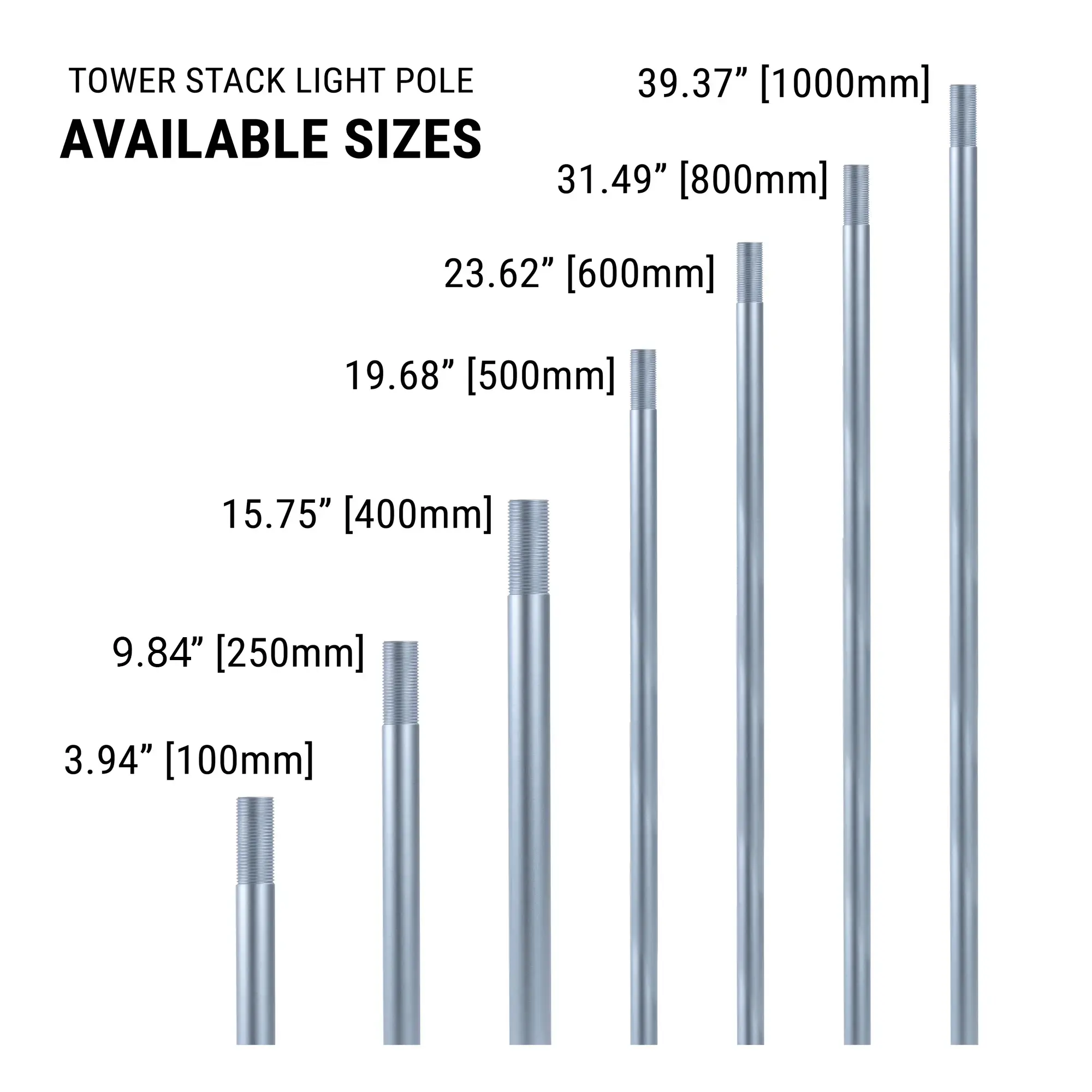
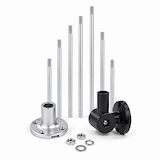
The TL1 Series offers multiple pole lengths and mounting accessories, allowing users to optimize visibility based on machine layout and operator viewing distance.
Material handling systems often span large areas of a facility, making it difficult for operators to identify equipment status from a central location.
Pole-mounted tower lights can elevate status indicators above conveyors, sortation equipment, and transfer stations, improving visibility across the system. Maintenance personnel can quickly locate jams, faults, or stopped sections of a conveyor line without needing to inspect each machine individually.
This improved visibility helps reduce troubleshooting time and supports faster restoration of production flow.
Integrating Tower Stack Lights with PLC Control Systems
Tower stack lights are most effective when they are integrated directly into a machine control system. In industrial automation applications, programmable logic controllers (PLCs) monitor machine conditions and activate tower light segments based on real-time operating status.
By connecting a tower stack light to PLC outputs, machine builders can provide operators with immediate visual feedback without requiring them to access an HMI or diagnostic screen.
Real-Time Machine Status Communication
PLCs continuously monitor inputs such as sensors, safety devices, motor feedback, and production data. Based on machine conditions, the PLC can activate specific tower light segments to communicate machine status throughout the facility.
Common examples include:
- Green light for normal operation
- Amber light for low material or maintenance warnings
- Red light for machine faults or emergency stops
- Blue light for operator assistance requests
- Flashing signals for high-priority alarms
Because tower lights can be viewed from long distances, operators and maintenance personnel can quickly identify machine conditions without interrupting production.
Water and Wastewater Lift Station Use Case
A remote lift station may use a PLC to monitor pump operation, tank levels, flow rates, and alarm conditions.
Under normal conditions, the PLC activates the green tower light segment to indicate that pumps and controls are operating correctly. If a tank level approaches a warning threshold or a pump requires maintenance, the PLC can activate an amber light to alert operators. If a pump failure, high-level alarm, or communication fault occurs, the PLC can trigger a flashing red light and optional buzzer to indicate that immediate attention is required.
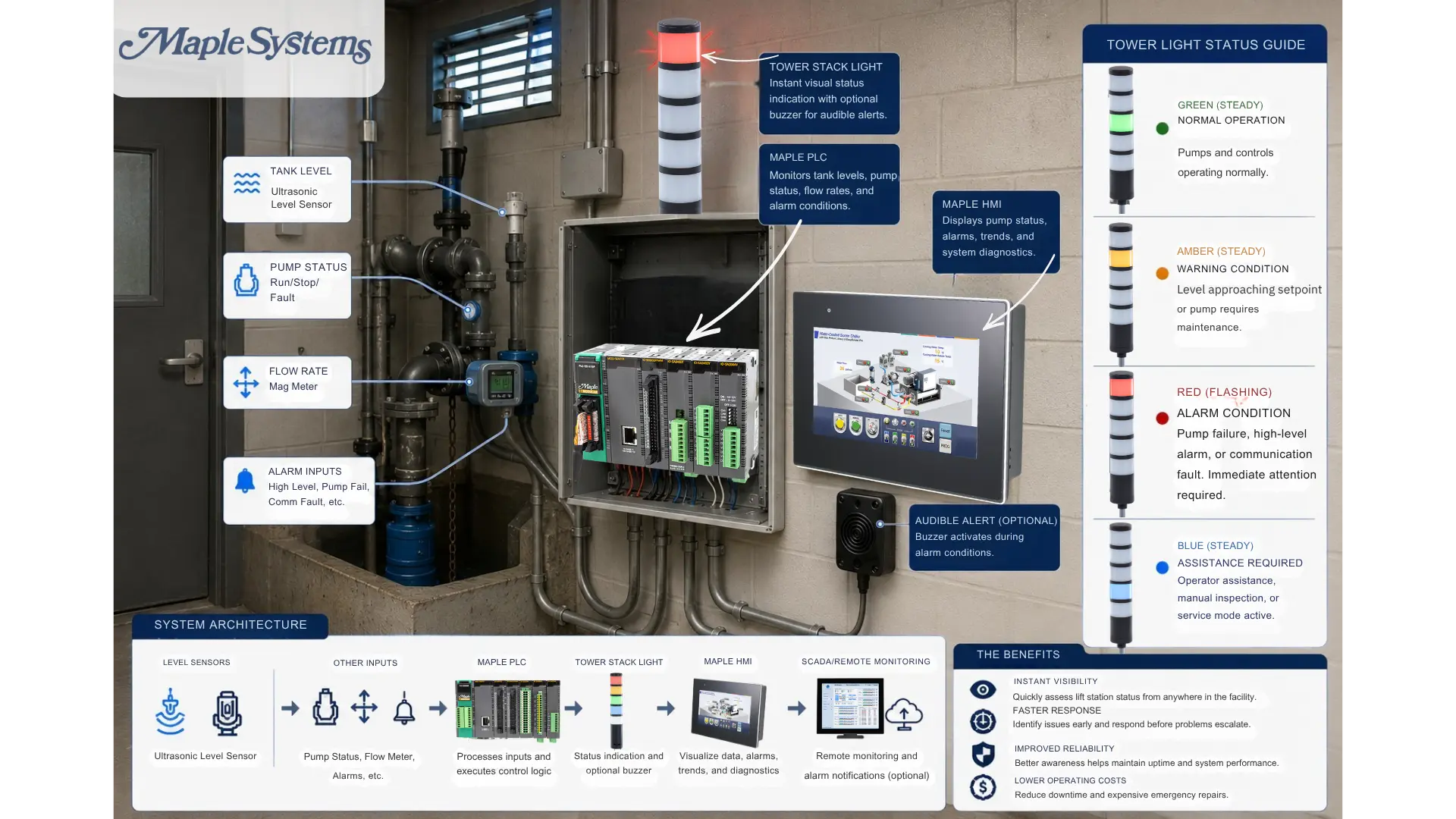
Even before connecting to a SCADA system or reviewing alarm logs, maintenance personnel can quickly assess equipment status using the tower light. This provides an additional layer of local indication that helps improve response times and maintain system reliability.
Final Takeaway
Tower stack lights remain one of the simplest and most effective ways to improve machine communication, operator awareness, and overall production efficiency. By providing clear visual and audible indication of machine status, they help operators respond faster to faults, warnings, maintenance requests, and process changes—reducing downtime and supporting safer operations across the facility.
When selecting a tower stack light, factors such as visibility, modularity, mounting options, audible alerts, environmental protection, and PLC integration all play an important role in long-term performance. The right solution should not only meet current application requirements but also provide the flexibility to adapt as equipment and production needs evolve.
The Maple Systems TL1 Series combines bright LED indication, modular stackable design, optional audible alarms, multiple mounting configurations, and industrial-rated durability into a versatile signaling solution for machine builders, system integrators, and plant operators. Whether deployed on packaging equipment, material handling systems, processing machinery, or municipal infrastructure, tower stack lights provide a reliable first line of communication that helps keep operations running smoothly and efficiently.
Next Steps
When selecting a tower stack light, evaluate:
- Visibility requirements
- Number of machine status conditions
- Audible alarm requirements
- Environmental conditions
- Mounting preferences
- Future expansion needs
- Standardization requirements across equipment
For many industrial automation applications, modular LED tower lights provide the flexibility, durability, and visibility needed to support efficient machine operation while simplifying maintenance and improving operator awareness.
Resources & Documentation
More
Tutorials
Sample Projects
Software Downloads
See our Support Center for a complete list of Quick Start and Installation Guides

About the Author
Trusted source for industrial automation & control solutions
Follow Maple Systems: