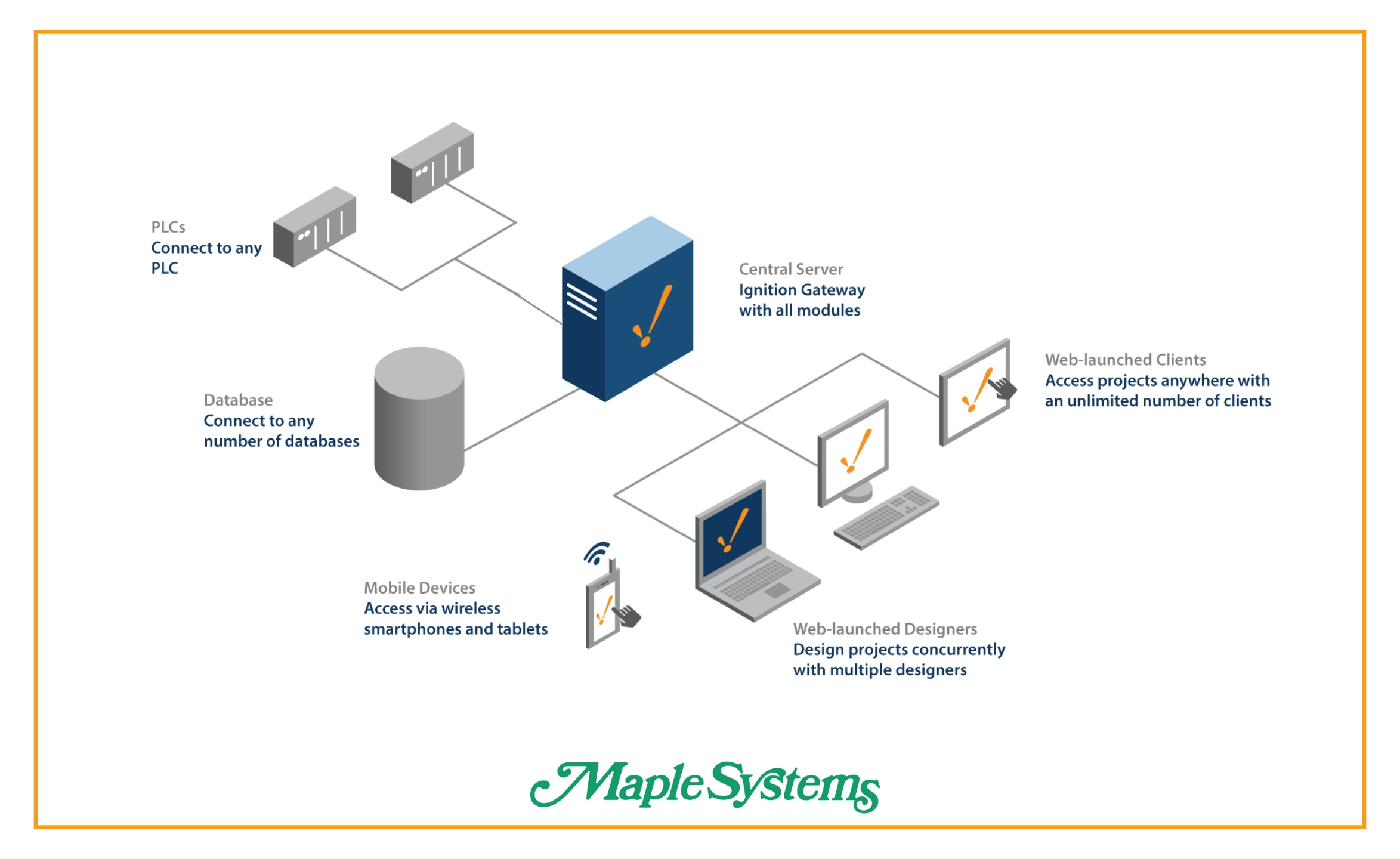
Ignition is an industrial application platform used to create SCADA systems (Supervisory Control and Data Acquisition). It also allows you to lay an infrastructure for IIoT (Industrial Internet of Things). It mainly acts as a central hub for connecting all the data within an industrial facility. Additionally, Ignition connects to almost any industrial device (via OPC UA or MQTT), and can host or talk to any SQL database. As a web-based platform, Ignition allows you to install one server, and access it from any web browser.
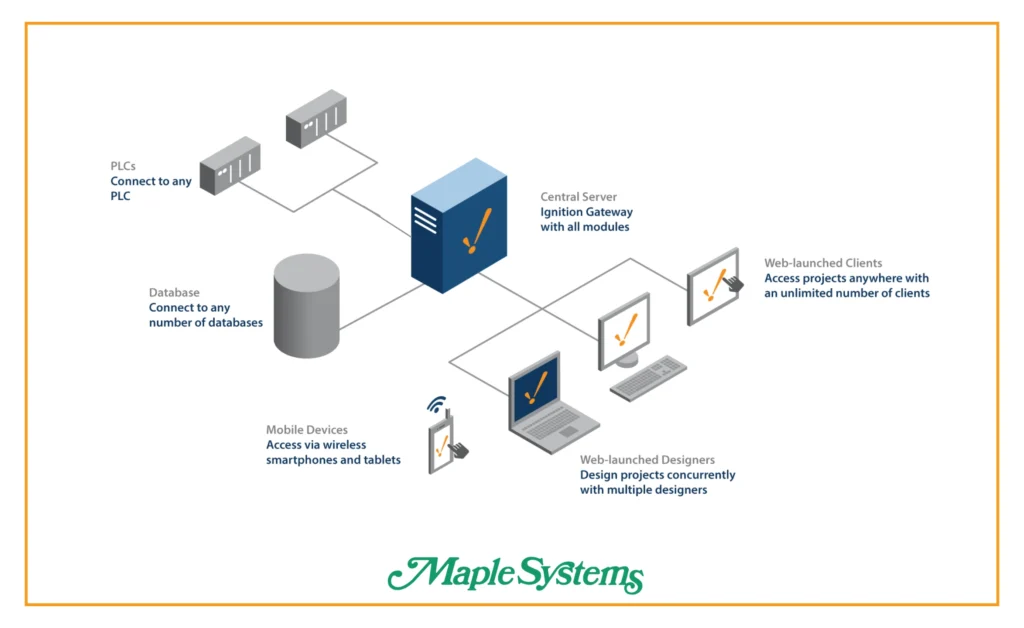
Imagine you have an Ignition project that allows you to view and control every machine in your facility from a universal MQTT dashboard. If you’d like to access your project as an isolated HMI for one device, or spread this information to various ends of your facility. You could easily use a Maple Systems Web HMI to provide this access into your project.
Alternatively, if you’d rather use a single IPC for both running and viewing your project, you could integrate a Maple Systems panel PC with your project.
Software Required
- Ignition Gateway
Hardware Required
- Any Maple Systems Industrial Panel or Box PC
- A Maple Systems Web HMI
These are going to be the main way to connect to an Ignition Gateway that’s already running. But if you don’t already have an Ignition Gateway running, setting one up is pretty easy.
Setting up an Ignition Gateway on your Industrial PC
Installing and Configuring Ignition
If you need to get an Ignition server started, it’s as simple as installing the server, and getting it running on a PC.
Instructions: Installing and Configuring Ignition
Ignition initial download
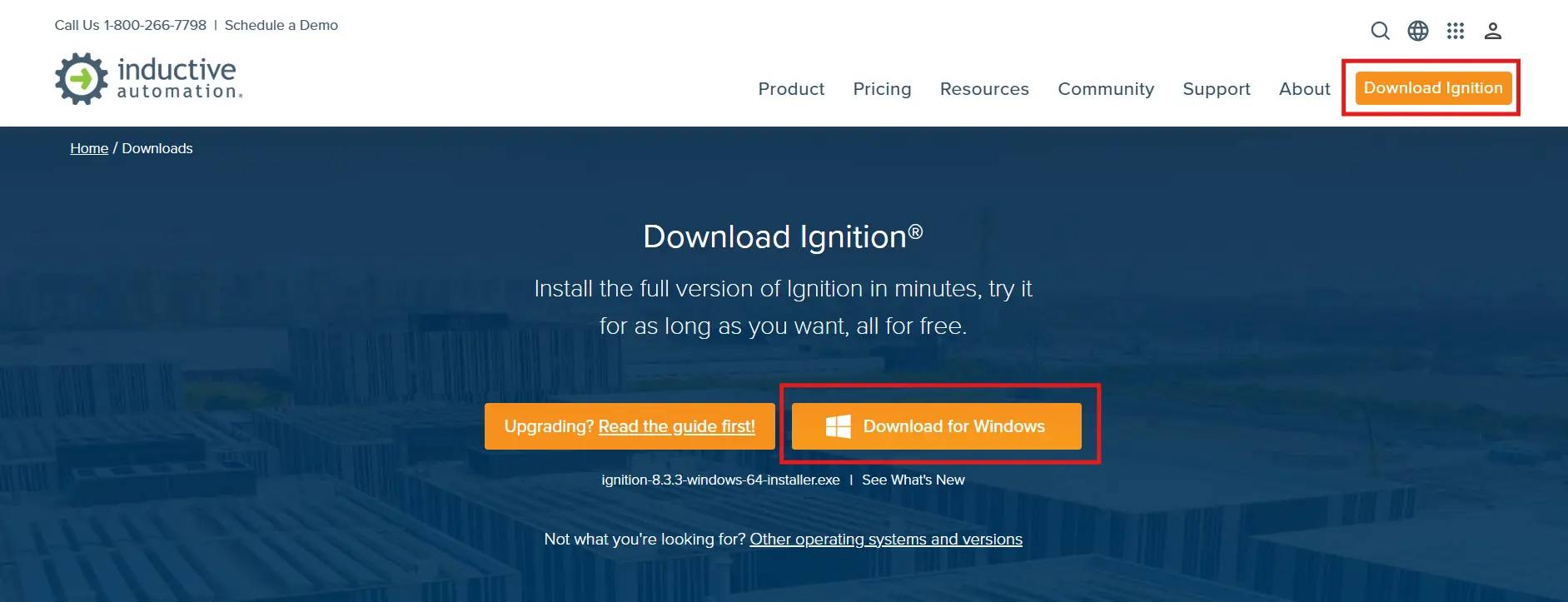
First, we’ll download the windows version of Ignition from their website, and run the installer .exe file.
Using the Install Wizard
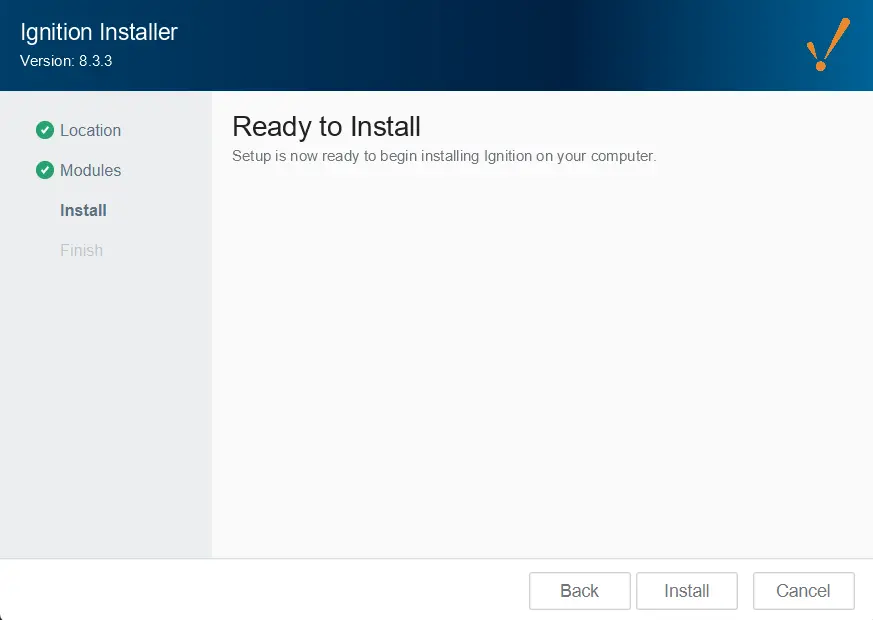
Then we’ll go through the install wizard, I’ll leave everything as defaults for the sake of simplicity.
Connecting to Your New Ignition Server
Now that we’ve installed and configured our initial Ignition Gateway server, you’ll notice that there isn’t any sort of desktop icon or client to connect to. Ignition gateway servers act as a web server that runs in the background of your computer, and you need to connect to it via a web-based client like a web browser.
Ignition Browser connection
Connecting to an Ignition Server through a web browser is the simplest and easiest way to get connected and configured.
Instructions: Ignition Browser connection
Connecting our Devices
To start, we’ll want to set up our Maple Systems PC to be on the same network, and the same subnet as your Ignition server, which means both devices have matching IP addresses based on the subnet mask of the two devices.
Navigating to the Ignition Server
Once we have our devices connected, linking to your Ignition Gateway is as simple as opening up a web browser and typing in “http://<IP address of your gateway device>:8808”

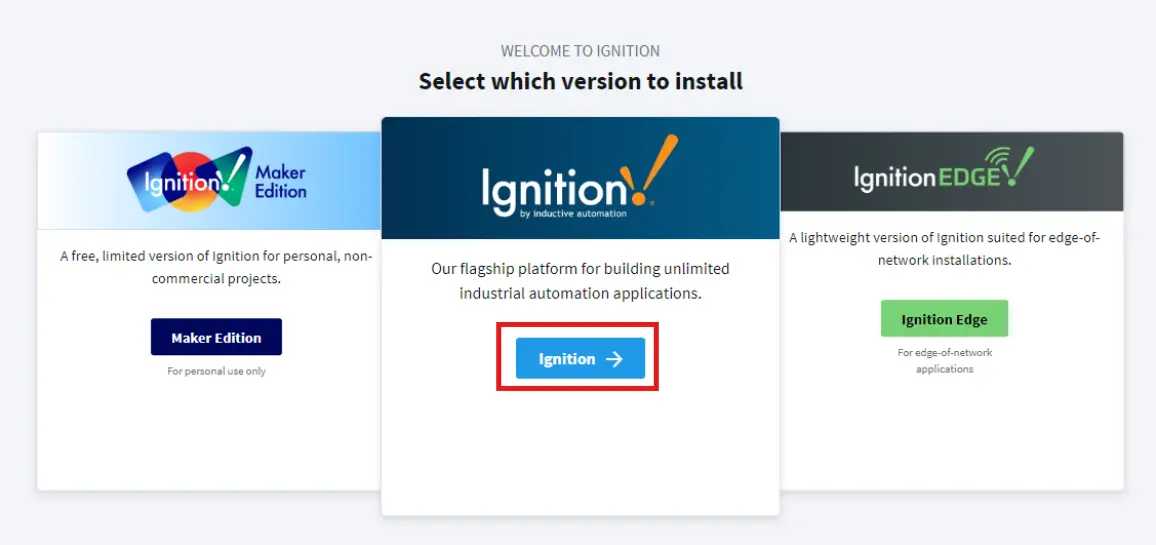
Selecting our Ignition version
Once we’ve connected to our Gateway server, we’ll be prompted to select a version of Ignition to use. For this tutorial, we’ll be using the standard full version of Ignition.
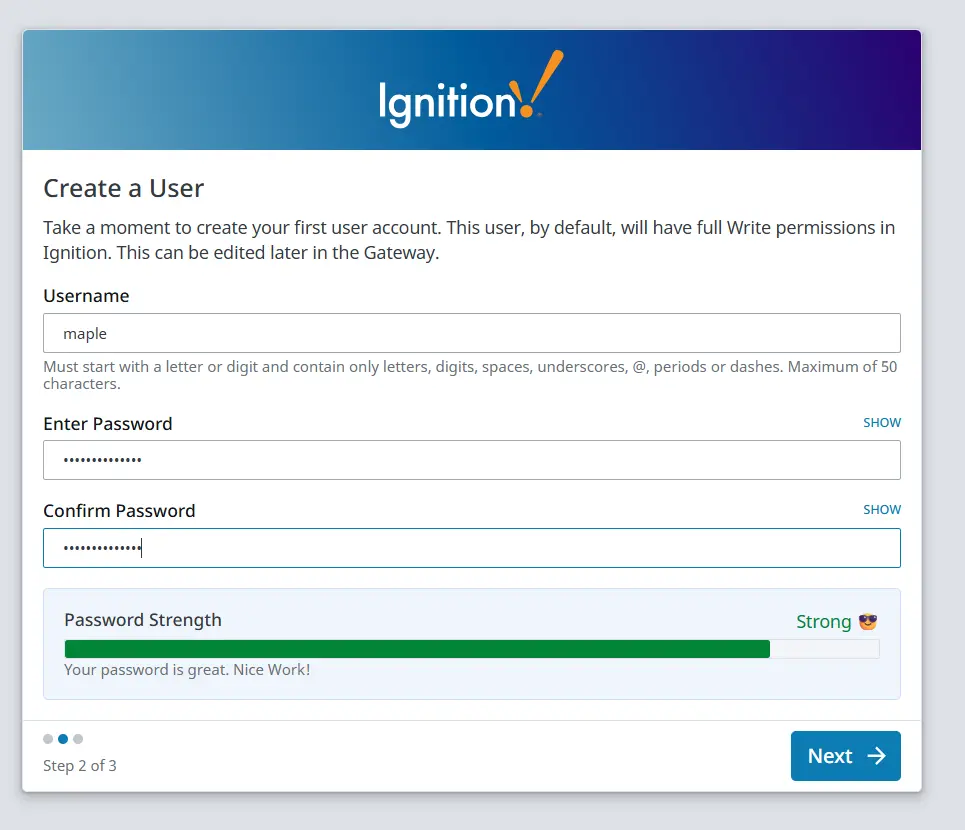
Creating an Ignition User
Now we’ll be prompted to create an admin user for configuring our Gateway.
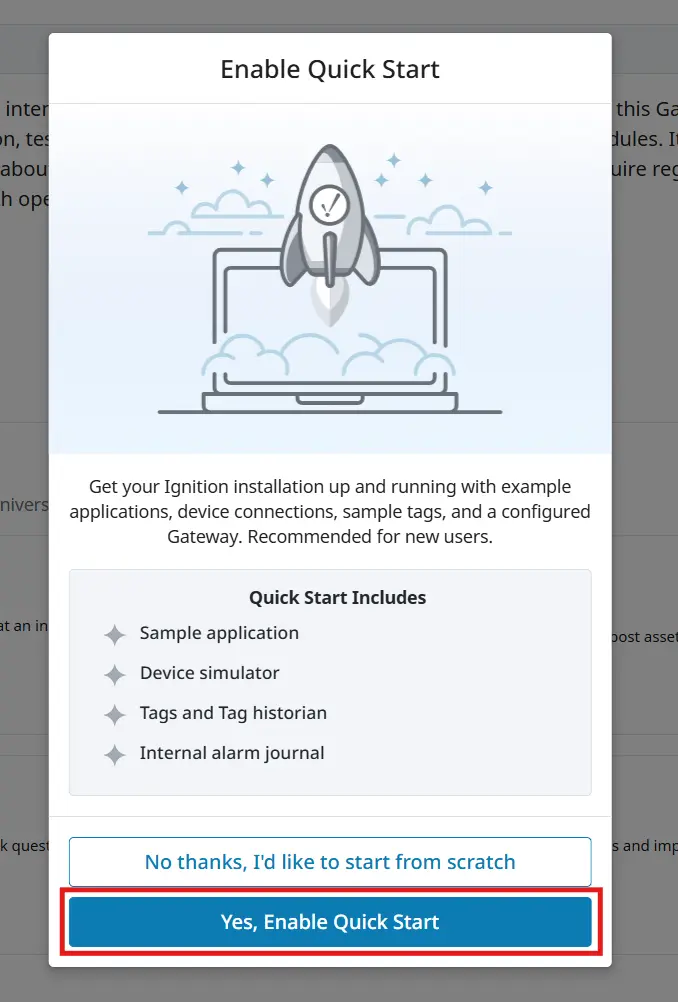
Enabling Quick Start
We won’t get into the weeds of creating an Ignition project, so we’re going to enable the Ignition quick start. This will prompt you to log in as the admin user you just set up in the previous step.
From here, you’d usually create your own Ignition project for your individual needs. If you’d like to learn more about how to do this, you’ll want to refer to Ignition’s documentation on that matter.
Connecting to an Ignition Project with a Web HMI
Now we’ll connect our Web HMI to our Ignition Gateway.
Instructions: Connecting to an Ignition Project with a Web HMI
Connect Both Devices to the Same Network
To start, we’ll want to ensure that both our Ignition gateway server, and our Web HMI are on the same network, and their IP addresses are within the same subnet (255.255.255.0 by default)
Set the Ignition Gateway to the Default Connection
Within the system settings of the Web HMI, navigate to the “Web Browser > Web Browser Setting” tab on the sidebar, and set the “default website” to “http://your.gateway.com:port/data/perspective/client/project”
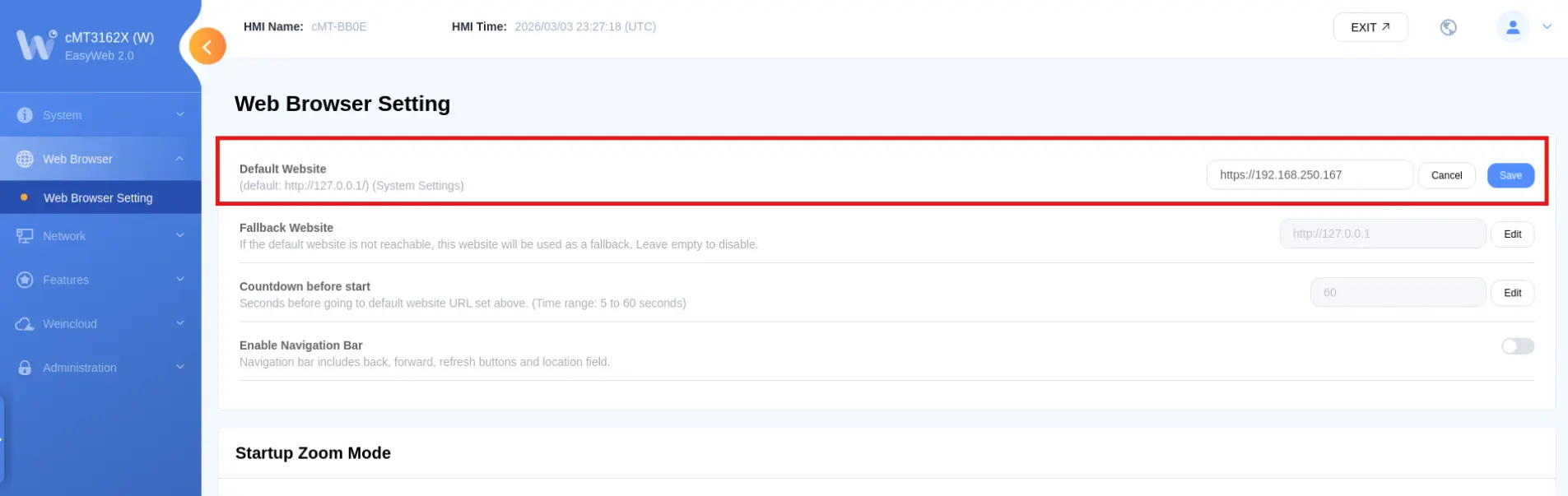
Then from here, you’ll be able to power cycle the web HMI and automatically connect to your Ignition project.
Final Thoughts
If we return back to our facility from earlier, with a fleet of Maple Systems web HMIs, we’re able to see the birds-eye view Ignition project from anywhere in the facility with ease. This enables us to access our centralized data at multiple key points within the plant, without needing to install or configure any additional client software.
With Ignition acting as your web-based SCADA hub and Maple Systems Web HMIs serving as dedicated access points, you create a scalable, flexible infrastructure that grows with your operation. The result is simpler deployment, improved visibility, and smarter decision-making from the same unified system.
Resources & Documentation
The following guides and documentation are specific to the hardware used in this integration tutorial and will help you with setup, configuration, and programming:
Looking for additional learning resources? Explore our library of tutorials, example projects, and software tools to help you get the most out of your system:
Also, browse our Support Center for a complete list of installation guides, FAQs, and additional technical documentation.

About the Author
Trusted source for industrial automation & control solutions
Follow Maple Systems:
Share: