

What is a Rugged Tablet?
In today’s fast-paced and increasingly technology-driven industries, mobile computing devices are essential for keeping operations running smoothly. While standard consumer tablets offer portability and convenience, they are not designed to survive the rigors of demanding work environments. This is where rugged tablets come in. A rugged tablet is a specialized mobile computing device engineered to deliver reliable performance in harsh and unpredictable conditions. Designed for industries where durability, performance, and connectivity are critical, rugged tablets combine reinforced hardware, advanced computing capabilities, and specialized features to ensure continuous operation.
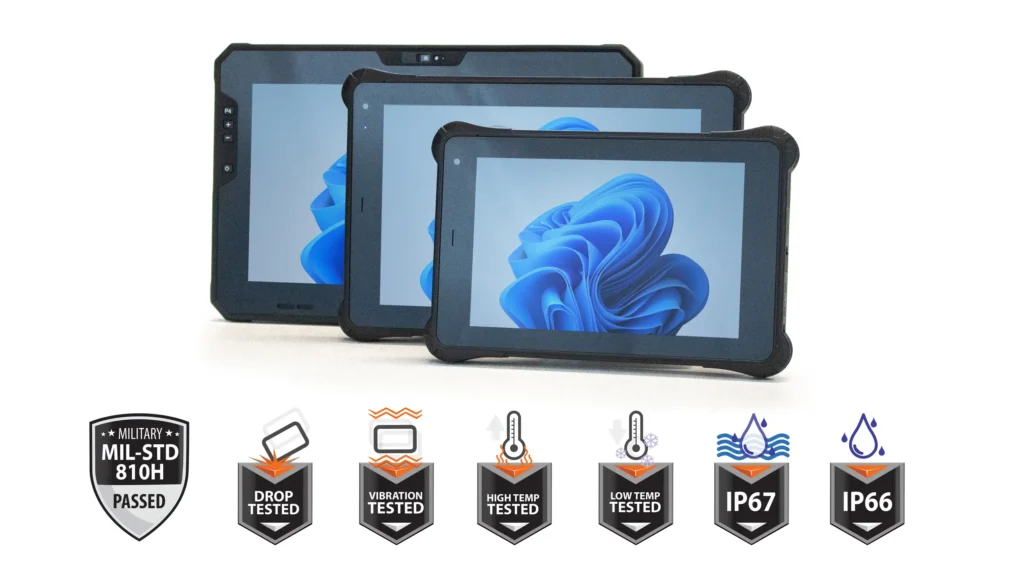
They are built to withstand drops, vibrations, dust, moisture, and extreme temperatures without compromising performance. They are widely used in industries such as manufacturing, construction, logistics, field service, public safety, and emergency response, where standard devices would not survive. More than just tools for data entry, rugged tablets are robust platforms that enable real-time communication, data capture, and decision-making in environments where every second counts.
By blending industrial durability with advanced technology, rugged tablets empower professionals to work efficiently and safely — even in the most challenging environments.
Why Rugged Are Essential for Industry
In sectors such as manufacturing, logistics, construction, and public safety, downtime and equipment failure can be costly. Rugged tablets offer reliability where standard tablets cannot, enabling uninterrupted workflows in extreme environments.
Key benefits of rugged tablets include:
Industrial durability that withstands drops, shocks, dust, and water exposure.
Extended battery life for long field shifts without interruptions.
Specialized features for industry-specific applications.
Reliable connectivity for real-time access to critical systems.
Cost efficiency through reduced repair and replacement needs.
For companies that require mobility and resilience, rugged tablets are not just tools — they are strategic assets that improve efficiency, safety, and operational performance.
Key Features of Rugged Tablets
What sets rugged tablets apart from consumer models is a combination of resilience, performance, and flexibility. Below are the defining features:
Industrial-Grade Durability
These devices are built to survive physical abuse. Many models meet or exceed MIL-STD-810 standards, which certify operation in conditions such as drops, shocks, vibrations, and extreme temperatures. Reinforced housings, shock-absorbing materials, and impact-resistant screens help them withstand environments that would destroy a consumer-grade tablet.
Environmental Protection (IP Rating)
High IP ratings (such as IP66 or IP67) guarantee protection against dust and water. This makes them suitable for outdoor work in rain, snow, or areas with heavy dust exposure. They can also function in both freezing cold and sweltering heat, ensuring uninterrupted use across diverse job sites.
Specialized Industry Features
Many rugged tablets offer features tailored for specific industries:
Glove-compatible touchscreens for construction and manufacturing.
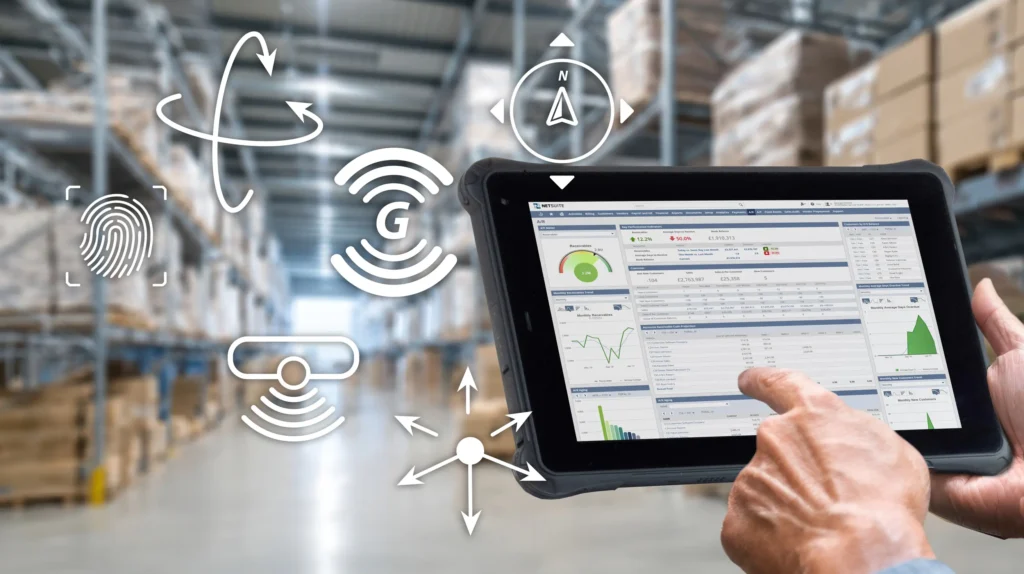
Built-in barcode scanners for logistics.
GPS and RFID for field service.
Thermal imaging for safety and inspection.
Power for Long Shifts
Extended-life batteries, often hot-swappable, keep devices running through long workdays without interruption. This feature is particularly valuable for field technicians and emergency responders who can’t stop to recharge.
Reliable Connectivity
Staying connected is essential. Industrial tablets support Wi-Fi, 4G/5G cellular, Bluetooth, and NFC, ensuring constant access to cloud platforms, IoT systems, and enterprise software. Many models include multiple ports for integration with industry-specific equipment.
Common Uses of Rugged Tablets
Rugged tablets are versatile devices, used in many industries for mission-critical tasks.
Construction
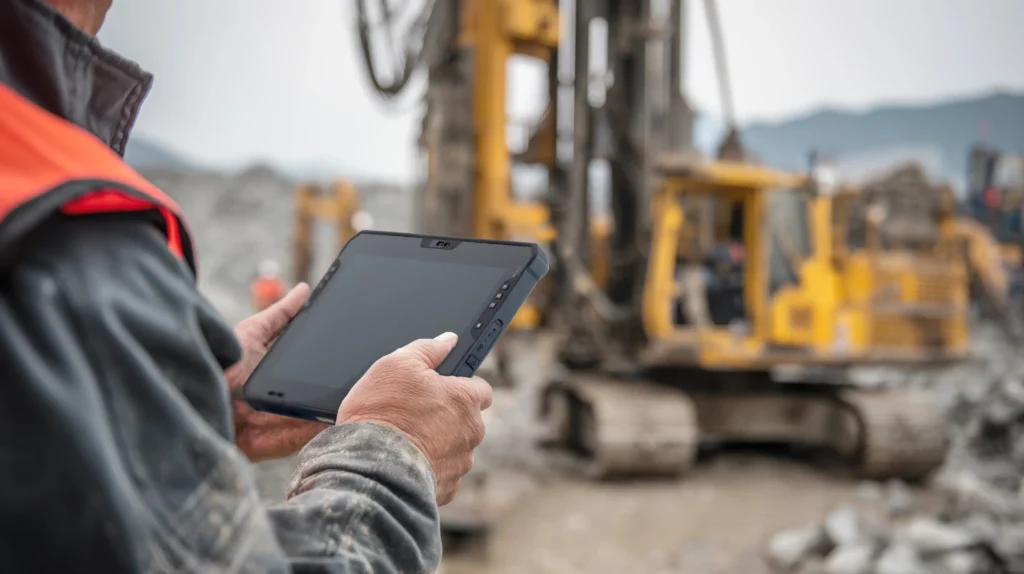
Used for digital blueprints, site inspections, and progress tracking. Withstand dust, mud, and drops that are common on worksites.
Field Service
Field technicians rely on them for diagnostics, repair documentation, and navigation. Built-in GPS and barcode scanning streamline workflows and reduce errors.
Manufacturing
Support production monitoring, quality assurance, and machine integration. Their rugged design allows them to operate reliably in environments filled with vibration, dust, and chemicals.
Logistics and Supply Chain
Enable real-time inventory management, shipment scanning, and route optimization. Seamless connectivity ensures accurate data exchange between warehouses and transport fleets.
Public Safety and Emergency Response
First responders use them for incident mapping, data sharing, and communication. Their resilience ensures critical information is always accessible in high-pressure situations.
Choosing the Right Rugged Tablet
Not every device suits every task. Here’s what organizations should evaluate before investing:
Durability Standards
Verify MIL-STD compliance and IP ratings for the intended environment.
Performance Specs
Assess processor power, memory, and storage based on application requirements.
Specialized Tools
Determine whether barcode scanning, GPS, RFID, or thermal imaging is needed.
Balance of Size and Weight
Match portability with screen size for comfort and usability.
Connectivity Options
Ensure support for cellular, Wi-Fi, and integration with existing platforms.
By aligning device capabilities with operational needs, companies can ensure they choose a model that maximizes value and performance.
Industry Impacts of Mobile Devices
The introduction of rugged tablets has reshaped how work is carried out in demanding sectors:
Productivity Gains
Workers complete tasks faster with access to real-time data.
Reduced Costs
Fewer repairs and replacements lower the total cost of ownership.
Better Compliance
Safety protocols and quality standards are easier to enforce with reliable mobile tools.
Flexibility
Employees can operate in remote locations without losing access to mission-critical applications.
The combination of durability and intelligence makes these devices more than simple tablets — they are integral to digital transformation in industrial settings.
The Future of Rugged Tablets
As technology evolves, so do the capabilities of rugged computing devices.
Future developments are expected to focus on:
5G integration

Faster and more stable connections.
AI and automation
Built into software platforms for predictive analytics and smarter workflows.
IoT expansion
Rugged tablets acting as control hubs for connected sensors and machines.
Advanced materials
Further improve shock absorption and water resistance while keeping devices lighter.
These innovations will keep rugged tablets at the center of industrial mobility strategies.
Conclusion
In environments where performance and reliability matter most, a rugged tablet is far more than a durable gadget — it is a critical operational tool. Built to withstand the toughest conditions, these devices provide seamless access to data, specialized features for industry, and the resilience needed to keep work moving.
From construction sites to emergency response teams, rugged tablets are driving productivity, safety, and efficiency across multiple sectors. By carefully selecting a model that matches their specific needs, organizations can secure a device that not only survives tough conditions but also enhances the way teams operate.
As industries continue embracing digital transformation, rugged tablets will play an even greater role in connecting workers, systems, and data in the most demanding environments.
For companies where downtime is not an option, investing in these devices is more than smart — it’s essential.
Learn more with Maple Systems
Whether building complex industrial networks or programming your first PLC or HMI, Maple Systems has an expansive library of technical and educational resources to support your success. Explore our support pages for tutorials, technical notes, sample projects, and more.
Contact us
Contact our sales team for pricing, availability, and support.
Email [email protected] or call (425) 745-3229.

About the Author
Trusted source for industrial automation & control solutions
Follow Maple Systems:
Share: