
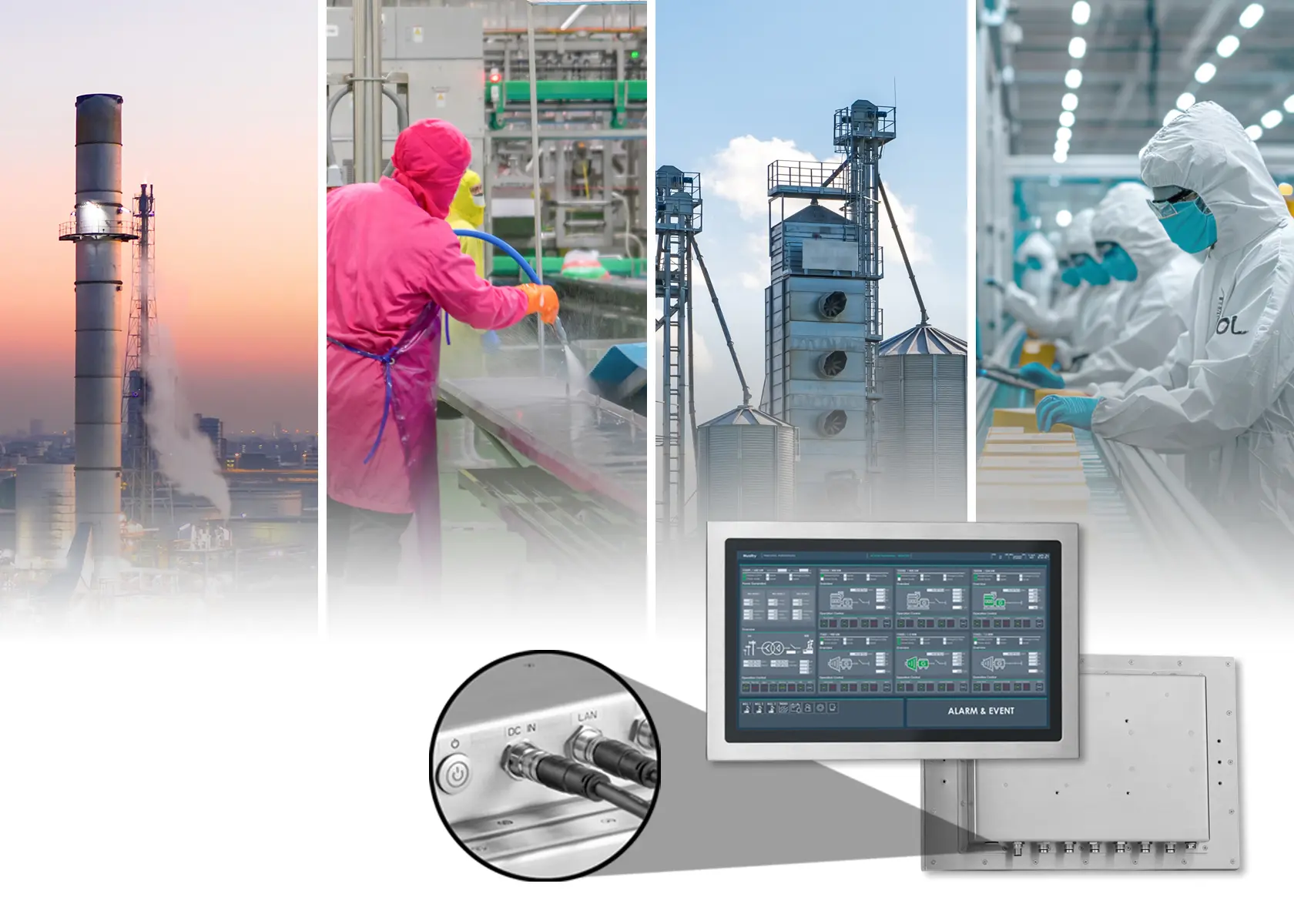
In many industrial automation systems, a rugged panel PC operates closest to the process, making environmental factors critical to system reliability before performance specs come into play. When the enclosure protection—such as IP65/IP69K ratings—does not align with the operational environment, premature failure occurs. This is particularly common regarding chemical resistance, temperature fluctuations, and structural vibration, forcing teams to compensate with increased, costly maintenance. Ultimately, using non-hardened, standard PCs adds unnecessary complexity and total cost of ownership (TCO) without improving long-term reliability.
Selecting a panel PC based on the operating environment eliminates these issues. By matching enclosure design, sealing, materials, and certifications to real exposure conditions, teams simplify deployment, reduce failure points, and prevent predictable downtime, resulting in a more stable and maintainable system architecture.
Why an Environment-First Approach Works
Industrial systems reduce downtime and cost when hardware operates within its intended design conditions.
Matching the panel PC to its environment ensures protection and performance align with real operating demands, supporting reliable operation, regulatory compliance, and consistent uptime. Reduce maintenance costs and total cost of ownership (TCO) by prioritizing environmental exposure over basic technical specifications. This proactive approach prevents equipment failure caused by moisture, dust, chemicals, and extreme temperatures.
Key Questions to Define the Operating Environment

- How much water exposure will the system face?
- Is cleaning occasional, frequent, or aggressive?
- Are chemicals or sanitizers used?
- Is dust or airborne debris present?
- Are temperature extremes or hazardous-location certifications required?
By defining these conditions upfront, teams simplify selection and reduce risk. As a result, they ensure dependable operation across clean rooms, washdown areas, and hazardous environments. From there, this guide leads buyers through identifying their operating environment first, then selecting the panel PC category that balances protection, reliability, and cost.
Low-Light Exposure Environments: Indoor and Enclosed Installations
Not every application requires waterproof or washdown-rated equipment. Instead, many panel PCs operate in controlled, low-exposure environments where reliability, longevity, and system integration take priority over extreme sealing. In these cases, environments are defined by stability, visibility, and continuous operation rather than contamination risk.
Common Conditions
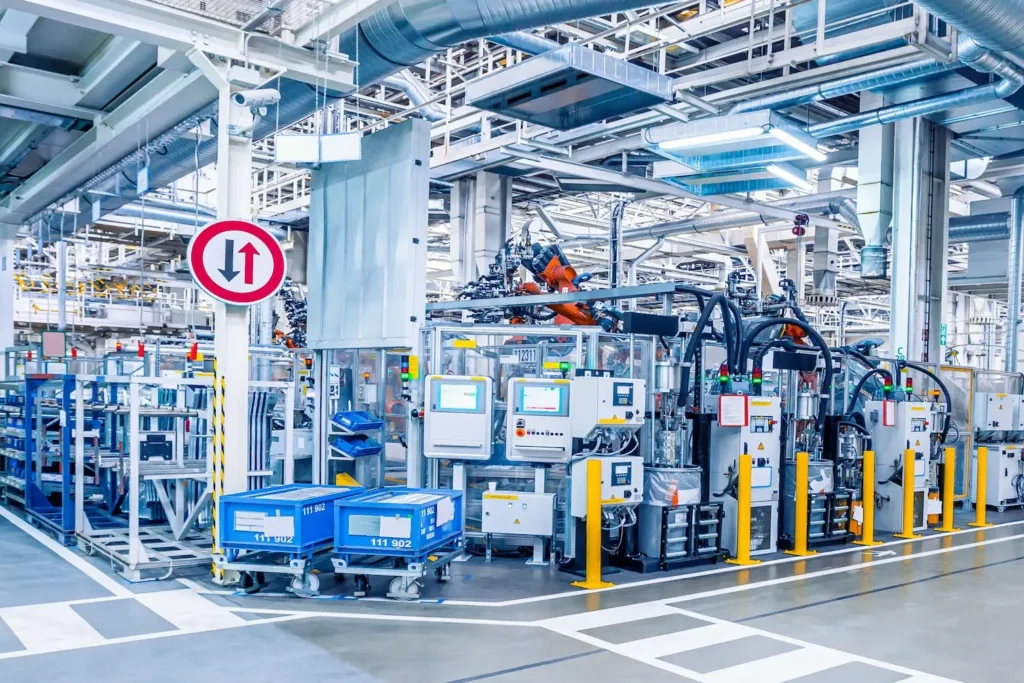
Indoor panel PC installations usually operate in stable, low‑exposure spaces where environmental protection is secondary to reliability, visibility, and seamless integration. These environments often include:
- Electrical or control cabinets
- Climate-controlled clean rooms and production floors
- Indoor operator stations with no direct washdown
Recommended Protection Level
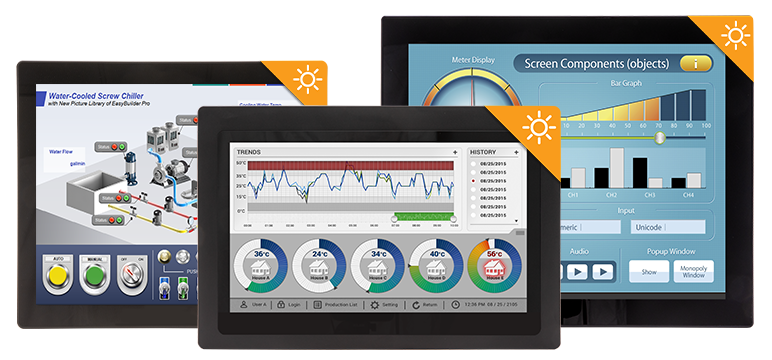
In many cases, standard industrial panel systems or front-sealed designs provide sufficient protection for these applications. Within this context, the primary focus remains on dependable operation, enclosure integrity, and mounting flexibility. Furthermore, full enclosure sealing is often unnecessary for these specific environments. Additionally, in areas with high ambient light—such as factory floors or near windows—visibility can become a challenge. To address this, high-brightness and sunlight-readable panel PCs significantly improve usability at glare-exposed operator stations. Consequently, these specialized displays ensure that critical data remains clear and accessible in any lighting condition.
These systems deliver clear touchscreen performance without over-specifying environmental protection. By matching protection levels to actual exposure conditions, teams avoid unnecessary cost while maintaining long-term reliability and operational efficiency.
Suggested panel PCs include: PC1200s, PC1300s, PC2300s, and OMI6800s
Light Exposure Environments
Many panel PCs operate in light-exposure environments where water, dust, or chemical contact remains limited and controlled. As a result, these applications prioritize day-to-day durability and usability and do not require full washdown or extreme sealing protection.
Common Conditions
Light‑exposure environments typically include situations where equipment encounters intermittent contact with moisture or airborne particles, but not high‑pressure cleaning or full chemical saturation. Examples include:
- Occasional splashing or light rinsing
- Dust or airborne debris
- Light chemical exposure
- No high-pressure water jets
- Enclosed or semi-protected factory areas

These conditions are frequently found in general manufacturing, packaging operations, food processing support areas, and material handling systems, where equipment is exposed to routine activity but not aggressive sanitation procedures.
Recommended Protection Level
In these cases, a system with an IP65 or IP66 sealed front panel is typically sufficient. As a result, these designs protect the touchscreen interface while maintaining cost efficiency and serviceability. According to IEC ingress protection standards, IP ratings define how effectively an enclosure resists water and dust exposure.
Suggested panel PCs include: PC1200s, PC1300s, PC2300s, OMI6800s, OMI6900s, and AExs
Moderate Exposure Environments
Exposure levels vary by application. Some installations require enhanced sealing for daily operation, while others demand full washdown protection to withstand aggressive sanitation or chemical exposure. In many deployments, only the front of the system is exposed, with the remaining enclosure protected by cabinets, equipment, or mounting structures.
Common Conditions
Moderate‑exposure environments typically involve regular contact with moisture, dust, or outdoor elements, but not the intensive sanitation or chemical force found in full washdown applications. These conditions often arise when equipment is partially protected. For example, the equipment is mounted within cabinets, recessed installations, or environments where only the front panel faces routine exposure. Typical scenarios include:
- Frequent dust or debris
- Hose-downs without high pressure
- Water exposure from limited directions
- Semi-outdoor installations
- Continuous 24/7 operation
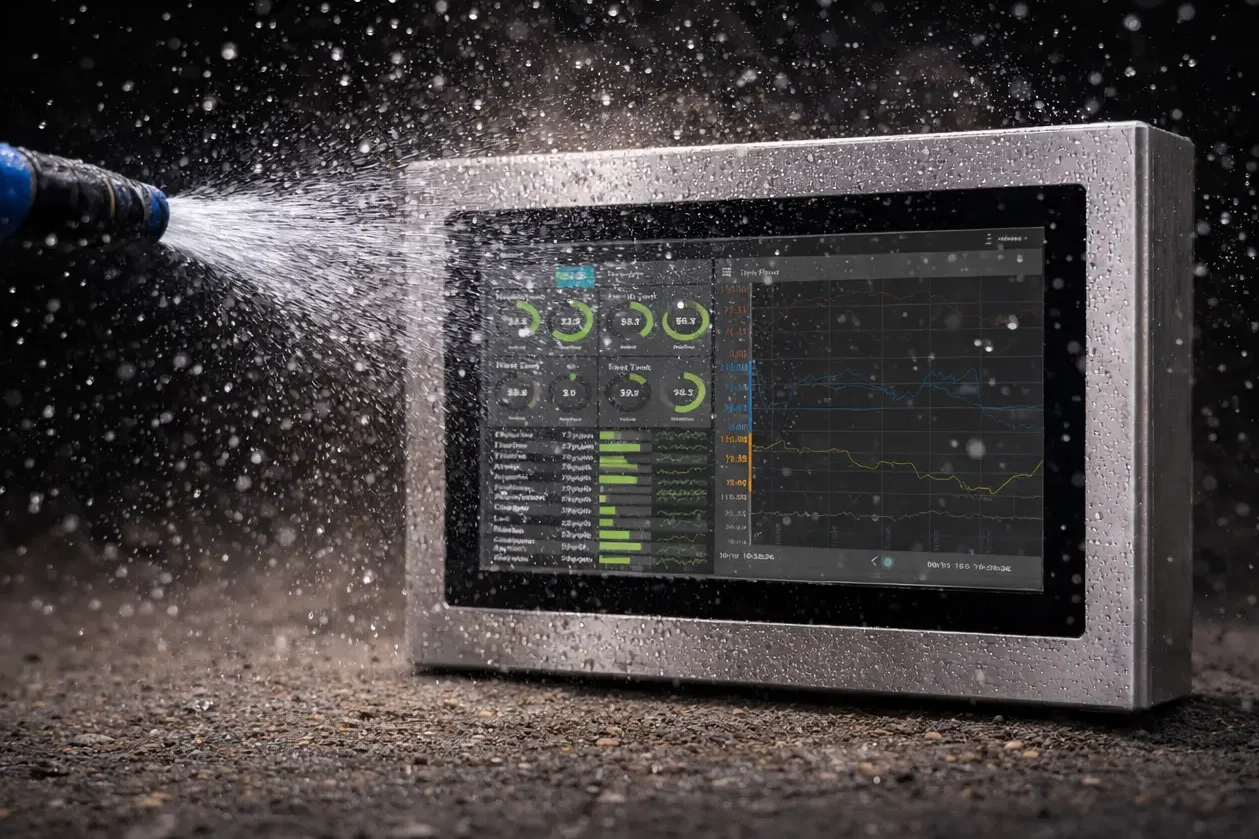
Industries such as food and beverage support zones, packaging lines, agricultural processing, utility facilities, and areas near washdown operations often face conditions that demand greater durability without requiring full immersion or chemical‑resistant sealing.
Recommended Protection Level
For these environments, systems with IP65–IP66 rated front panels or partially sealed enclosures, combined with enhanced port sealing and industrial connectors, provide a reliable balance of protection and cost efficiency. In practice, these designs suit mixed environments where the display and interface face routine exposure, while cabinets or mounting structures shield the enclosure from direct washdown.
By aligning front-panel sealing and enclosure protection with actual exposure conditions, teams can therefore maintain reliable operation without over-specifying full washdown designs. As a result, this approach ensures long-term performance, serviceability, and overall value.
Suggested panel PCs include: PC1200s, PC1300s, PC2300s, OMI6800s, OMI6900s, and AExs
Heavy Exposure Environments
In these environments, frequent, aggressive cleaning results in sustained exposure to water, chemicals, and contaminants. Accordingly, systems must withstand high-pressure, high-temperature washdowns from all directions, without being designed for continuous submersion.
Common Conditions
In heavy‑exposure settings, equipment is placed directly in sanitation zones where routine cleaning procedures are aggressive, high‑force, and non‑negotiable. These areas often follow strict hygiene protocols and rely on cleaning processes designed to eliminate contamination risks. Typical operational factors include:
- High-pressure, high-temperature washdowns
- Frequent sanitation with chemicals or disinfectants
- Direct water exposure from all directions
- Harsh or corrosive cleaning agents
- Strict hygiene or regulatory requirements
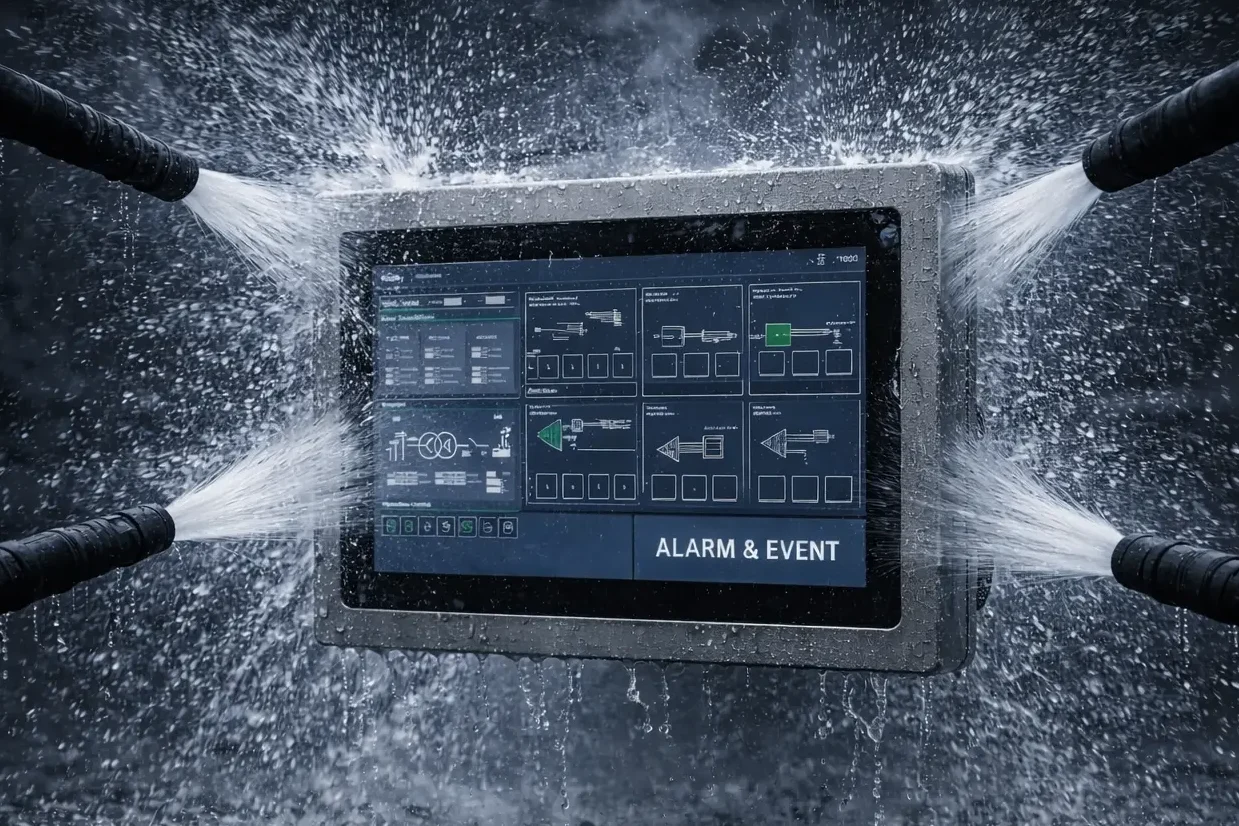
These conditions occur in applications such as food and beverage processing, dairy and meat facilities, pharmaceutical manufacturing, and other sanitation‑intensive industries where equipment must endure aggressive daily washdowns without performance degradation.
Required Protection Level
For these environments, fully sealed stainless-steel systems with IP66 or IP66/IP69K ratings are required. Accordingly, these designs resist powerful water jets and aggressive cleaning cycles from all directions without allowing ingress into the enclosure. In addition, smooth, cleanable surfaces, waterproof connectors, and sealed construction support reliable operation during routine sanitation, while clearly distinguishing washdown protection from immersion-rated use.
By selecting systems purpose-built for full washdown exposure, teams maintain long-term reliability, sanitation compliance, and maximum uptime. As a result, they achieve this without compromising safety or durability.
Suggested panel PCs include: AExs and PC8100s or visit Waterproof PCs page.
Chemical-Intensive Environments
Chemical-intensive environments involve frequent exposure to disinfectants, corrosive cleaners, and sanitation chemicals. In these applications, waterproofing alone is not sufficient; enclosure materials and system design must also resist corrosion and support strict hygiene and regulatory requirements.
Common Conditions
Equipment in these settings is placed in areas where chemical handling, sanitation cycles, or production processes introduce corrosive or reactive substances into the work environment. The challenge is not only moisture but the chemical composition of the materials used in cleaning or production. Typical operational factors include:
- Daily sanitation with disinfectants
- Exposure to corrosive or acidic cleaning agents
- Chemical exposure during production or cleaning process
- Strict hygiene or regulatory compliance requirements
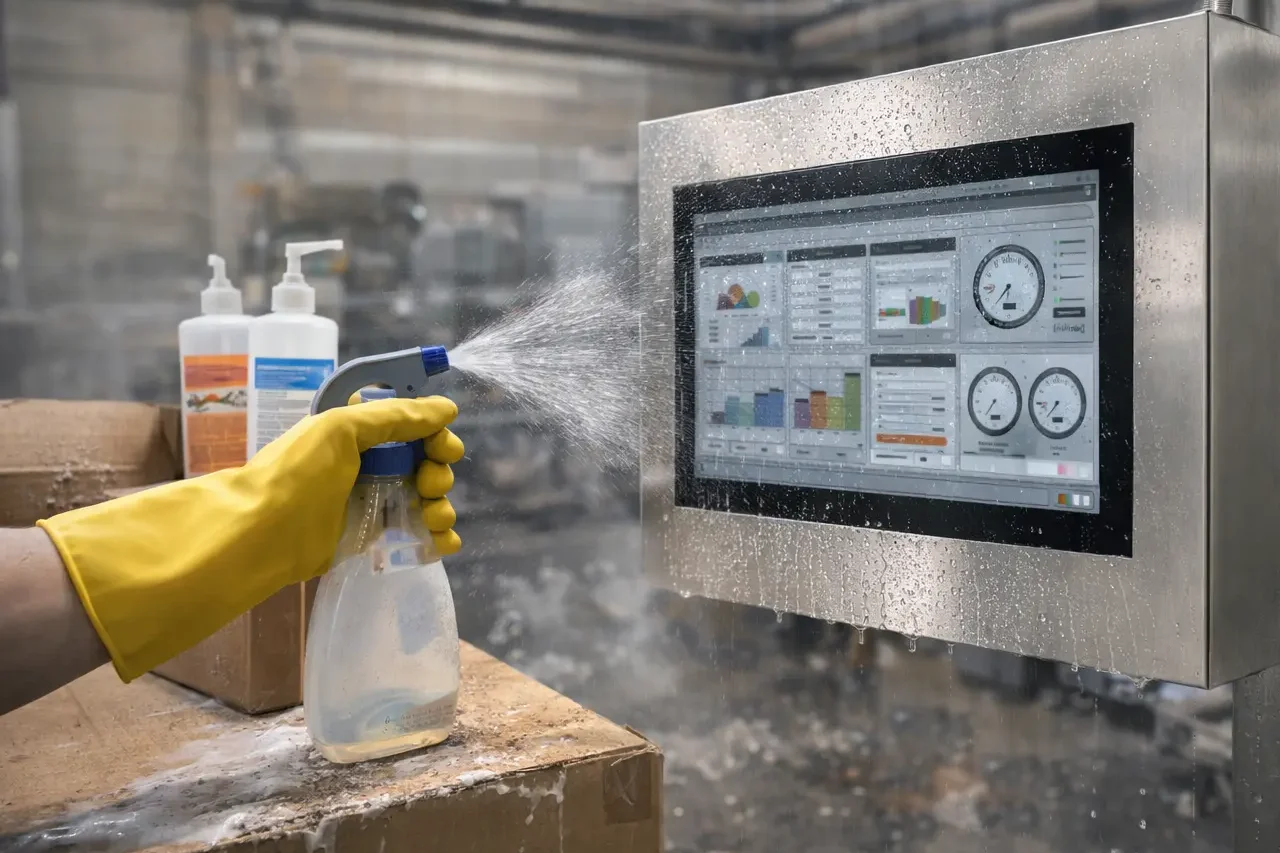
These environments are common in dairy processing, pharmaceutical manufacturing, clean-in-place (CIP) operations, chemical production, and sanitation‑heavy food processing areas, where equipment must resist both water and chemical degradation.
Recommended System Design
For these environments, stainless steel panel systems with IP66 or IP66/IP69K ratings provide the required level of protection. Stainless steel enclosures resist corrosion, simplify cleaning, and deliver longer service life compared to painted or aluminum alternatives. Fully sealed construction, waterproof connectors, and smooth, cleanable surfaces help prevent ingress while supporting sanitation compliance.
Material selection is also critical. 304 stainless steel offers strong corrosion resistance for general washdown and sanitation environments and is commonly used in food, beverage, and pharmaceutical applications. 316 stainless steel, which contains added molybdenum, provides enhanced resistance to chlorides, acids, and aggressive chemicals, making it better suited for harsher chemical exposure or marine-adjacent environments.
By selecting stainless steel systems engineered for the appropriate level of chemical exposure, teams ensure reliable operation, long-term durability, and compliance in environments where water, chemicals, and contaminants are part of daily operation.
Suggested 304 and 316 Stainless Steel PCs
Extended Temperature Applications
Temperature extremes can shorten the lifespan of industrial systems even when water protection is adequate. Applications exposed to sustained heat or cold require systems designed to operate reliably across a wide temperature range.
Common Conditions
Outdoor installations, industrial processes that generate thermal extremes, and interior spaces with inconsistent temperature regulation often create these conditions. Typical scenarios include:
- Outdoor installations subject to seasonal temperature swings, direct sunlight, or prolonged cold
- Low‑temperature facilities such as cold storage, walk‑in freezers, or refrigerated logistics areas
- High‑heat industrial zones near ovens, furnaces, or continuous‑heat machinery
- Unconditioned or partially conditioned manufacturing spaces where ambient temperature varies throughout the day
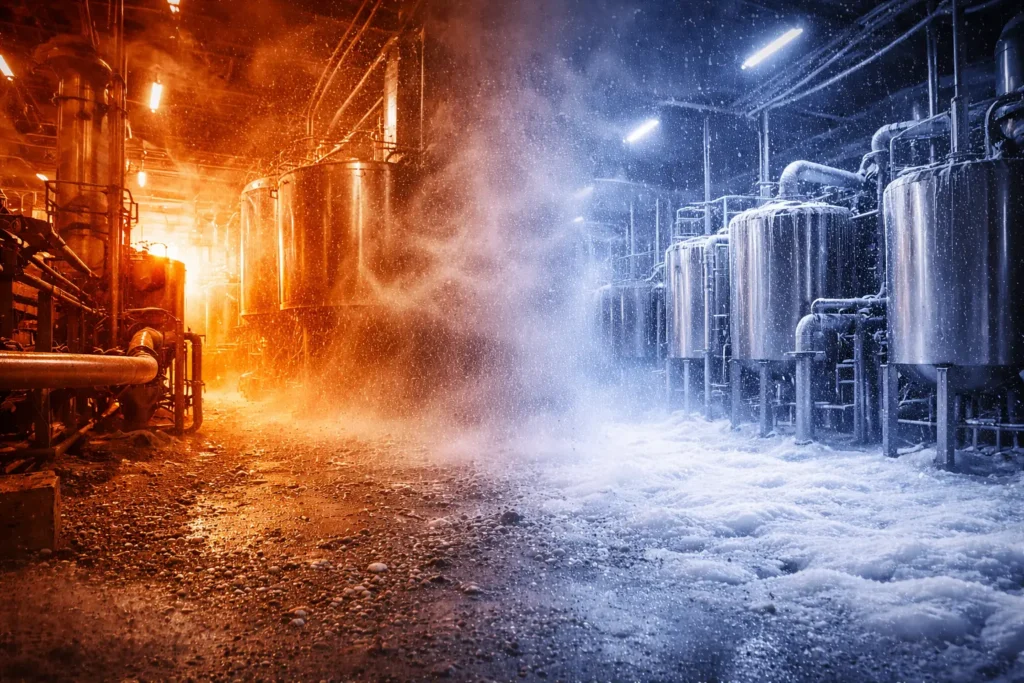
These situations arise across industries such as logistics, food storage, outdoor automation, heavy manufacturing, and utility operations; basically, anywhere equipment must withstand temperature stress rather than moisture or chemical exposure.
Required Thermal Design
For these environments, select systems rated for extended temperature operation, with sealed enclosures to reduce condensation risk and fanless thermal designs where possible. As a result, industrial-grade components ensure stable performance across temperature ranges from −20°C to 60°C (−4°F to 140°F). Additionally, in high-light or outdoor installations, high-brightness, sunlight-readable displays improve visibility without compromising durability. By aligning thermal capability with actual operating conditions, teams ensure consistent performance and long-term reliability in extreme environments.
Suggested Extended Temperature PCs
Hazardous Locations
Some industrial environments require compliance beyond standard environmental protection. These applications involve the presence of flammable gases, vapors, or combustible dust and demand systems engineered specifically for safe operation in regulated areas.
Common Conditions
Understanding where these conditions occur helps guide proper system selection. Common settings include:
- Oil and gas facilities
- Chemical processing plants
- Grain handling operations
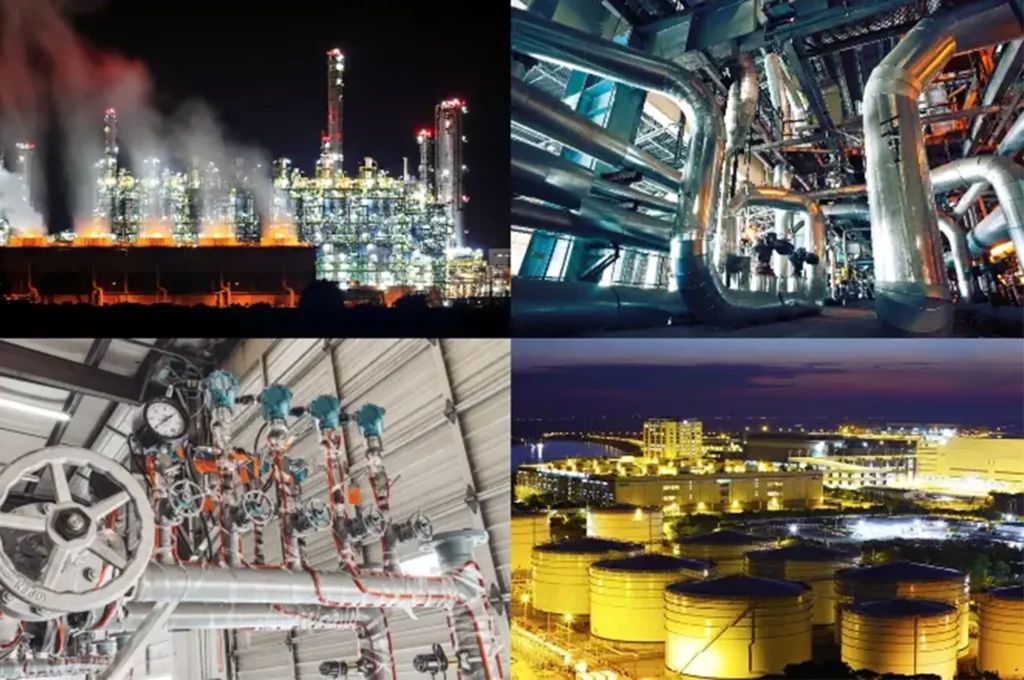
Recognizing these common settings makes it easier to identify when specialized equipment is needed. Matching the environment with the correct system type supports safer performance and helps maintain continuity in demanding industrial operations.
Required Certifications
For these environments, systems must meet Class I Division 2 requirements with fully sealed, non-sparking designs that reduce ignition risk. Accordingly, these solutions are engineered for safe operation in locations where explosive gases or vapors may be present. Class I Division 2 systems are also available with optically bonded, high-brightness touchscreens to maintain visibility in demanding lighting conditions. Selecting equipment certified for hazardous locations ensures compliance, reduces risk, and supports reliable operation in highly regulated industrial environments.
Suggested panel PCs include: AEx Series
Final Takeaway
An environment-first approach shifts selection away from surface-level features and toward the real job of surviving the surroundings while delivering dependable uptime. By extension, aligning enclosure design, sealing, materials, and certifications with actual exposure conditions reduces risk, avoids costly misconfigurations, and protects operational continuity. Ultimately, then, when a system is chosen for the environment it must endure, it invariably delivers measurable value through consistent performance, regulatory confidence, and predictable total cost of ownership.
Match the System to the Environment
To simplify selection further, the tabs below identify the appropriate panel PCs recommendation based on operating environment.
Low–Light Exposure: Indoor, Clean Room, and Enclosed Installations
Indoor, Clean Room, and Enclosed Installations
IP65 and IP66 sealed-front industrial panel PCs are well suited for environments where the operator interface is exposed to dust, splashing water, or washdown spray, while the rear of the system remains protected inside a cabinet or enclosure.
In these applications, protection is concentrated at the point of interaction, providing adequate environmental resistance without the cost or complexity of a fully sealed system.
Under IEC ingress protection standards, an IP65 rating indicates a dust-tight enclosure with protection against water projected by a 6.3 mm nozzle from any direction. As a result, IP65-rated panel PCs can be sprayed clean and prevent contaminants from entering the system and damaging internal components.
IP65 rated series: PC1200s, PC1300s, and PC2300s
IP66 is complete protection against contact (dust-tight) and water projected in powerful jets (12.5 mm nozzle) against the enclosure from any direction shall have no harmful effects.
IP66 rated series: OMI6800s and OMI6900s
Moderate Exposure: Partial Water, Dust, and Debris
Partial Water, Dust, and Debris
IP65 and IP66 sealed-front industrial panel PCs suit environments where dust, splashing water, or washdown spray contact the operator interface while cabinets or enclosures protect the rear of the system.
In these applications, teams concentrate protection at the point of interaction, delivering the required environmental resistance without the cost or complexity of a fully sealed system.
Under IEC ingress protection standards, an IP65 rating indicates a dust-tight enclosure with protection against water projected by a 6.3 mm nozzle from any direction. As a result, IP65-rated panel PCs can be sprayed clean and prevent contaminants from entering the system and damaging internal components.
IP65 rated series: PC1200s, PC1300s, and PC2300s
This level of protection, classified as IP66, provides complete resistance to dust ingress and withstands water projected in powerful jets using a 12.5 mm nozzle from any direction, with no harmful effects to the enclosure.
IP66 rated series: OMI6800s and OMI6900s
IP66 with M12 Connectors: AExs

Heavy Exposure: Full Washdown and Sanitization
Full Washdown and Sanitization
IP66 industrial panel PCs are designed to withstand heavy water spray, washdown, and airborne debris, making them suitable for demanding but controlled cleaning environments.
IP66/IP69K systems extend that protection to high-pressure, high-temperature sanitation, supporting applications where intensive washdown and strict hygiene standards are required.
IP66 is complete protection against contact (dust-tight) and water projected in powerful jets (12.5 mm nozzle) against the enclosure from any direction shall have no harmful effects.
IP66 rated series: AExs
IP66/IP69K rating indicates the device is built to withstand extensive wash downs with corrosion resistance against cleaning agents, especially against close-range high-pressure, high-temperature washdowns. The level of protection allows for easy cleaning and sterilization using water with temperatures of up to 80°C and pressure of up to 30 Bar.
IP66/IP69K rated series: PC8100s
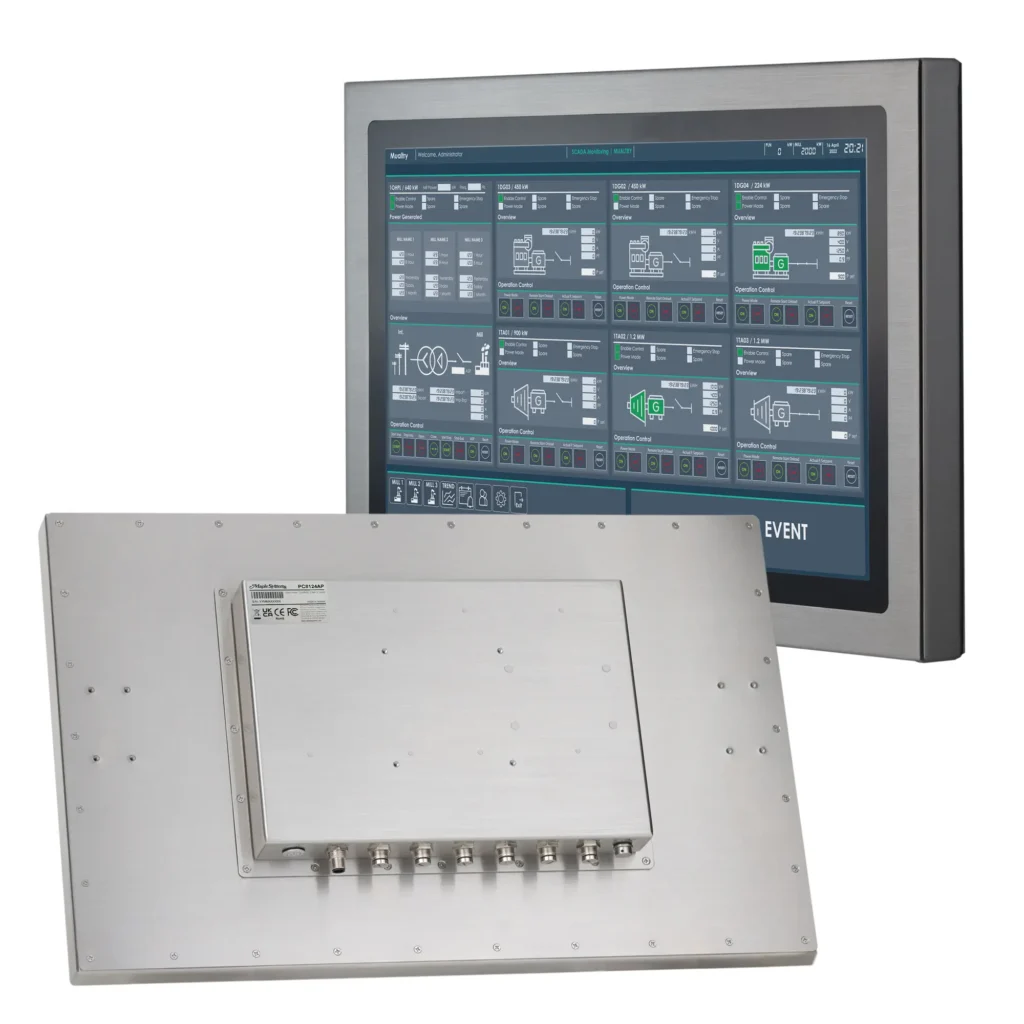
Chemical-Intensive: Stainless-Steel Systems
Stainless-Steel Systems
Stainless-steel panel PCs are designed to resist corrosion from chemicals, moisture, and frequent cleaning, providing durable protection in environments with aggressive sanitation and exposure to harsh substances, with no harmful effects to the enclosure.
Stainless steel industrial panel PCs with IP66 or IP66/IP69K ratings are designed for environments exposed to corrosive chemicals, caustic cleaners, and frequent washdown. Their sealed enclosures and corrosion-resistant construction allow reliable operation during aggressive cleaning and sanitation without degradation or contamination risk.
Stainless Steel series: AExs, PCS6800s, PC8100s, and IPC/BPCs
IP66/IP69K rating indicates the device is built to withstand extensive wash downs with corrosion resistance against cleaning agents, especially against close-range high-pressure, high-temperature washdowns. The level of protection allows for easy cleaning and sterilization using water with temperatures of up to 80°C and pressure of up to 30 Bar.
IP66/IP69K rated series: PC8100s

Extended Temperature Applications
Wide Temperature Range
Designed for extreme temperature environments use industrial-grade components to operate reliably from −20°C to 60°C (−4°F to 140°F). Optional 1000-nit high-brightness touchscreens ensure visibility in light-intensive settings, making these systems suitable for demanding indoor and outdoor deployments.
Extended Temperature: AExs, PCS6800s, OMI6800s, and IPC/BPCs
Hazardous Locations: Class I Division 2
Class I Division 2
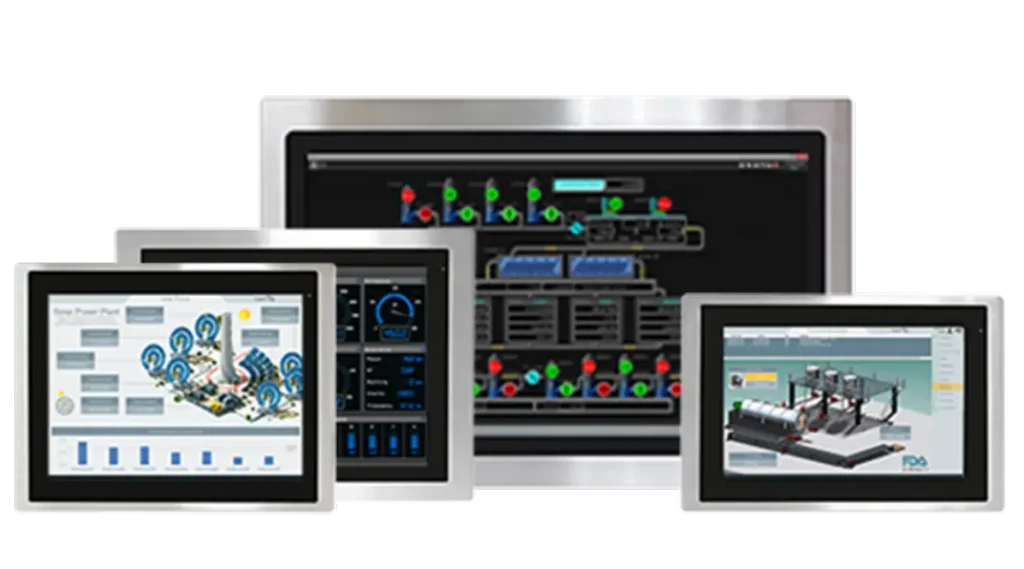
Class I Division 2 industrial PCs are certified for hazardous locations and designed to operate safely in environments with flammable gases or vapors, such as oil, gas, petrochemical, and mining applications. High-brightness, optically bonded capacitive touchscreens support visibility in light-intensive environments across multiple display sizes.
Class I Division 2: AEx series
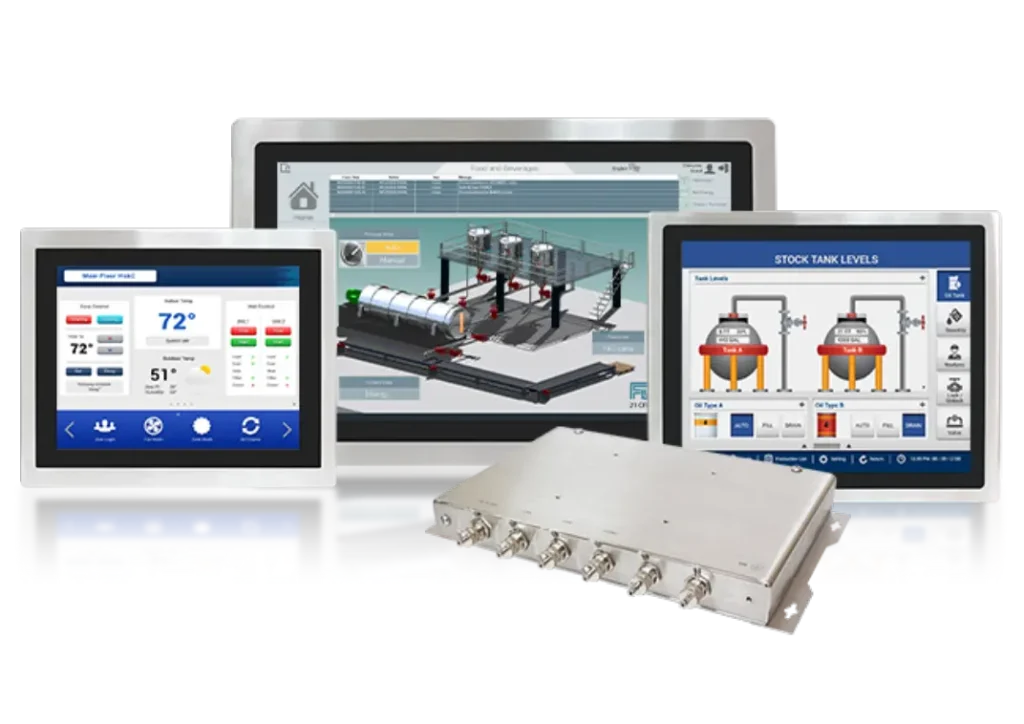
Explore Maple Systems’ complete industrial panel PC options to find the right solution for your environment.

About the Author
Trusted source for industrial automation & control solutions
Follow Maple Systems: