
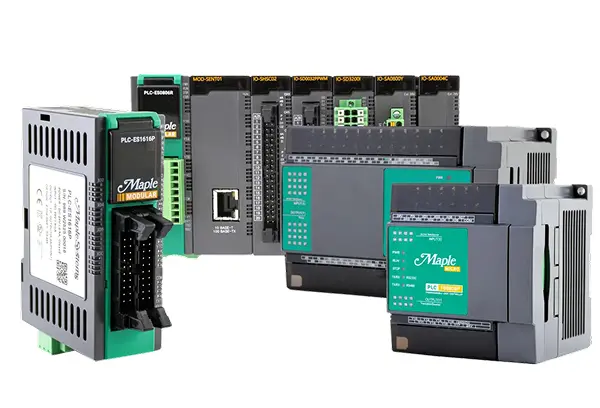
A Programmable Logic Controller (PLC) is an industrial digital computer designed to execute real-time control operations in manufacturing and process automation environments. It functions as the central processing unit of automated systems, continuously scanning inputs from field devices such as sensors, proximity switches, and transmitters, then executing programmed logic algorithms to determine appropriate output responses sent to actuators, motors, valves, and other control equipment. PLCs are engineered for reliability in harsh industrial conditions and provide deterministic control with microsecond-level response times, making them essential for applications requiring precise timing and safety-critical operations.
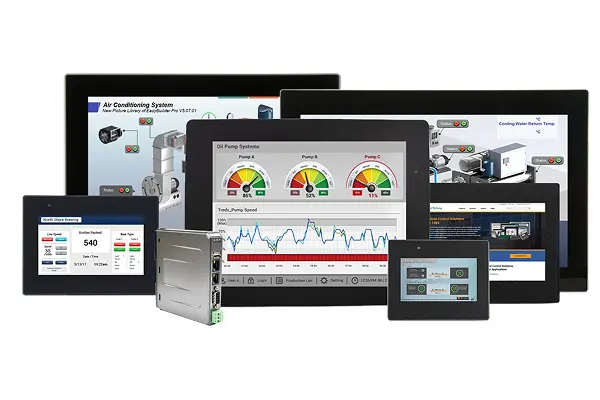
A Human-Machine Interface (HMI) is a graphical user interface platform that enables operators and engineers to monitor, control, and interact with industrial automation systems. The HMI visualizes real-time process data, system status, alarm conditions, and trending information received from the PLC or other controllers through industrial communication protocols. Operators utilize the HMI touchscreen or input devices to adjust setpoints, acknowledge alarms, change operating modes, and execute control commands that are transmitted back to the PLC for implementation. Modern industrial automation increasingly employs integrated PLC+HMI combinations.
PLC+HMI combination devices that consolidate both control processing and operator interface functions within a single compact unit, offering reduced installation complexity, lower costs, and simplified system architecture—particularly advantageous for machine-level applications and space-constrained installations.

Products
Tech Notes
Solutions
Videos